

SEARCH WHAT YOU WANT
7T/H Automatic Borehole Water RO Purification System | Food Processing Factory Ghana Case
1. Project Overview
This project adopts a 7T/H automatic borehole water RO purification system for a professional food processing factory in Ghana, West Africa. The customer relies 100% on local underground borehole water for production auxiliary processing, equipment cleaning and factory daily water use. Local groundwater features high turbidity, high total hardness and high TDS, easily causing pipeline scaling, sediment contamination and low production hygiene.
To solve common borehole water quality problems in Ghana and meet food industry water standards, we customized a complete borehole water pretreatment and RO desalination solution with softening filtration and UV terminal sterilization. The system supports stable 7m³/h 24/7 continuous water purification, ensuring long-term stable and qualified process water for food and beverage production.
Basic Project Information
-
Project Location: Ghana, West Africa
-
Applicable Industry: Food & Beverage Processing Industry
-
System Capacity: 7m³/h continuous operation
-
Core Solution: Multi-media pretreatment + water softening + RO reverse osmosis desalination + UV sterilization
2. Raw Borehole Water Quality & Project Challenges
The local deep borehole groundwater in Ghana contains excessive suspended sediment, extreme water hardness and dissolved solids, which cannot be directly used for food industrial production. Long-term use will cause equipment failure and food hygiene risks.
Raw Water Quality Parameters
-
Water Source: Deep underground borehole water
-
TDS: 980–1100 mg/L
-
Total Hardness: 320 mg/L (extremely hard water)
-
Turbidity: 12–15 NTU (with visible sand and suspended solids)
Customer Key Pain Points
-
◊Severe pipeline and equipment scaling: Hard water forms thick scale on heat exchangers, boilers and water pipelines, reducing thermal efficiency and causing frequent equipment downtime.
-
◊Food hygiene hidden dangers: Unfiltered sediment and impurities contaminate equipment cleaning process, failing food production hygiene requirements.
-
◊High operating and maintenance costs: Frequent manual descaling, chemical cleaning and pipeline replacement increase long-term production costs.
3. Custom Water Treatment Process & System Configuration
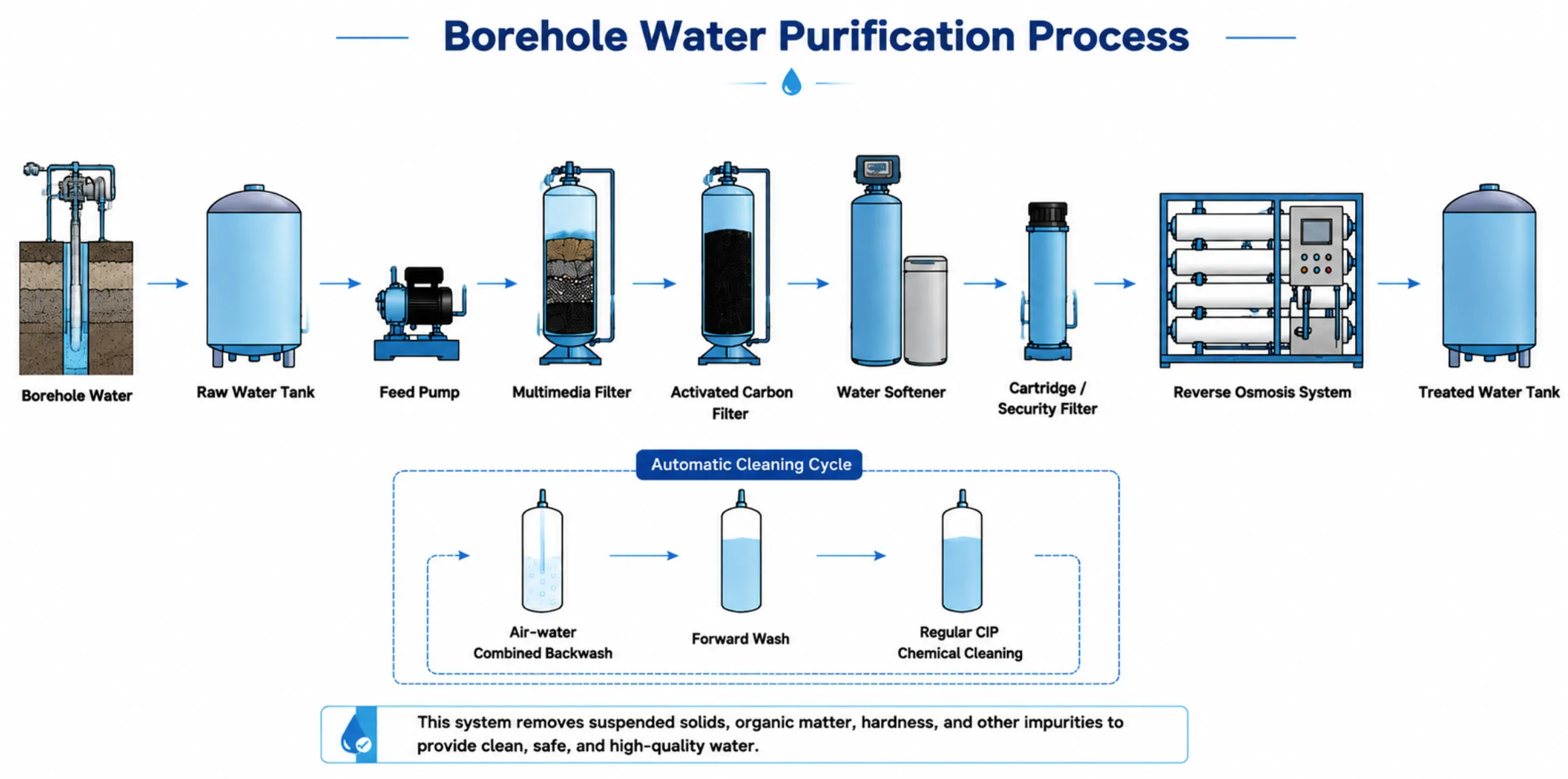
According to the water quality characteristics of Ghana borehole water, we designed a graded purification process combining full pretreatment and deep RO desalination, which effectively solves high turbidity, high hardness and high TDS problems of local well water.
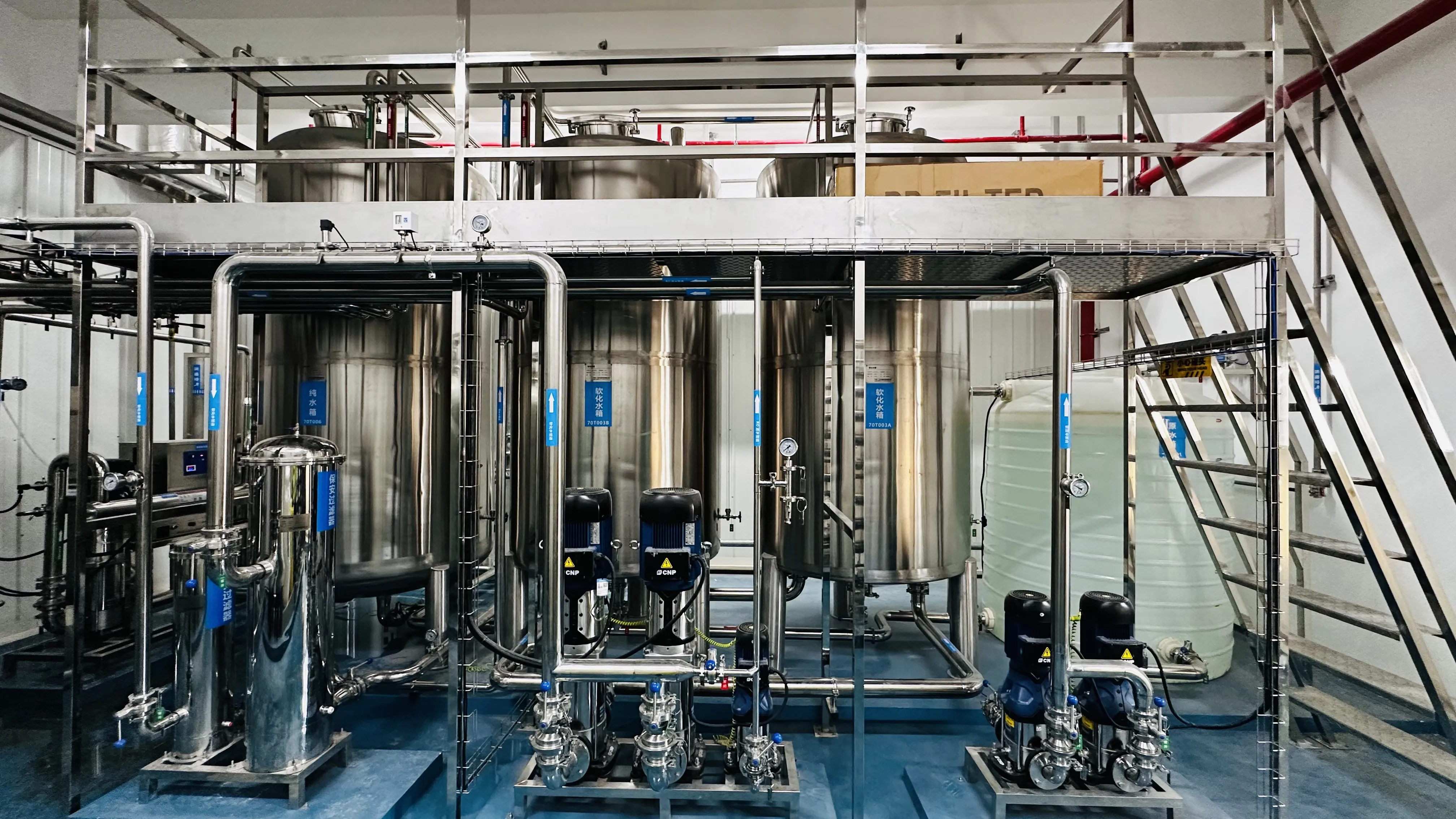
Complete Process Flow: Borehole Water → Raw Water Tank → Feed Pump → Multi-Media Filter (Sediment & Turbidity Removal) → Activated Carbon Filter (Organics & Odor Removal) → Water Softener (Scale Prevention) → 5μm Security Cartridge Filter → RO Reverse Osmosis System (Deep Desalination) → Treated Water Tank → UV Sterilizer (Terminal Disinfection)
Core System Advantages
-
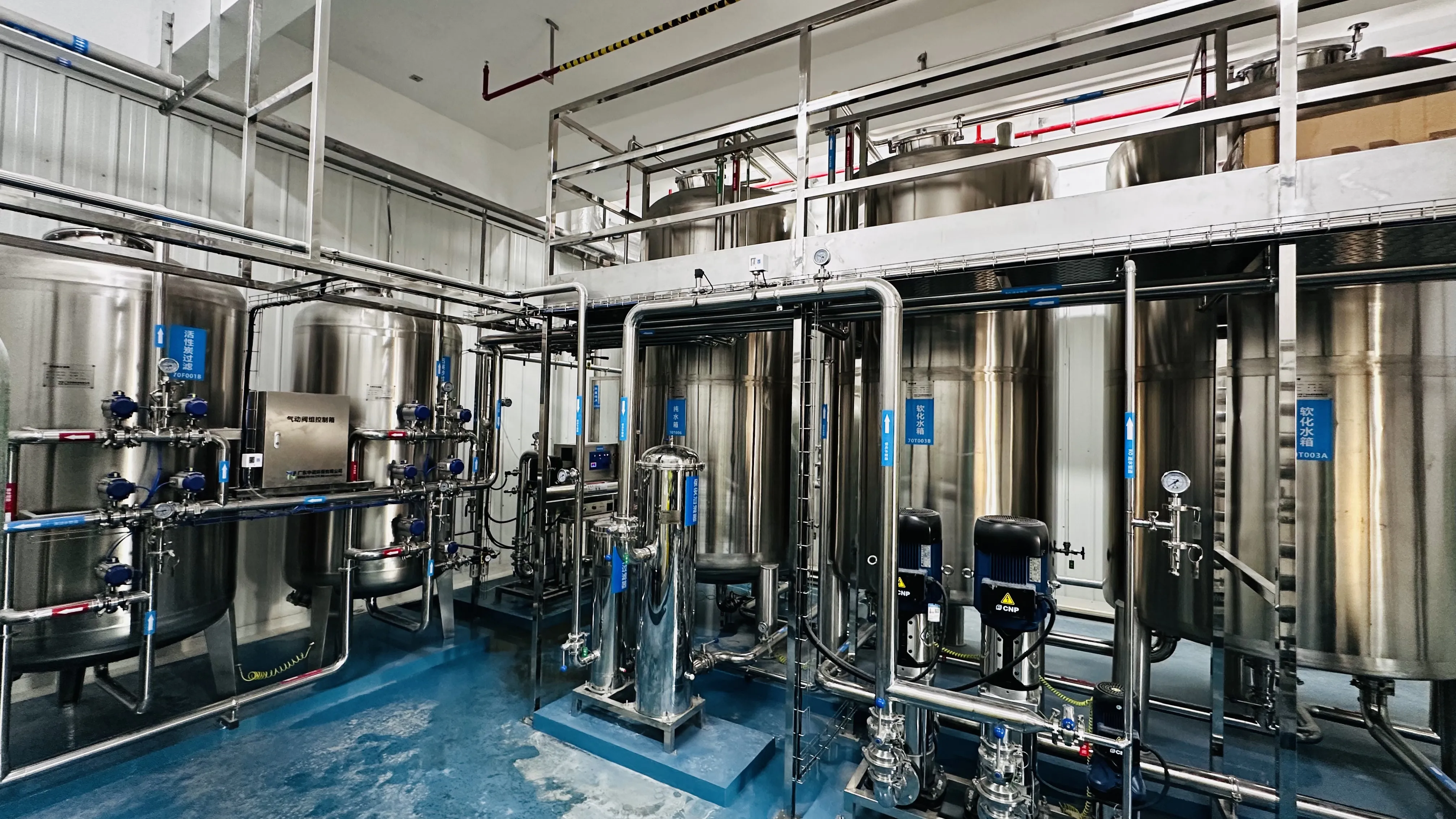
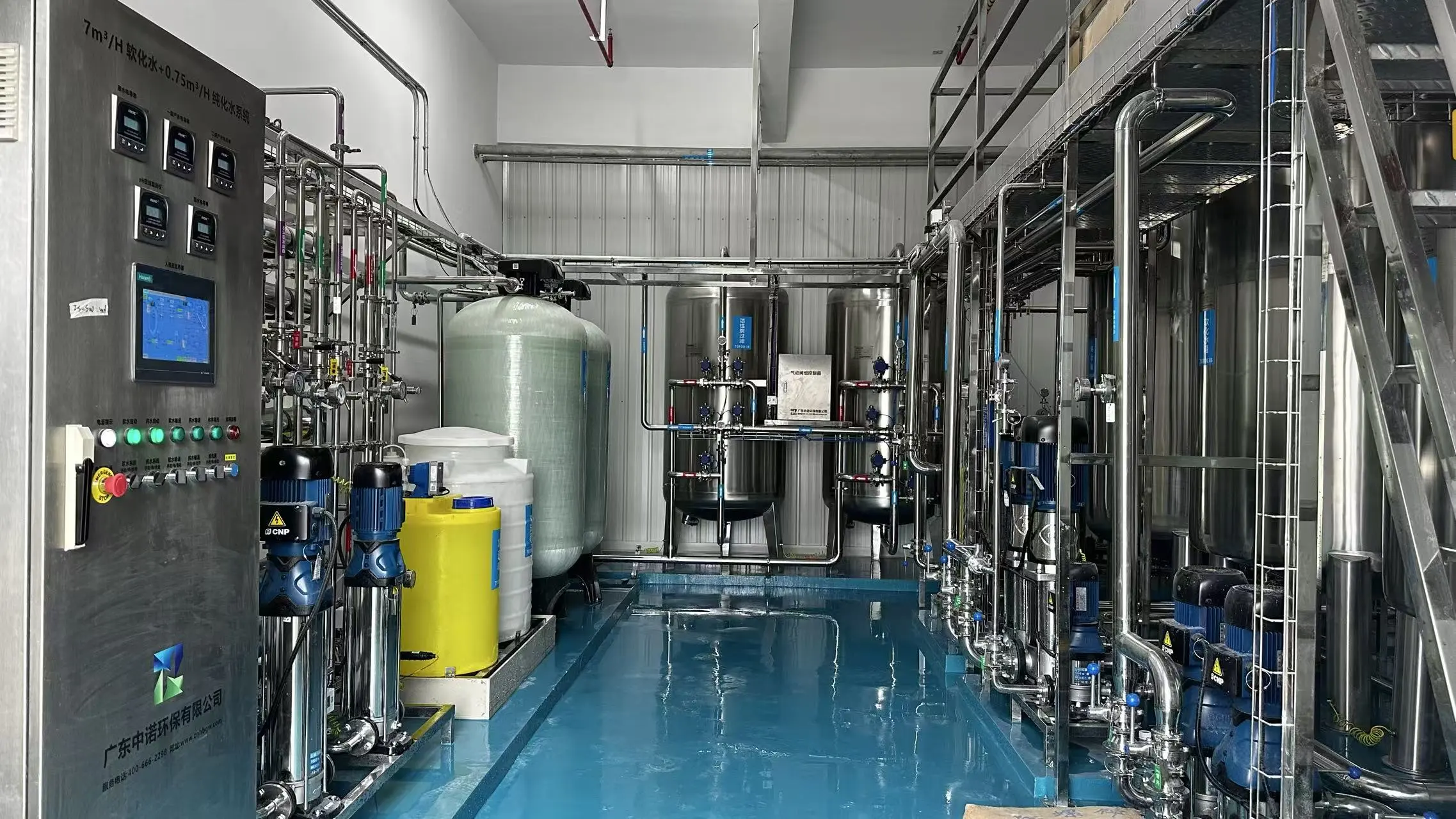
Tropical anti-corrosion design: SS304/SS316 stainless steel tanks and pipelines adapt to Ghana’s high temperature and high humidity tropical environment, avoiding rust and corrosion.
-
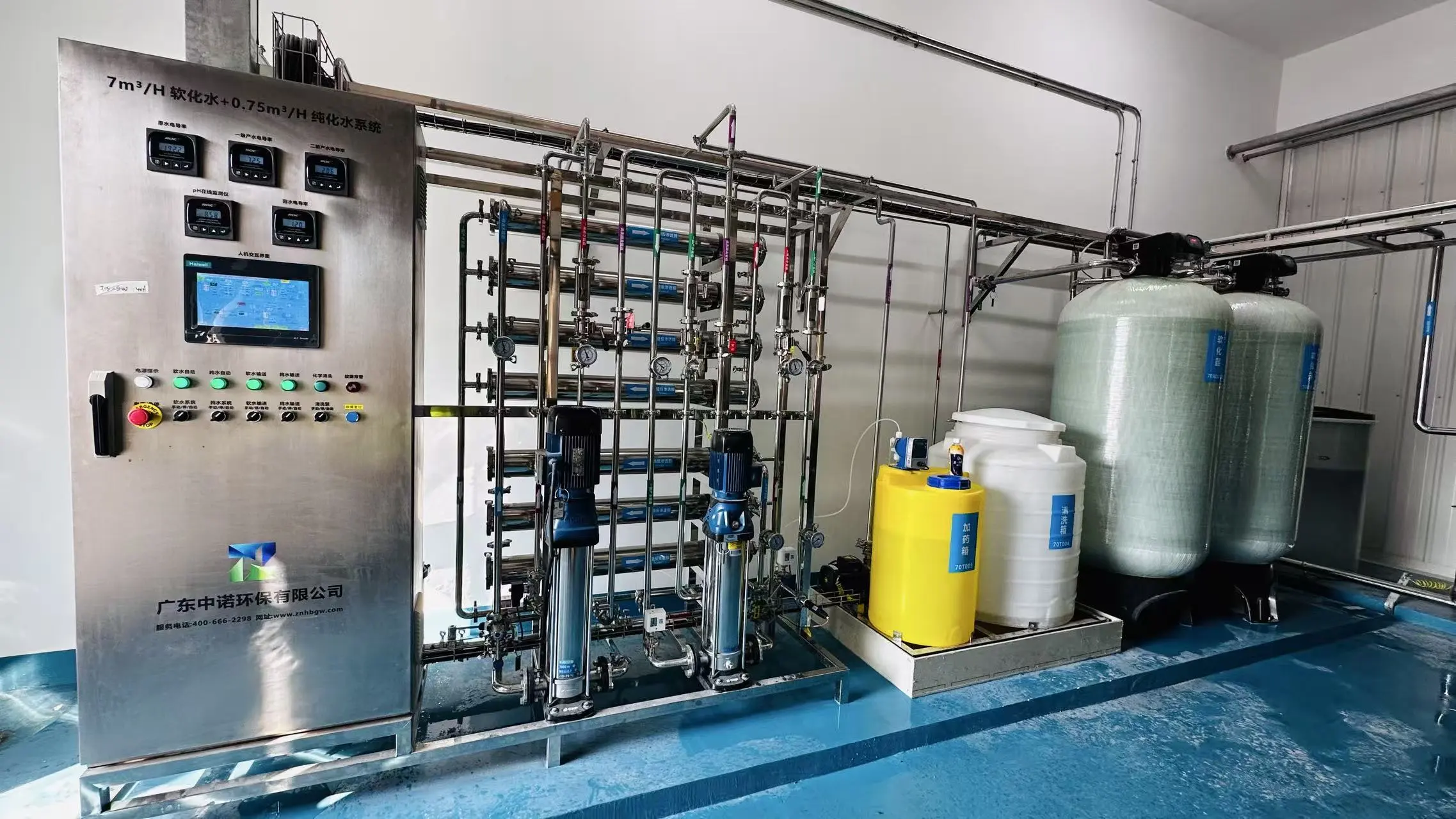
PLC intelligent automatic control: Realizes automatic backwashing, online TDS and conductivity monitoring, automatic fault alarm, truly unattended operation.
-
Anti-fouling RO membrane configuration: Industrial high-rejection RO membranes adapt to fluctuating borehole water quality, ensuring stable long-term desalination performance.
4. Water Treatment Performance & Purification Effect
After running the 7T/H borehole water RO purification system, the factory’s water quality is greatly improved, fully meeting food processing auxiliary water standards. All core purification data are stable and up to standard.
|
Testing Parameter
|
Raw Borehole Water
|
Final Treated Water
|
Removal Performance
|
|---|---|---|---|
|
Turbidity
|
12–15 NTU
|
≤ 0.1 NTU
|
Nearly 100% sediment removal
|
|
TDS
|
980–1100 mg/L
|
< 120 mg/L
|
≥ 89% desalination rate
|
|
Total Hardness
|
320 mg/L
|
< 25 mg/L
|
≥ 92% hardness removal rate
|
|
Water Appearance
|
Turbid with sediment
|
Crystal clear & odor-free
|
Meet food processing water standard
|
5. Actual Project Operation Results
The installed 7 ton per hour automatic borehole water treatment system has been running stably for a long time, bringing multiple economic and production benefits for the Ghana food factory.
-
Stable 24/7 automatic water supply: Steady 7m³/h purified water output fully meets the factory’s uninterrupted production and cleaning water demand.
-
Thorough scale prevention: Over 92% hardness removal rate reduces equipment scaling by more than 95%, improves heat exchange efficiency and extends service life of boilers and pipelines by 3–5 years.
-
Guaranteed food production hygiene: Deep removal of sediment, impurities and microorganisms ensures cleaning water complies with food industry safety specifications.
-
Greatly reduced operating costs: Intelligent automatic operation reduces manual maintenance and chemical descaling downtime by over 80%, effectively lowering long-term factory operating expenses.
6. Why Choose Zhongnuo Borehole Water Treatment System?
Zhongnuo has rich experience in industrial borehole water purification projects for Africa food factories, providing targeted customized solutions for high-hardness, high-turbidity and high-TDS groundwater in tropical regions.
-
Targeted custom solution: Designed specifically for Ghana local borehole water quality, solving turbidity, hardness and desalination problems one-stop.
-
Industrial-grade durable equipment: Anti-corrosion material and high-efficiency RO membrane ensure stable operation under complex water quality and tropical climate conditions.
-
Full-turnkey service: Free water quality analysis, solution design, factory testing, overseas installation guidance and after-sales technical support.
-
Cost-effective factory direct supply: No middlemen, supporting flexible customization and fast delivery for African industrial water treatment projects.
7.FAQ
Q1: Can this 7T/H borehole water RO system adapt to seasonal water quality fluctuations in Ghana?
A1: Yes. The multi-media pretreatment with automatic backwashing function can effectively intercept a large amount of sediment and turbidity in rainy seasons. The PLC adjustable backwash cycle protects the RO membrane steadily against fluctuating borehole water quality.
Q2: Can the treated water reach food-grade drinking water standard?
A2: The standard configuration meets food auxiliary production and equipment cleaning standards. We can upgrade to double-pass RO or add ultrafiltration sterile filtration module to reach direct drinking water grade.
Q3: Is the 7T/H borehole purification system difficult to maintain?
A3: The fully automatic design requires minimal daily operation. Consumable replacement cycle is long: quartz sand and activated carbon every 1–2 years, precision filter cartridge every 1–3 months, and RO membrane service life up to 2–3 years.
1. Project Overview
This project adopts a 7T/H automatic borehole water RO purification system for a professional food processing factory in Ghana, West Africa. The customer relies 100% on local underground borehole water for production auxiliary processing, equipment cleaning and factory daily water use. Local groundwater features high turbidity, high total hardness and high TDS, easily causing pipeline scaling, sediment contamination and low production hygiene.
To solve common borehole water quality problems in Ghana and meet food industry water standards, we customized a complete borehole water pretreatment and RO desalination solution with softening filtration and UV terminal sterilization. The system supports stable 7m³/h 24/7 continuous water purification, ensuring long-term stable and qualified process water for food and beverage production.
Basic Project Information
-
Project Location: Ghana, West Africa
-
Applicable Industry: Food & Beverage Processing Industry
-
System Capacity: 7m³/h continuous operation
-
Core Solution: Multi-media pretreatment + water softening + RO reverse osmosis desalination + UV sterilization
2. Raw Borehole Water Quality & Project Challenges
The local deep borehole groundwater in Ghana contains excessive suspended sediment, extreme water hardness and dissolved solids, which cannot be directly used for food industrial production. Long-term use will cause equipment failure and food hygiene risks.
Raw Water Quality Parameters
-
Water Source: Deep underground borehole water
-
TDS: 980–1100 mg/L
-
Total Hardness: 320 mg/L (extremely hard water)
-
Turbidity: 12–15 NTU (with visible sand and suspended solids)
Customer Key Pain Points
-
◊Severe pipeline and equipment scaling: Hard water forms thick scale on heat exchangers, boilers and water pipelines, reducing thermal efficiency and causing frequent equipment downtime.
-
◊Food hygiene hidden dangers: Unfiltered sediment and impurities contaminate equipment cleaning process, failing food production hygiene requirements.
-
◊High operating and maintenance costs: Frequent manual descaling, chemical cleaning and pipeline replacement increase long-term production costs.
3. Custom Water Treatment Process & System Configuration
According to the water quality characteristics of Ghana borehole water, we designed a graded purification process combining full pretreatment and deep RO desalination, which effectively solves high turbidity, high hardness and high TDS problems of local well water.
Complete Process Flow: Borehole Water → Raw Water Tank → Feed Pump → Multi-Media Filter (Sediment & Turbidity Removal) → Activated Carbon Filter (Organics & Odor Removal) → Water Softener (Scale Prevention) → 5μm Security Cartridge Filter → RO Reverse Osmosis System (Deep Desalination) → Treated Water Tank → UV Sterilizer (Terminal Disinfection)
Core System Advantages
-
Tropical anti-corrosion design: SS304/SS316 stainless steel tanks and pipelines adapt to Ghana’s high temperature and high humidity tropical environment, avoiding rust and corrosion.
-
PLC intelligent automatic control: Realizes automatic backwashing, online TDS and conductivity monitoring, automatic fault alarm, truly unattended operation.
-
Anti-fouling RO membrane configuration: Industrial high-rejection RO membranes adapt to fluctuating borehole water quality, ensuring stable long-term desalination performance.
4. Water Treatment Performance & Purification Effect
After running the 7T/H borehole water RO purification system, the factory’s water quality is greatly improved, fully meeting food processing auxiliary water standards. All core purification data are stable and up to standard.
|
Testing Parameter
|
Raw Borehole Water
|
Final Treated Water
|
Removal Performance
|
|---|---|---|---|
|
Turbidity
|
12–15 NTU
|
≤ 0.1 NTU
|
Nearly 100% sediment removal
|
|
TDS
|
980–1100 mg/L
|
< 120 mg/L
|
≥ 89% desalination rate
|
|
Total Hardness
|
320 mg/L
|
< 25 mg/L
|
≥ 92% hardness removal rate
|
|
Water Appearance
|
Turbid with sediment
|
Crystal clear & odor-free
|
Meet food processing water standard
|
5. Actual Project Operation Results
The installed 7 ton per hour automatic borehole water treatment system has been running stably for a long time, bringing multiple economic and production benefits for the Ghana food factory.
-
Stable 24/7 automatic water supply: Steady 7m³/h purified water output fully meets the factory’s uninterrupted production and cleaning water demand.
-
Thorough scale prevention: Over 92% hardness removal rate reduces equipment scaling by more than 95%, improves heat exchange efficiency and extends service life of boilers and pipelines by 3–5 years.
-
Guaranteed food production hygiene: Deep removal of sediment, impurities and microorganisms ensures cleaning water complies with food industry safety specifications.
-
Greatly reduced operating costs: Intelligent automatic operation reduces manual maintenance and chemical descaling downtime by over 80%, effectively lowering long-term factory operating expenses.
6. Why Choose Zhongnuo Borehole Water Treatment System?
Zhongnuo has rich experience in industrial borehole water purification projects for Africa food factories, providing targeted customized solutions for high-hardness, high-turbidity and high-TDS groundwater in tropical regions.
-
Targeted custom solution: Designed specifically for Ghana local borehole water quality, solving turbidity, hardness and desalination problems one-stop.
-
Industrial-grade durable equipment: Anti-corrosion material and high-efficiency RO membrane ensure stable operation under complex water quality and tropical climate conditions.
-
Full-turnkey service: Free water quality analysis, solution design, factory testing, overseas installation guidance and after-sales technical support.
-
Cost-effective factory direct supply: No middlemen, supporting flexible customization and fast delivery for African industrial water treatment projects.
7.FAQ
Q1: Can this 7T/H borehole water RO system adapt to seasonal water quality fluctuations in Ghana?
A1: Yes. The multi-media pretreatment with automatic backwashing function can effectively intercept a large amount of sediment and turbidity in rainy seasons. The PLC adjustable backwash cycle protects the RO membrane steadily against fluctuating borehole water quality.
Q2: Can the treated water reach food-grade drinking water standard?
A2: The standard configuration meets food auxiliary production and equipment cleaning standards. We can upgrade to double-pass RO or add ultrafiltration sterile filtration module to reach direct drinking water grade.
Q3: Is the 7T/H borehole purification system difficult to maintain?
A3: The fully automatic design requires minimal daily operation. Consumable replacement cycle is long: quartz sand and activated carbon every 1–2 years, precision filter cartridge every 1–3 months, and RO membrane service life up to 2–3 years.
Get a Quote for Free
Submit this form and our sales representative will contact you soon.


ONLINE MESSAGE
Copyright © 2026 Zhongnuo Water Treatment Co., Ltd.