

SEARCH WHAT YOU WANT
Pharmaceutical Water Treatment Solutions
Reliable Water Purification Systems for Pharmaceutical Production
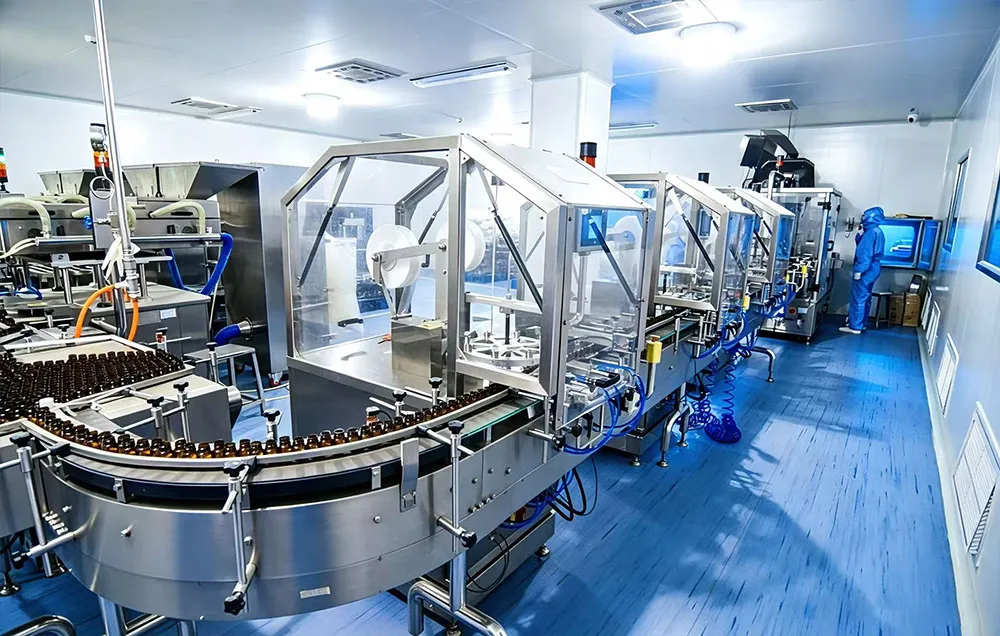
Water is one of the most critical raw materials in pharmaceutical production. It is widely used in drug formulation, active pharmaceutical ingredient (API) production, equipment cleaning, laboratory testing, and injectable preparation.
Unlike general industrial water applications, pharmaceutical water systems require strict control of conductivity, total organic carbon (TOC), microbial contamination, chemical impurities, and particle levels.
Poor water quality can directly affect product safety, production stability, and regulatory compliance. Zhongnuo Water Treatment (ZNWTE) provides RO, UF, EDI ultra-pure water systems, and customized purification solutions to help pharmaceutical manufacturers maintain reliable water quality.
In pharmaceutical production, high-purity water supports three key needs:
· Drug manufacturing: used in drug formulation, API development, tablet and capsule production, and liquid formulation, directly influencing final product quality.
· Equipment cleaning: high-quality purified water helps reduce chemical residue, microbial contamination, and cross-contamination risks.
· Laboratory and sterile production: testing, analysis, R&D, injectable manufacturing, and sterile drug production all depend on tightly controlled water quality to protect patient safety.
· Strict purity requirements: pharmaceutical plants must consistently meet international standards and industry regulations, with demanding targets for low conductivity, low TOC, low microbial content, low particle levels, and stable chemical composition. Water quality fluctuations may lead to failed quality checks, production delays, batch rejection, and higher costs. ZNWTE uses RO membrane filtration, EDI deionization, UV sterilization, and precision filtration to deliver stable high-purity water.
· Microbial contamination control: microorganisms may grow in storage tanks, pipelines, and distribution systems, often caused by raw water impurities, weak system design, or poor maintenance. This can result in product contamination, shorter shelf life, and regulatory risk. ZNWTE can integrate UF, UV sterilization, precision filtration, and hygienic piping design to reduce microbial risk.
· High dissolved mineral content: calcium, magnesium, sodium, chloride, sulfate, and silica in raw water can affect pharmaceutical processes and may cause scaling, higher maintenance cost, and lower purification efficiency. ZNWTE uses RO to remove dissolved substances and combines it with EDI when higher purity is required.
· Continuous and stable water supply: pharmaceutical plants often run continuously, so any interruption in purified water supply can affect production schedules, delivery, and manufacturing efficiency, while also causing production loss, higher operating cost, and emergency maintenance. ZNWTE supports stable supply through automatic control, real-time monitoring, reliable operating design, and maintenance-friendly system configuration.
|
|
|
|

· Industrial RO water systems: pharmaceutical plants, API development, and process water applications.
· EDI ultra-pure water systems: laboratory water, high-purity pharmaceutical production, and sterile manufacturing.
· UF systems: pretreatment, microbial control, and particle removal.
· Industrial RO water systems: pharmaceutical plants, API development, and process water applications.
· EDI ultra-pure water systems: laboratory water, high-purity pharmaceutical production, and sterile manufacturing.
· UF systems: pretreatment, microbial control, and particle removal.
· Pharmaceutical production: tablets, capsules, injectables, and API development.
· Medical and healthcare products: medical consumables, healthcare products, and sterile products.
· Laboratory and research: pharmaceutical laboratories, testing centers, and research institutes.
What water treatment systems are commonly used in pharmaceutical plants?
Pharmaceutical plants commonly use reverse osmosis (RO) combined with EDI to produce purified water and ultra-pure water.
Why is EDI important in pharmaceutical water treatment?
EDI provides continuous deionization without chemical regeneration, helping maintain stable high purity while reducing operating cost.
Can ZNWTE design customized pharmaceutical water systems?
Yes. Systems are designed according to the water source, production capacity, required water quality standards, and installation conditions.
What information is needed before quotation?
Customers usually provide the raw water report, required water capacity, target water quality, and application details.
Zhongnuo Water Treatment (ZNWTE) provides professional RO, UF, EDI, and ultra-pure water systems for pharmaceutical manufacturers worldwide. Contact our engineering team for a customized pharmaceutical water treatment solution.
Water is one of the most critical raw materials in pharmaceutical production. It is widely used in drug formulation, active pharmaceutical ingredient (API) production, equipment cleaning, laboratory testing, and injectable preparation.
Unlike general industrial water applications, pharmaceutical water systems require strict control of conductivity, total organic carbon (TOC), microbial contamination, chemical impurities, and particle levels.
Poor water quality can directly affect product safety, production stability, and regulatory compliance. Zhongnuo Water Treatment (ZNWTE) provides RO, UF, EDI ultra-pure water systems, and customized purification solutions to help pharmaceutical manufacturers maintain reliable water quality.
In pharmaceutical production, high-purity water supports three key needs:
· Drug manufacturing: used in drug formulation, API development, tablet and capsule production, and liquid formulation, directly influencing final product quality.
· Equipment cleaning: high-quality purified water helps reduce chemical residue, microbial contamination, and cross-contamination risks.
· Laboratory and sterile production: testing, analysis, R&D, injectable manufacturing, and sterile drug production all depend on tightly controlled water quality to protect patient safety.
· Strict purity requirements: pharmaceutical plants must consistently meet international standards and industry regulations, with demanding targets for low conductivity, low TOC, low microbial content, low particle levels, and stable chemical composition. Water quality fluctuations may lead to failed quality checks, production delays, batch rejection, and higher costs. ZNWTE uses RO membrane filtration, EDI deionization, UV sterilization, and precision filtration to deliver stable high-purity water.
· Microbial contamination control: microorganisms may grow in storage tanks, pipelines, and distribution systems, often caused by raw water impurities, weak system design, or poor maintenance. This can result in product contamination, shorter shelf life, and regulatory risk. ZNWTE can integrate UF, UV sterilization, precision filtration, and hygienic piping design to reduce microbial risk.
· High dissolved mineral content: calcium, magnesium, sodium, chloride, sulfate, and silica in raw water can affect pharmaceutical processes and may cause scaling, higher maintenance cost, and lower purification efficiency. ZNWTE uses RO to remove dissolved substances and combines it with EDI when higher purity is required.
· Continuous and stable water supply: pharmaceutical plants often run continuously, so any interruption in purified water supply can affect production schedules, delivery, and manufacturing efficiency, while also causing production loss, higher operating cost, and emergency maintenance. ZNWTE supports stable supply through automatic control, real-time monitoring, reliable operating design, and maintenance-friendly system configuration.
|
|
|
|
· Industrial RO water systems: pharmaceutical plants, API development, and process water applications.
· EDI ultra-pure water systems: laboratory water, high-purity pharmaceutical production, and sterile manufacturing.
· UF systems: pretreatment, microbial control, and particle removal.
· Industrial RO water systems: pharmaceutical plants, API development, and process water applications.
· EDI ultra-pure water systems: laboratory water, high-purity pharmaceutical production, and sterile manufacturing.
· UF systems: pretreatment, microbial control, and particle removal.
· Pharmaceutical production: tablets, capsules, injectables, and API development.
· Medical and healthcare products: medical consumables, healthcare products, and sterile products.
· Laboratory and research: pharmaceutical laboratories, testing centers, and research institutes.
What water treatment systems are commonly used in pharmaceutical plants?
Pharmaceutical plants commonly use reverse osmosis (RO) combined with EDI to produce purified water and ultra-pure water.
Why is EDI important in pharmaceutical water treatment?
EDI provides continuous deionization without chemical regeneration, helping maintain stable high purity while reducing operating cost.
Can ZNWTE design customized pharmaceutical water systems?
Yes. Systems are designed according to the water source, production capacity, required water quality standards, and installation conditions.
What information is needed before quotation?
Customers usually provide the raw water report, required water capacity, target water quality, and application details.
Zhongnuo Water Treatment (ZNWTE) provides professional RO, UF, EDI, and ultra-pure water systems for pharmaceutical manufacturers worldwide. Contact our engineering team for a customized pharmaceutical water treatment solution.
Previous: No more data
Get a Quote for Free
Submit this form and our sales representative will contact you soon.


ONLINE MESSAGE
Copyright © 2026 Zhongnuo Water Treatment Co., Ltd.