

SEARCH WHAT YOU WANT
What Should an Industrial RO Performance Guarantee Include?
Time:2026-10-19
An industrial reverse osmosis quotation may promise “20 m³/h capacity” and “high salt rejection.” These figures help describe the equipment, but they do not fully explain what the supplier guarantees at your site.
A useful performance guarantee connects measurable results with defined operating conditions, supply boundaries and acceptance procedures.
Buyers should be able to answer four questions: What must the system deliver? Under which conditions? How will performance be verified? What happens if the agreed requirements are not met?
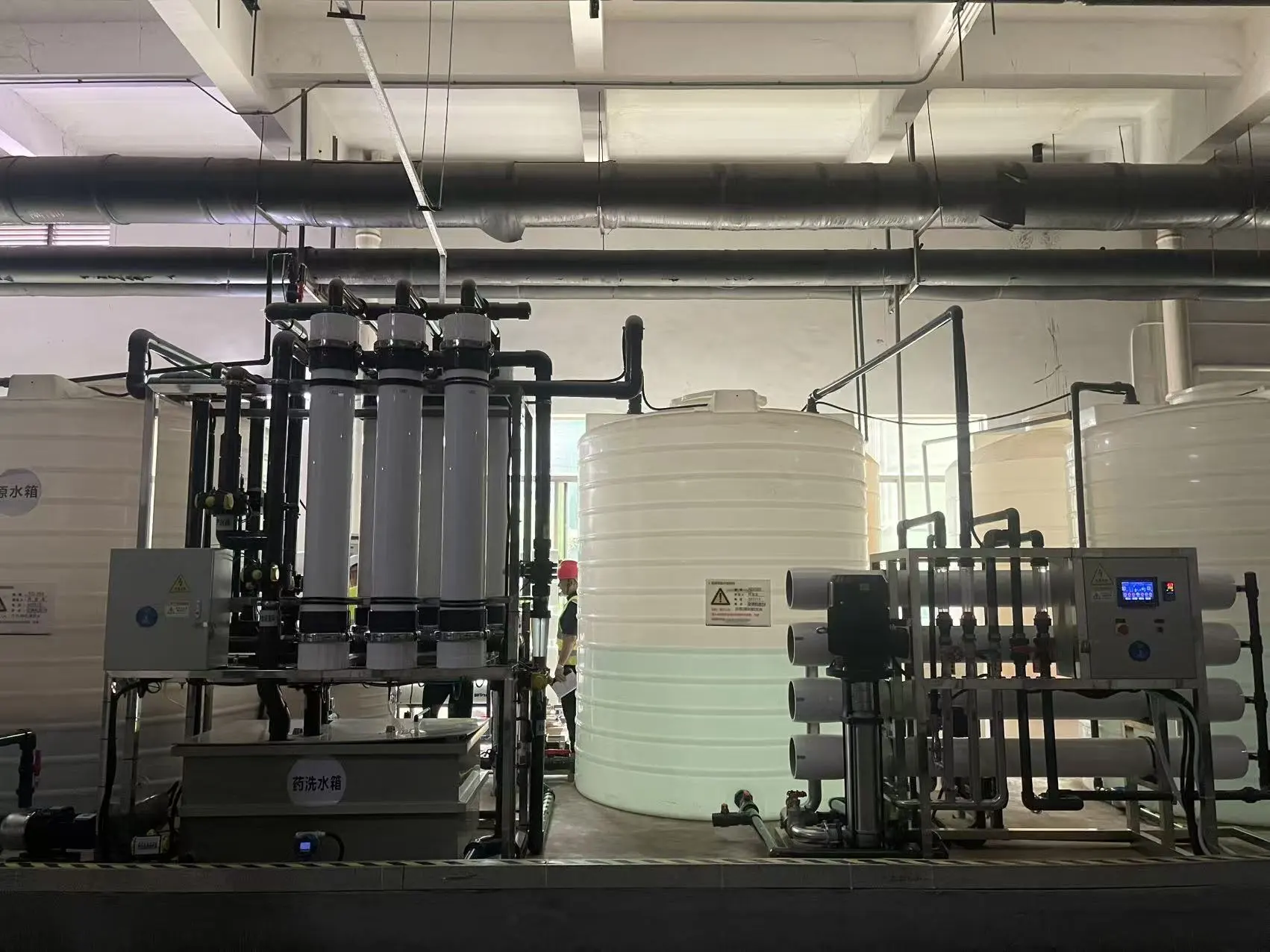
This guide explains what to include before approving an industrial RO order.
1. Define the Guaranteed Results Together
The core guarantee should state product-water flow, product-water quality and recovery as connected requirements.
These parameters should be achieved during the same agreed operating condition—not demonstrated separately using different settings.
| Guaranteed Item | What to Specify |
|---|---|
| Product-water flow | Minimum compliant flow, units and measurement point |
| Product-water quality | Maximum conductivity, TDS or application-specific limits |
| Recovery | Agreed value or operating range, with a defined calculation boundary |
| Delivery pressure | Required pressure at the supply connection, where applicable |
| Net daily delivery | Usable daily volume under an agreed operating schedule, if required |
| Energy consumption | Maximum specific energy consumption and included equipment, if guaranteed |
DuPont’s system-design guidance similarly describes RO performance through permeate flow and quality referenced to defined feedwater analysis, temperature, pressure and recovery. These conditions are essential to interpreting the promised output.
Separate guaranteed values from estimates
A quotation may contain nominal ratings, design projections, expected operating values and guaranteed limits. They should be clearly identified.
For example, a projected permeate conductivity is not automatically a guaranteed maximum. Likewise, an estimated energy figure should not be presented as a firm commitment unless its conditions and verification method are defined.
2. State the Feedwater and Utility Conditions
A performance guarantee should reference an approved design basis.
At minimum, identify:
-
• Raw-water source and the agreed analysis.
-
• Feedwater temperature range.
-
• TDS and relevant ionic composition.
-
• Required RO inlet quality after pretreatment.
-
• Available feedwater pressure and flow.
-
• Electrical supply and other required utilities.
TDS alone does not describe scaling or fouling risk. Hardness, alkalinity, silica, iron, manganese, suspended solids and other relevant constituents may affect the treatment design.
Distinguish between raw water entering the treatment package and pretreated water entering the RO membranes. If another contractor supplies pretreatment, state who is responsible for meeting and verifying the RO inlet requirements.
Check the full operating range
Ask whether the guarantee applies only at one reference condition or throughout an agreed operating range.
Cold water and high salinity can increase the pressure needed to maintain output. Other conditions may govern product-water quality or scaling risk. The design therefore needs to address the relevant combinations rather than assume one condition is the worst case for every parameter.
For seasonal sources, How Variable Feedwater TDS Affects RO Pump and Membrane Selection explains why these limits should be established before equipment selection.
3. Define Where and When Water Delivery Is Measured
A guaranteed flow has limited value unless its measurement boundary is clear.
Specify whether the commitment applies at:
-
• The RO skid outlet.
-
• The second-pass RO outlet.
-
• The final treatment outlet after EDI or other polishing.
-
• The customer’s delivery connection.
Flow and water quality should be assessed at the same agreed delivery boundary, using appropriate sampling points.
For double-pass RO, first-pass permeate becomes second-pass feedwater. It should not be counted as final product water.
Distinguish hourly flow from daily supply
An operating-flow guarantee does not automatically guarantee a daily volume.
For example:
| Item | Illustrative Value |
|---|---|
| Compliant product-water flow | 20 m³/h |
| Compliant production time | 22 hours/day |
| Total compliant production | 440 m³/day |
| Subsequent internal product-water use | 10 m³/day |
| Net usable daily supply | 430 m³/day |
If daily delivery matters, define startup diversion, flushing, cleaning, internal consumption and planned downtime. Avoid deducting a loss twice when it has already been excluded from production time.
These distinctions are discussed in Rated Capacity vs Guaranteed Net Permeate: What RO Buyers Should Confirm.
Also clarify whether daily supply is demonstrated during an acceptance run or established through an agreed operating calculation. A short flow test alone does not verify long-term water availability.
4. Use Measurable Water-Quality and Efficiency Limits
Product-water quality
A statement such as “high-purity water” should be replaced with measurable requirements.
Depending on the application, specify conductivity, TDS, individual ions, silica, TOC or other relevant parameters. Identify the test method, units and temperature-reporting basis where applicable.
A salt-rejection percentage alone does not establish the final water quality. The resulting product-water concentration also depends on the feedwater.
Conductivity cannot independently establish microbiological quality or compliance with every industrial application requirement. If additional treatment or monitoring is needed, its scope should be explicit.
Recovery
Define whether recovery refers to a single RO pass or the overall treatment package.
For a simple single-pass system without recycle:
Recovery (%) = Permeate flow ÷ Feedwater flow × 100
Systems with recycle or multiple passes need a water balance that distinguishes fresh feedwater, internal circulation, final product water and discharged concentrate.
The guaranteed output should not depend on exceeding the agreed recovery or equipment operating limits.
Energy consumption
Where energy is guaranteed, specify the measurement boundary:
Specific energy consumption = Electrical energy consumed ÷ Compliant usable water produced
State whether the figure includes only the high-pressure pump or also pretreatment, dosing, downstream treatment and distribution.
Installed motor power is not the same as actual electrical consumption. The guarantee should also state how startup, standby and flushing energy are treated during the assessment.
5. Define the Guarantee Period and Maintenance Responsibilities
Commissioning performance and sustained operating performance are different commitments.
Confirm whether the guarantee applies:
-
• During initial acceptance with new membranes.
-
• At a defined later verification date.
-
• Throughout an agreed service period under specified conditions.
If a service-period commitment is included, document the maintenance requirements, operating limits and any agreed performance allowances.
Responsibilities should cover pretreatment operation, chemical dosing, filter replacement, membrane cleaning, instrument calibration and operating records. Avoid relying only on vague phrases such as “normal operation” or “proper maintenance.”
Where cleaning is part of maintaining performance, the cleaning package and access arrangements should be suitable for the installation. See How to Size a CIP System for an Industrial RO Plant.
Distinguish performance guarantees from equipment warranties
An equipment warranty generally addresses specified defects or component failures. A performance guarantee addresses whether the treatment system achieves agreed results.
A one-year equipment warranty does not, by itself, define a one-year commitment for flow, quality, recovery or availability. Both should be described separately.
6. Agree on the Acceptance Test Before Manufacturing
The acceptance procedure turns the guarantee into something that can be verified.
It should define:
-
• Test location and required site readiness.
-
• Stabilization period and test duration.
-
• Approved operating settings.
-
• Measurement and sampling locations.
-
• Instrument accuracy and calibration requirements.
-
• Data-recording intervals and laboratory methods.
-
• Pass/fail rules and treatment of interruptions.
-
• Witnessing and reporting responsibilities.
Specify whether limits apply to averages, individual readings or both. Any permitted excursions and measurement tolerances should be agreed before testing.
Separate factory checks from site performance acceptance
Factory Acceptance Testing may verify assembly, leakage, electrical operation and control functions. If factory water differs from the project feedwater, clarify which process-performance requirements can actually be demonstrated.
Site Acceptance Testing should verify the agreed site performance once the required feedwater, utilities and installation conditions are available.
Agree on any correction or normalization method
Temperature, salinity and pressure affect observed membrane performance. Normalization can help compare performance under different conditions, but it is not the same as measuring actual delivered water.
If corrected results are permitted for acceptance, agree on the method, reference conditions and valid correction range in advance. Record both actual and corrected results.
A normalized flow of 20 m³/h does not mean the plant physically delivered 20 m³/h during the test. Where actual delivery is the requirement, keep that distinction explicit.
Reliable verification also depends on suitable instrumentation, as explained in What Online Instruments Are Essential for an Automatic RO System?.
7. Establish the Process for Handling a Failed Test
The guarantee should explain what happens when the acceptance criteria are not achieved.
Agree on a practical sequence:
-
Verify the instruments, operating data and test conditions.
-
Identify whether the shortfall relates to equipment, settings, feedwater, utilities or installation.
-
Document the corrective work and responsible party.
-
Establish the correction and retest schedule.
-
Define responsibility for agreed corrective-work and retesting costs.
-
State how unresolved non-compliance will be handled under the purchase agreement.
A corrective action should not silently reduce another requirement. For example, meeting flow by exceeding the agreed recovery or delivering water outside the quality limit does not demonstrate full compliance.
Any proposed change to the guarantee should be reviewed and documented.
A Practical Performance Guarantee Schedule
Ask the supplier to complete a schedule such as the following before ordering.
| Required Entry | Information to Record |
|---|---|
| Design basis | Approved feedwater analysis, operating range and utilities |
| Guaranteed flow | Minimum compliant output and measurement point |
| Guaranteed quality | Limits, units, reporting basis and test methods |
| Recovery | Agreed value or range and calculation boundary |
| Delivery conditions | Required pressure and downstream supply boundary |
| Daily delivery, if required | Operating schedule, deductions and verification method |
| Energy, if guaranteed | Maximum consumption and included equipment |
| Guarantee period | Acceptance date or defined service period |
| Maintenance responsibilities | Required tasks, limits and operating records |
| Acceptance procedure | Duration, instruments, sampling and pass/fail criteria |
| Condition corrections | Approved method and permitted application range |
| Non-compliance process | Investigation, correction, retesting and responsibilities |
This schedule also makes supplier comparison more useful. Instead of comparing broad promises, buyers can compare documented commitments using the approach in How to Compare Industrial RO System Quotations: 12 Technical Points Buyers Should Check.
Request an RO Proposal with Measurable Performance Requirements
A clear industrial RO performance guarantee connects the promised results to the conditions and procedures needed to verify them.
Before ordering, confirm the performance values, operating boundaries, acceptance method and responsibilities together.
Planning an industrial RO project? Send Zhongnuo Water Treatment your raw-water analysis, required hourly and daily supply, target water quality and operating schedule. These details help our engineering team prepare a suitable design and clearly defined performance commitments for your application.
An industrial reverse osmosis quotation may promise “20 m³/h capacity” and “high salt rejection.” These figures help describe the equipment, but they do not fully explain what the supplier guarantees at your site.
A useful performance guarantee connects measurable results with defined operating conditions, supply boundaries and acceptance procedures.
Buyers should be able to answer four questions: What must the system deliver? Under which conditions? How will performance be verified? What happens if the agreed requirements are not met?
This guide explains what to include before approving an industrial RO order.
1. Define the Guaranteed Results Together
The core guarantee should state product-water flow, product-water quality and recovery as connected requirements.
These parameters should be achieved during the same agreed operating condition—not demonstrated separately using different settings.
| Guaranteed Item | What to Specify |
|---|---|
| Product-water flow | Minimum compliant flow, units and measurement point |
| Product-water quality | Maximum conductivity, TDS or application-specific limits |
| Recovery | Agreed value or operating range, with a defined calculation boundary |
| Delivery pressure | Required pressure at the supply connection, where applicable |
| Net daily delivery | Usable daily volume under an agreed operating schedule, if required |
| Energy consumption | Maximum specific energy consumption and included equipment, if guaranteed |
DuPont’s system-design guidance similarly describes RO performance through permeate flow and quality referenced to defined feedwater analysis, temperature, pressure and recovery. These conditions are essential to interpreting the promised output.
Separate guaranteed values from estimates
A quotation may contain nominal ratings, design projections, expected operating values and guaranteed limits. They should be clearly identified.
For example, a projected permeate conductivity is not automatically a guaranteed maximum. Likewise, an estimated energy figure should not be presented as a firm commitment unless its conditions and verification method are defined.
2. State the Feedwater and Utility Conditions
A performance guarantee should reference an approved design basis.
At minimum, identify:
-
• Raw-water source and the agreed analysis.
-
• Feedwater temperature range.
-
• TDS and relevant ionic composition.
-
• Required RO inlet quality after pretreatment.
-
• Available feedwater pressure and flow.
-
• Electrical supply and other required utilities.
TDS alone does not describe scaling or fouling risk. Hardness, alkalinity, silica, iron, manganese, suspended solids and other relevant constituents may affect the treatment design.
Distinguish between raw water entering the treatment package and pretreated water entering the RO membranes. If another contractor supplies pretreatment, state who is responsible for meeting and verifying the RO inlet requirements.
Check the full operating range
Ask whether the guarantee applies only at one reference condition or throughout an agreed operating range.
Cold water and high salinity can increase the pressure needed to maintain output. Other conditions may govern product-water quality or scaling risk. The design therefore needs to address the relevant combinations rather than assume one condition is the worst case for every parameter.
For seasonal sources, How Variable Feedwater TDS Affects RO Pump and Membrane Selection explains why these limits should be established before equipment selection.
3. Define Where and When Water Delivery Is Measured
A guaranteed flow has limited value unless its measurement boundary is clear.
Specify whether the commitment applies at:
-
• The RO skid outlet.
-
• The second-pass RO outlet.
-
• The final treatment outlet after EDI or other polishing.
-
• The customer’s delivery connection.
Flow and water quality should be assessed at the same agreed delivery boundary, using appropriate sampling points.
For double-pass RO, first-pass permeate becomes second-pass feedwater. It should not be counted as final product water.
Distinguish hourly flow from daily supply
An operating-flow guarantee does not automatically guarantee a daily volume.
For example:
| Item | Illustrative Value |
|---|---|
| Compliant product-water flow | 20 m³/h |
| Compliant production time | 22 hours/day |
| Total compliant production | 440 m³/day |
| Subsequent internal product-water use | 10 m³/day |
| Net usable daily supply | 430 m³/day |
If daily delivery matters, define startup diversion, flushing, cleaning, internal consumption and planned downtime. Avoid deducting a loss twice when it has already been excluded from production time.
These distinctions are discussed in Rated Capacity vs Guaranteed Net Permeate: What RO Buyers Should Confirm.
Also clarify whether daily supply is demonstrated during an acceptance run or established through an agreed operating calculation. A short flow test alone does not verify long-term water availability.
4. Use Measurable Water-Quality and Efficiency Limits
Product-water quality
A statement such as “high-purity water” should be replaced with measurable requirements.
Depending on the application, specify conductivity, TDS, individual ions, silica, TOC or other relevant parameters. Identify the test method, units and temperature-reporting basis where applicable.
A salt-rejection percentage alone does not establish the final water quality. The resulting product-water concentration also depends on the feedwater.
Conductivity cannot independently establish microbiological quality or compliance with every industrial application requirement. If additional treatment or monitoring is needed, its scope should be explicit.
Recovery
Define whether recovery refers to a single RO pass or the overall treatment package.
For a simple single-pass system without recycle:
Recovery (%) = Permeate flow ÷ Feedwater flow × 100
Systems with recycle or multiple passes need a water balance that distinguishes fresh feedwater, internal circulation, final product water and discharged concentrate.
The guaranteed output should not depend on exceeding the agreed recovery or equipment operating limits.
Energy consumption
Where energy is guaranteed, specify the measurement boundary:
Specific energy consumption = Electrical energy consumed ÷ Compliant usable water produced
State whether the figure includes only the high-pressure pump or also pretreatment, dosing, downstream treatment and distribution.
Installed motor power is not the same as actual electrical consumption. The guarantee should also state how startup, standby and flushing energy are treated during the assessment.
5. Define the Guarantee Period and Maintenance Responsibilities
Commissioning performance and sustained operating performance are different commitments.
Confirm whether the guarantee applies:
-
• During initial acceptance with new membranes.
-
• At a defined later verification date.
-
• Throughout an agreed service period under specified conditions.
If a service-period commitment is included, document the maintenance requirements, operating limits and any agreed performance allowances.
Responsibilities should cover pretreatment operation, chemical dosing, filter replacement, membrane cleaning, instrument calibration and operating records. Avoid relying only on vague phrases such as “normal operation” or “proper maintenance.”
Where cleaning is part of maintaining performance, the cleaning package and access arrangements should be suitable for the installation. See How to Size a CIP System for an Industrial RO Plant.
Distinguish performance guarantees from equipment warranties
An equipment warranty generally addresses specified defects or component failures. A performance guarantee addresses whether the treatment system achieves agreed results.
A one-year equipment warranty does not, by itself, define a one-year commitment for flow, quality, recovery or availability. Both should be described separately.
6. Agree on the Acceptance Test Before Manufacturing
The acceptance procedure turns the guarantee into something that can be verified.
It should define:
-
• Test location and required site readiness.
-
• Stabilization period and test duration.
-
• Approved operating settings.
-
• Measurement and sampling locations.
-
• Instrument accuracy and calibration requirements.
-
• Data-recording intervals and laboratory methods.
-
• Pass/fail rules and treatment of interruptions.
-
• Witnessing and reporting responsibilities.
Specify whether limits apply to averages, individual readings or both. Any permitted excursions and measurement tolerances should be agreed before testing.
Separate factory checks from site performance acceptance
Factory Acceptance Testing may verify assembly, leakage, electrical operation and control functions. If factory water differs from the project feedwater, clarify which process-performance requirements can actually be demonstrated.
Site Acceptance Testing should verify the agreed site performance once the required feedwater, utilities and installation conditions are available.
Agree on any correction or normalization method
Temperature, salinity and pressure affect observed membrane performance. Normalization can help compare performance under different conditions, but it is not the same as measuring actual delivered water.
If corrected results are permitted for acceptance, agree on the method, reference conditions and valid correction range in advance. Record both actual and corrected results.
A normalized flow of 20 m³/h does not mean the plant physically delivered 20 m³/h during the test. Where actual delivery is the requirement, keep that distinction explicit.
Reliable verification also depends on suitable instrumentation, as explained in What Online Instruments Are Essential for an Automatic RO System?.
7. Establish the Process for Handling a Failed Test
The guarantee should explain what happens when the acceptance criteria are not achieved.
Agree on a practical sequence:
-
Verify the instruments, operating data and test conditions.
-
Identify whether the shortfall relates to equipment, settings, feedwater, utilities or installation.
-
Document the corrective work and responsible party.
-
Establish the correction and retest schedule.
-
Define responsibility for agreed corrective-work and retesting costs.
-
State how unresolved non-compliance will be handled under the purchase agreement.
A corrective action should not silently reduce another requirement. For example, meeting flow by exceeding the agreed recovery or delivering water outside the quality limit does not demonstrate full compliance.
Any proposed change to the guarantee should be reviewed and documented.
A Practical Performance Guarantee Schedule
Ask the supplier to complete a schedule such as the following before ordering.
| Required Entry | Information to Record |
|---|---|
| Design basis | Approved feedwater analysis, operating range and utilities |
| Guaranteed flow | Minimum compliant output and measurement point |
| Guaranteed quality | Limits, units, reporting basis and test methods |
| Recovery | Agreed value or range and calculation boundary |
| Delivery conditions | Required pressure and downstream supply boundary |
| Daily delivery, if required | Operating schedule, deductions and verification method |
| Energy, if guaranteed | Maximum consumption and included equipment |
| Guarantee period | Acceptance date or defined service period |
| Maintenance responsibilities | Required tasks, limits and operating records |
| Acceptance procedure | Duration, instruments, sampling and pass/fail criteria |
| Condition corrections | Approved method and permitted application range |
| Non-compliance process | Investigation, correction, retesting and responsibilities |
This schedule also makes supplier comparison more useful. Instead of comparing broad promises, buyers can compare documented commitments using the approach in How to Compare Industrial RO System Quotations: 12 Technical Points Buyers Should Check.
Request an RO Proposal with Measurable Performance Requirements
A clear industrial RO performance guarantee connects the promised results to the conditions and procedures needed to verify them.
Before ordering, confirm the performance values, operating boundaries, acceptance method and responsibilities together.
Planning an industrial RO project? Send Zhongnuo Water Treatment your raw-water analysis, required hourly and daily supply, target water quality and operating schedule. These details help our engineering team prepare a suitable design and clearly defined performance commitments for your application.
Get a Quote for Free
Submit this form and our sales representative will contact you soon.


ONLINE MESSAGE
Copyright © 2026 Zhongnuo Water Treatment Co., Ltd.