

SEARCH WHAT YOU WANT
What Spare Parts Should Be Ordered with an Industrial RO System?
Time:2026-10-09
Ordering an industrial reverse osmosis system without a suitable spare-parts package can turn a minor component failure into an extended shutdown. A missing seal, dosing-pump valve or pressure switch may interrupt production while a replacement is sourced and shipped.
However, purchasing a spare for every component creates unnecessary cost and storage requirements.
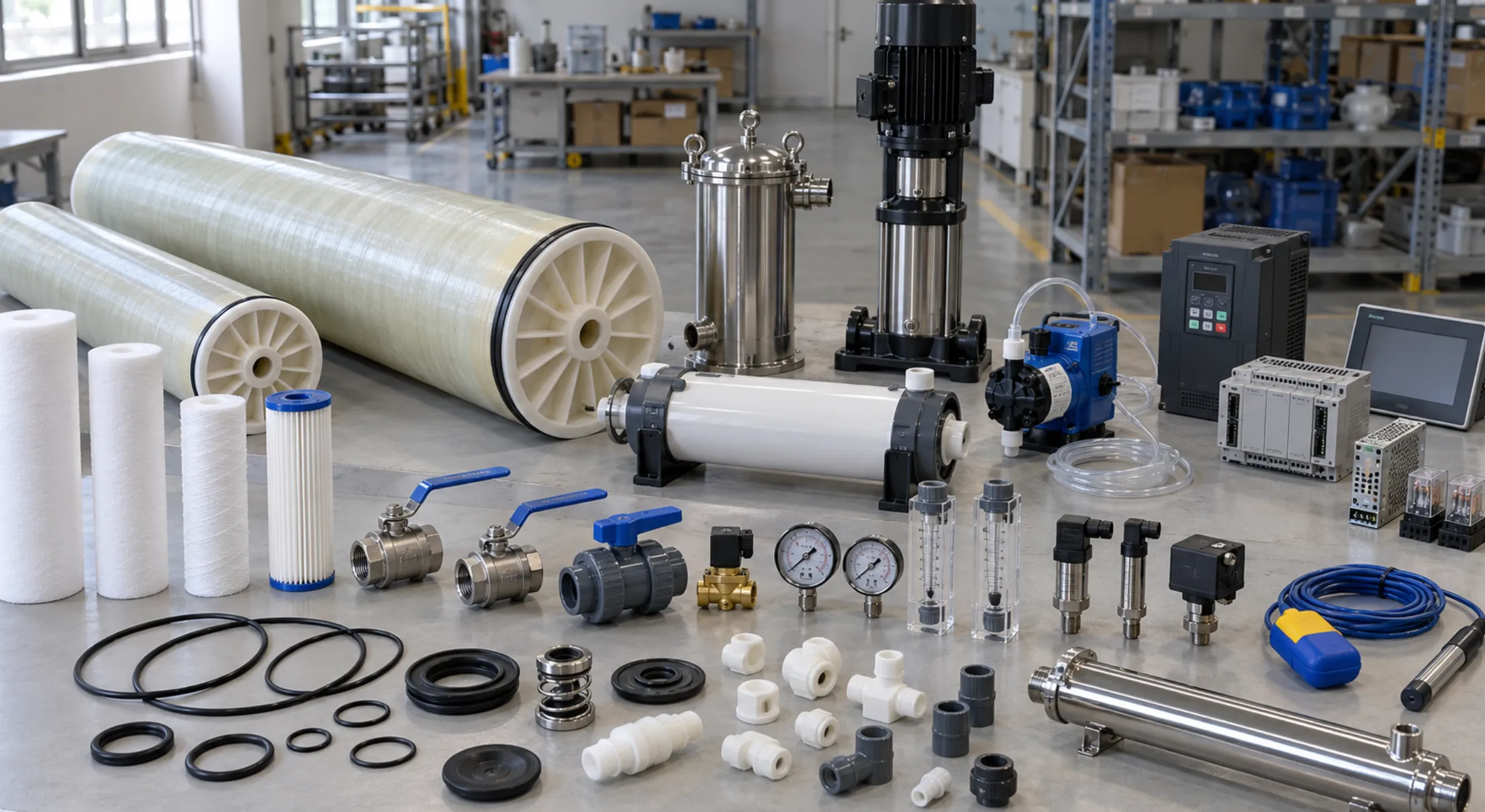
The right approach is to stock routine consumables, small components that can stop production, and selected critical parts with long replacement lead times. Quantities should reflect operating conditions, local availability and the amount of downtime your facility can accept.
1. Start with Downtime Risk, Not Equipment Capacity
Two RO plants with the same capacity may need different spare-parts packages.
A factory with nearby technical support and reliable local suppliers may keep a modest inventory. A remote facility dependent on imported parts may need complete replacement assemblies.
Before selecting spares, answer three questions:
-
What happens if this component fails? Does it stop one train, the whole plant or only a nonessential function?
-
How long will replacement take? Include sourcing, shipping, customs clearance and installation.
-
Can the site team repair it? A service kit is useful only when the necessary skills and tools are available.
Storage capacity and standby equipment also affect the decision. Two RO trains do not provide complete backup if they depend on one shared feed pump or chemical-dosing system.
For related planning, see One 20 m³/h RO Train or Two 10 m³/h Trains: Which Design Is Better?.
2. Which Spare Parts Should Be Included?
Use the following list as a starting point. The final package should match the equipment actually installed.
| Spare Part | Why It Matters | Purchasing Priority |
|---|---|---|
| Cartridge-filter elements | Require routine replacement to maintain suitable RO feed conditions | Include an initial operating stock |
| Filter-housing seals and O-rings | May become damaged or leak during servicing | Include matching replacement sets |
| Membrane interconnector O-rings, brine seals and vessel seal kits | Support membrane servicing and repair of specific sealing faults | Include manufacturer-approved parts |
| Dosing-pump service kits and tubing | Restore chemical delivery after wear or leakage | Include for each distinct pump and chemical duty |
| Selected fuses, relays and control power supplies | Small electrical failures can stop the entire system | Stock according to installed ratings and shutdown impact |
| Critical pressure switches or transmitters | Support equipment protection and automatic operation | Prioritize difficult-to-source models |
| Valve repair kits, solenoid coils or complete small valves | Restore isolation, flushing and flow-control functions | Select by failure consequence and repairability |
| Pump seals or complete spare pumps | Reduce interruption following pump failure | Decide according to downtime tolerance and site capability |
| RO membrane elements | Allow replacement of damaged or underperforming elements | Purchase selectively |
| VFD, PLC, HMI or I/O modules | May require long lead times and configuration work | Consider for critical or remote installations |
 Routine Consumables: Start with Filters and Seals
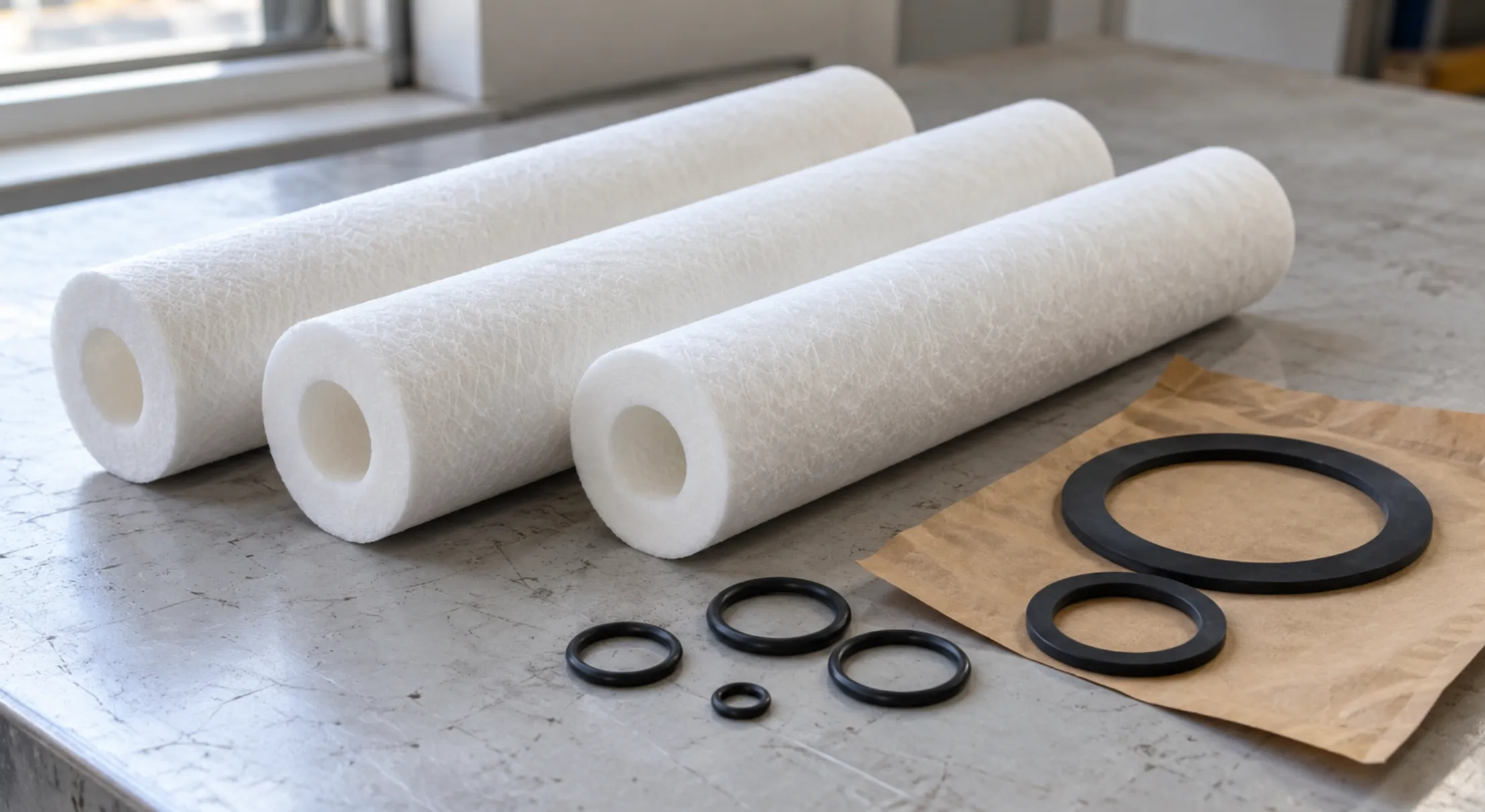
Cartridge filters are usually among the first items to include. Confirm the exact length, diameter, end connections, material and filtration rating, including whether the micron rating is nominal or absolute.
Do not assume cartridges with the same length are interchangeable.
Include the corresponding housing seals. A replacement filter is of limited use if the housing cannot be resealed after opening.
Replacement frequency should follow operating conditions, differential pressure and supplier guidance. Frequent blockage should trigger a review of pretreatment performance rather than simply increasing filter inventory.
Dosing Components: Match Each Chemical Duty
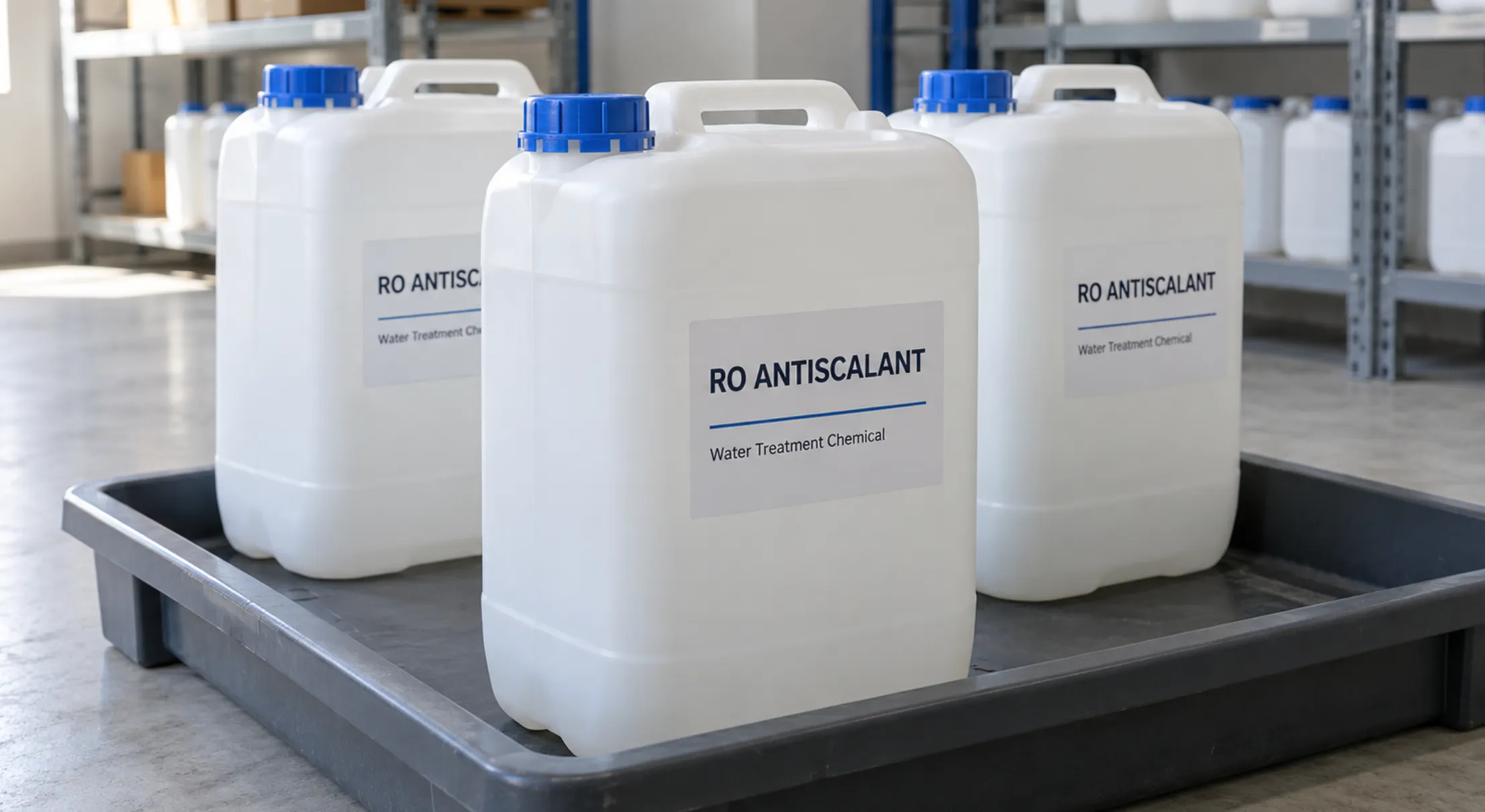
Where antiscalant, acid, alkali or dechlorination chemicals are used, dosing reliability is part of membrane protection.
Depending on the installed pump, useful spares may include diaphragms, suction and discharge valves, injection valves, seals and dosing tubing. Manufacturer service kits are model-specific; Grundfos, for example, lists dosing-head, valve and diaphragm kits for different pump configurations.
Match wetted materials to the actual chemical and concentration. Similar-looking tubing or seals may not be suitable for every dosing service.
For sites without pump-repair capability, a compatible complete spare dosing pump may restore service faster than a repair kit.
Instruments and Electrical Parts: Prioritize Shutdown-Critical Items
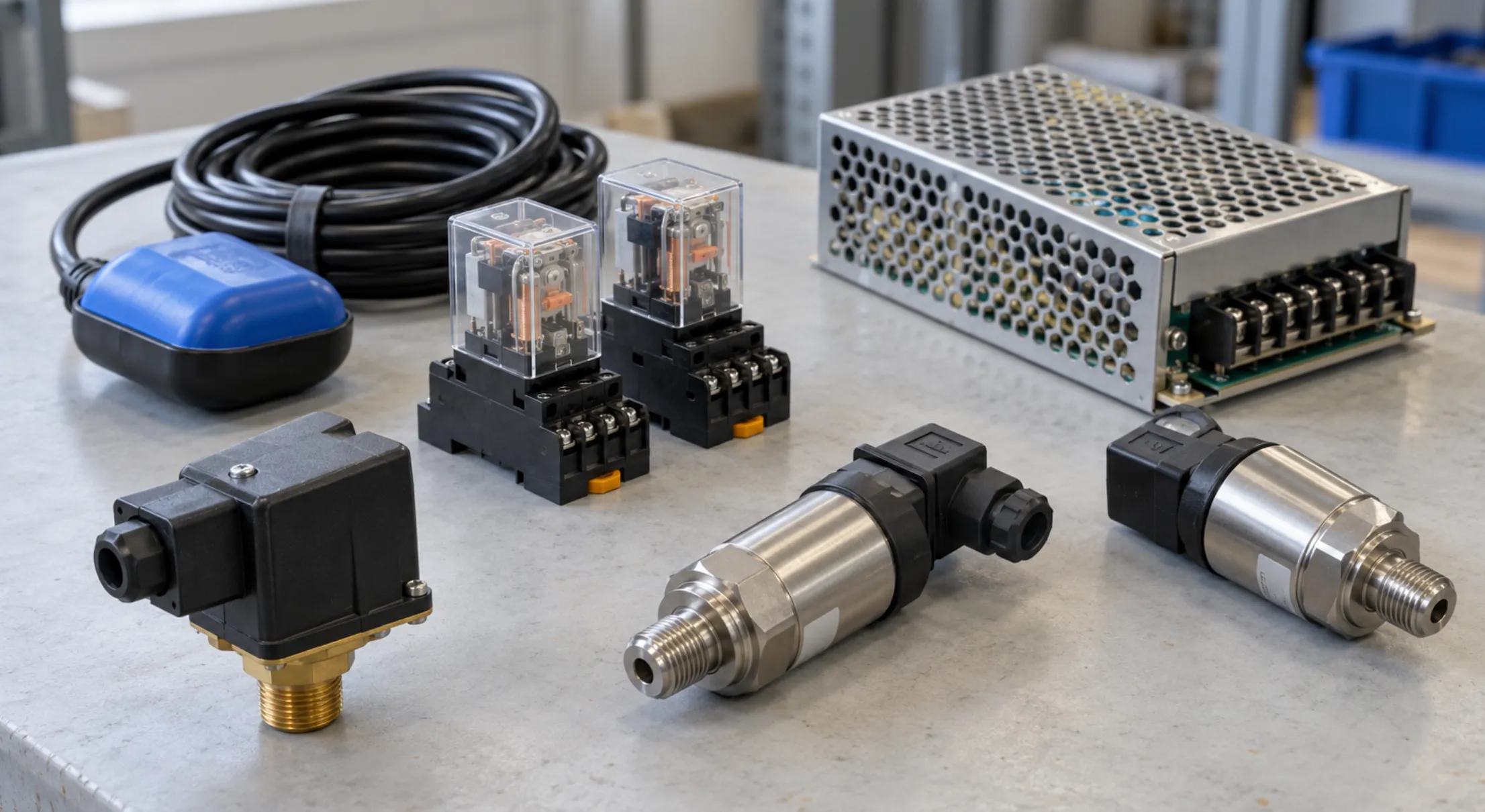
Use the electrical drawings and control sequence to identify components whose failure prevents safe operation.
These may include pressure switches, level switches, control power supplies, relays and selected transmitters. Conductivity probes and analyzers may also deserve local stock when water-quality monitoring is essential and replacement lead times are long.
For instruments, verify the measurement range, output signal, process connection and controller compatibility.
Calibration solutions and testing tools are maintenance supplies rather than spare parts, but they should be included in the maintenance plan where required. Protective interlocks should remain functional during troubleshooting and repair.
3. Should You Order Spare Membranes, Pumps and Controls?
These items require a separate decision because they tie up more capital and may need specific storage or configuration.
RO Membrane Elements
A complete spare membrane set is not automatically necessary for a new plant.
Consider a limited stock when membranes are difficult to source, delivery times are long or losing an element would seriously affect production. Confirm the exact model and performance characteristics: 4040 or 8040 describes a size category, not complete compatibility.
Spare membranes must also be stored correctly. DuPont distinguishes dry elements from wet, preserved elements and provides specific handling and storage guidance. Follow the instructions for the supplied membrane model and condition.
See 4040 vs 8040 RO Membranes: Which Size Is Right for Your System?.
Pumps and Mechanical Seals
Where qualified maintenance staff are available, a manufacturer-specified seal kit may be appropriate. Where repairs cannot be completed quickly, a complete replacement pump may be more practical.
Confirm the pump model, duty point, materials, motor voltage and frequency, connections and installation dimensions.
A stored spare pump still requires installation time. If the process cannot tolerate that interruption, assess an installed standby arrangement.
VFDs, PLCs and HMIs
A physically compatible replacement may not operate correctly without the original configuration.
If these components are included, request:
-
Exact hardware and firmware requirements.
-
VFD parameter backups.
-
PLC and HMI program backups, where included in the supply agreement.
-
Required licenses, access credentials and restoration instructions.
Read How VFD Control Improves RO Pump Efficiency and System Stability for related operating considerations.
4. How Many Spares Should You Order?
Avoid a universal “one-year spare-parts package” unless its quantities and assumptions are clearly listed.
For routine consumables, estimate:
Initial stock = Expected consumption before replenishment + Commissioning allowance + Safety stock
For example, if a housing uses eight cartridges and the agreed planning allowance covers three complete changes before the next delivery, the base requirement is 24 replacement cartridges, before any additional commissioning allowance or safety stock.
This is an inventory example, not a recommended replacement interval.
For critical components, quantity should reflect the number of identical installed units, failure consequences, supplier lead time and available redundancy.
The maintenance plan should also cover the CIP system’s own filters, pump and seals. See How to Size a CIP System for an Industrial RO Plant.
5. Confirm Compatibility and Documentation Before Shipment
Every spare should be traceable to the installed equipment. Ask for a spare-parts schedule containing:
| Required Information | Purpose |
|---|---|
| Equipment tag and location | Identifies where the part is used |
| Manufacturer, model and part number | Prevents ordering errors |
| Material, dimensions and electrical rating | Confirms compatibility |
| Quantity installed and quantity supplied | Makes inventory coverage clear |
| Storage requirements and shelf life, where applicable | Protects the part before use |
| Replacement instructions and required tools | Supports on-site maintenance |
Keep commissioning consumables separate from the operating spare stock. Clearly label packages and check delivered quantities against the approved list.
Cleaning chemicals, antiscalant and calibration solutions should be quoted separately because they have their own consumption rates, storage conditions and shipping requirements.
Request an Itemized Spare-Parts Package
When requesting an industrial RO quotation, ask the supplier to separate:
-
Commissioning consumables needed for startup.
-
Routine operating spares for the agreed replenishment period.
-
Critical emergency spares selected by downtime risk.
-
Optional major replacements, including pumps, membranes and controls.
This makes quotations easier to compare and shows exactly what support is available after installation.
Planning an industrial RO project? Share your raw-water analysis, required capacity, operating hours, installation location and acceptable downtime with Zhongnuo Water Treatment. These details help us recommend an equipment configuration and spare-parts package suited to your operating needs.
Ordering an industrial reverse osmosis system without a suitable spare-parts package can turn a minor component failure into an extended shutdown. A missing seal, dosing-pump valve or pressure switch may interrupt production while a replacement is sourced and shipped.
However, purchasing a spare for every component creates unnecessary cost and storage requirements.
The right approach is to stock routine consumables, small components that can stop production, and selected critical parts with long replacement lead times. Quantities should reflect operating conditions, local availability and the amount of downtime your facility can accept.
1. Start with Downtime Risk, Not Equipment Capacity
Two RO plants with the same capacity may need different spare-parts packages.
A factory with nearby technical support and reliable local suppliers may keep a modest inventory. A remote facility dependent on imported parts may need complete replacement assemblies.
Before selecting spares, answer three questions:
-
What happens if this component fails? Does it stop one train, the whole plant or only a nonessential function?
-
How long will replacement take? Include sourcing, shipping, customs clearance and installation.
-
Can the site team repair it? A service kit is useful only when the necessary skills and tools are available.
Storage capacity and standby equipment also affect the decision. Two RO trains do not provide complete backup if they depend on one shared feed pump or chemical-dosing system.
For related planning, see One 20 m³/h RO Train or Two 10 m³/h Trains: Which Design Is Better?.
2. Which Spare Parts Should Be Included?
Use the following list as a starting point. The final package should match the equipment actually installed.
| Spare Part | Why It Matters | Purchasing Priority |
|---|---|---|
| Cartridge-filter elements | Require routine replacement to maintain suitable RO feed conditions | Include an initial operating stock |
| Filter-housing seals and O-rings | May become damaged or leak during servicing | Include matching replacement sets |
| Membrane interconnector O-rings, brine seals and vessel seal kits | Support membrane servicing and repair of specific sealing faults | Include manufacturer-approved parts |
| Dosing-pump service kits and tubing | Restore chemical delivery after wear or leakage | Include for each distinct pump and chemical duty |
| Selected fuses, relays and control power supplies | Small electrical failures can stop the entire system | Stock according to installed ratings and shutdown impact |
| Critical pressure switches or transmitters | Support equipment protection and automatic operation | Prioritize difficult-to-source models |
| Valve repair kits, solenoid coils or complete small valves | Restore isolation, flushing and flow-control functions | Select by failure consequence and repairability |
| Pump seals or complete spare pumps | Reduce interruption following pump failure | Decide according to downtime tolerance and site capability |
| RO membrane elements | Allow replacement of damaged or underperforming elements | Purchase selectively |
| VFD, PLC, HMI or I/O modules | May require long lead times and configuration work | Consider for critical or remote installations |
Routine Consumables: Start with Filters and Seals
Cartridge filters are usually among the first items to include. Confirm the exact length, diameter, end connections, material and filtration rating, including whether the micron rating is nominal or absolute.
Do not assume cartridges with the same length are interchangeable.
Include the corresponding housing seals. A replacement filter is of limited use if the housing cannot be resealed after opening.
Replacement frequency should follow operating conditions, differential pressure and supplier guidance. Frequent blockage should trigger a review of pretreatment performance rather than simply increasing filter inventory.
Dosing Components: Match Each Chemical Duty
Where antiscalant, acid, alkali or dechlorination chemicals are used, dosing reliability is part of membrane protection.
Depending on the installed pump, useful spares may include diaphragms, suction and discharge valves, injection valves, seals and dosing tubing. Manufacturer service kits are model-specific; Grundfos, for example, lists dosing-head, valve and diaphragm kits for different pump configurations.
Match wetted materials to the actual chemical and concentration. Similar-looking tubing or seals may not be suitable for every dosing service.
For sites without pump-repair capability, a compatible complete spare dosing pump may restore service faster than a repair kit.
Instruments and Electrical Parts: Prioritize Shutdown-Critical Items
Use the electrical drawings and control sequence to identify components whose failure prevents safe operation.
These may include pressure switches, level switches, control power supplies, relays and selected transmitters. Conductivity probes and analyzers may also deserve local stock when water-quality monitoring is essential and replacement lead times are long.
For instruments, verify the measurement range, output signal, process connection and controller compatibility.
Calibration solutions and testing tools are maintenance supplies rather than spare parts, but they should be included in the maintenance plan where required. Protective interlocks should remain functional during troubleshooting and repair.
3. Should You Order Spare Membranes, Pumps and Controls?
These items require a separate decision because they tie up more capital and may need specific storage or configuration.
RO Membrane Elements
A complete spare membrane set is not automatically necessary for a new plant.
Consider a limited stock when membranes are difficult to source, delivery times are long or losing an element would seriously affect production. Confirm the exact model and performance characteristics: 4040 or 8040 describes a size category, not complete compatibility.
Spare membranes must also be stored correctly. DuPont distinguishes dry elements from wet, preserved elements and provides specific handling and storage guidance. Follow the instructions for the supplied membrane model and condition.
See 4040 vs 8040 RO Membranes: Which Size Is Right for Your System?.
Pumps and Mechanical Seals
Where qualified maintenance staff are available, a manufacturer-specified seal kit may be appropriate. Where repairs cannot be completed quickly, a complete replacement pump may be more practical.
Confirm the pump model, duty point, materials, motor voltage and frequency, connections and installation dimensions.
A stored spare pump still requires installation time. If the process cannot tolerate that interruption, assess an installed standby arrangement.
VFDs, PLCs and HMIs
A physically compatible replacement may not operate correctly without the original configuration.
If these components are included, request:
-
Exact hardware and firmware requirements.
-
VFD parameter backups.
-
PLC and HMI program backups, where included in the supply agreement.
-
Required licenses, access credentials and restoration instructions.
Read How VFD Control Improves RO Pump Efficiency and System Stability for related operating considerations.
4. How Many Spares Should You Order?
Avoid a universal “one-year spare-parts package” unless its quantities and assumptions are clearly listed.
For routine consumables, estimate:
Initial stock = Expected consumption before replenishment + Commissioning allowance + Safety stock
For example, if a housing uses eight cartridges and the agreed planning allowance covers three complete changes before the next delivery, the base requirement is 24 replacement cartridges, before any additional commissioning allowance or safety stock.
This is an inventory example, not a recommended replacement interval.
For critical components, quantity should reflect the number of identical installed units, failure consequences, supplier lead time and available redundancy.
The maintenance plan should also cover the CIP system’s own filters, pump and seals. See How to Size a CIP System for an Industrial RO Plant.
5. Confirm Compatibility and Documentation Before Shipment
Every spare should be traceable to the installed equipment. Ask for a spare-parts schedule containing:
| Required Information | Purpose |
|---|---|
| Equipment tag and location | Identifies where the part is used |
| Manufacturer, model and part number | Prevents ordering errors |
| Material, dimensions and electrical rating | Confirms compatibility |
| Quantity installed and quantity supplied | Makes inventory coverage clear |
| Storage requirements and shelf life, where applicable | Protects the part before use |
| Replacement instructions and required tools | Supports on-site maintenance |
Keep commissioning consumables separate from the operating spare stock. Clearly label packages and check delivered quantities against the approved list.
Cleaning chemicals, antiscalant and calibration solutions should be quoted separately because they have their own consumption rates, storage conditions and shipping requirements.
Request an Itemized Spare-Parts Package
When requesting an industrial RO quotation, ask the supplier to separate:
-
Commissioning consumables needed for startup.
-
Routine operating spares for the agreed replenishment period.
-
Critical emergency spares selected by downtime risk.
-
Optional major replacements, including pumps, membranes and controls.
This makes quotations easier to compare and shows exactly what support is available after installation.
Planning an industrial RO project? Share your raw-water analysis, required capacity, operating hours, installation location and acceptable downtime with Zhongnuo Water Treatment. These details help us recommend an equipment configuration and spare-parts package suited to your operating needs.
Previous: No more data
Get a Quote for Free
Submit this form and our sales representative will contact you soon.


ONLINE MESSAGE
Copyright © 2026 Zhongnuo Water Treatment Co., Ltd.