

SEARCH WHAT YOU WANT
EDI vs. Mixed Bed Resin: Which Ultrapure Water System Is Better?
Time:2026-04-21
Producing ultrapure water is essential for industries such as pharmaceuticals, semiconductors, electronics, power generation, laboratories, and food processing. Even trace amounts of dissolved ions can affect product quality, manufacturing efficiency, and regulatory compliance.
When designing an ultrapure water system, one of the most common questions engineers ask is:
Should we choose an EDI system or a Mixed Bed Resin system?
Both technologies remove dissolved ions and produce high-purity water, but they differ significantly in operating costs, maintenance requirements, environmental impact, and long-term performance.
This guide compares EDI and Mixed Bed Resin systems to help you choose the most suitable solution for your project.
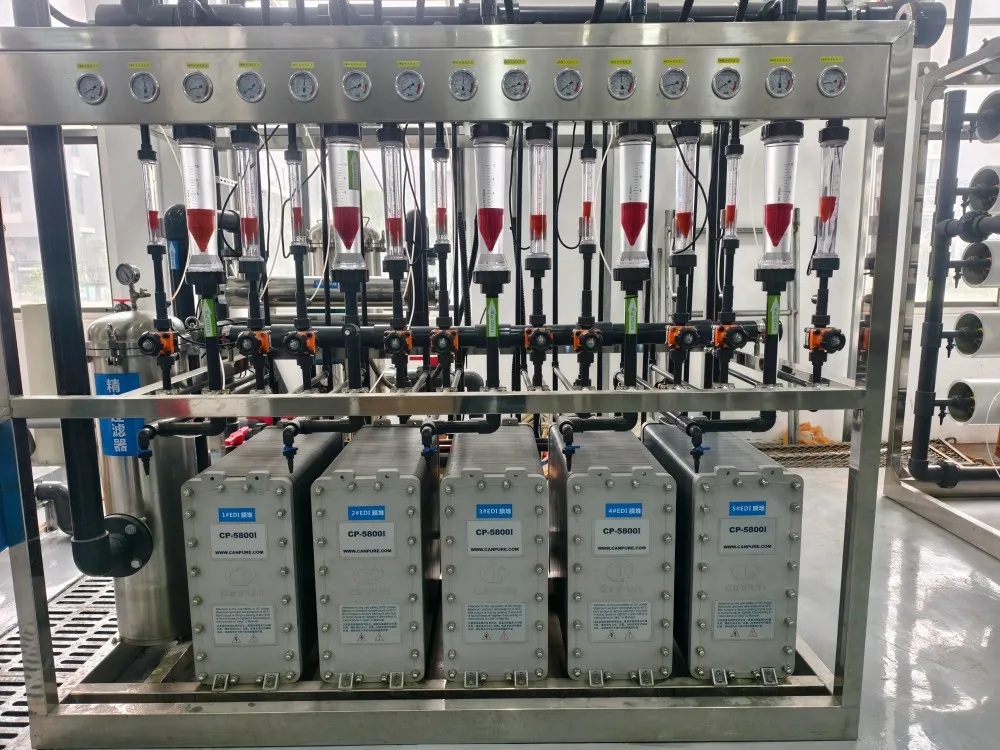
What Is an EDI Water System?
Electrodeionization (EDI) is an advanced water purification technology that combines ion exchange resins, ion-selective membranes, and direct current electricity to continuously remove dissolved ions.
Unlike traditional ion exchange systems, EDI regenerates its resins automatically using electricity, eliminating the need for chemical regeneration.
A typical EDI system consists of:
· Pretreatment system
· Reverse Osmosis (RO) system
· EDI module
· UV sterilization (optional)
· Final filtration (optional)
Because EDI requires high-quality feed water, it is almost always installed after a reverse osmosis system.
What Is a Mixed Bed Resin System?
A Mixed Bed Resin system contains a mixture of strong acid cation resin and strong base anion resin inside one vessel.
As water passes through the resin bed, dissolved minerals such as calcium, sodium, chloride, sulfate, and silica are exchanged for hydrogen and hydroxide ions, producing highly purified water.
However, once the resin becomes exhausted, it must be regenerated using chemicals such as hydrochloric acid (HCl) and sodium hydroxide (NaOH), or replaced entirely.
This regeneration process increases operating costs, creates chemical waste, and requires additional labor.
EDI vs. Mixed Bed Resin: Side-by-Side Comparison
|
Feature |
EDI System |
Mixed Bed Resin |
|
Water Quality |
Excellent and stable |
Excellent initially, gradually declines as resin exhausts |
|
Continuous Operation |
Yes |
No |
|
Chemical Regeneration |
Not required |
Required |
|
Operating Cost |
Low |
High |
|
Maintenance |
Minimal |
Frequent |
|
Environmental Impact |
Eco-friendly |
Chemical wastewater generated |
|
Automation |
High |
Medium |
|
Labor Requirement |
Low |
High |
|
Long-Term Cost |
Lower |
Higher |
|
Initial Investment |
Higher |
Lower |
Although EDI systems generally require a higher initial investment, they often deliver a lower total cost of ownership over the system's lifetime.
Water Quality Comparison
Both technologies are capable of producing ultrapure water.
Typical product water quality includes:
EDI System
· Resistivity up to 18 MΩ·cm
· Conductivity as low as 0.055 μS/cm
· Stable operation
· Continuous production
Mixed Bed Resin
· High initial purity
· Water quality gradually decreases as resin becomes exhausted
· Requires periodic regeneration
· Greater risk of inconsistent water quality
For industries requiring consistent ultrapure water 24 hours a day, EDI generally provides more reliable performance.
Operating Cost Comparison
Operating costs are often the deciding factor for industrial users.
EDI Operating Costs
Since EDI uses electricity instead of chemical regeneration, daily operating expenses are relatively low.
Typical costs include:
· Electricity
· RO membrane maintenance
· Routine filter replacement
No acid or alkali chemicals are required during normal operation.
Mixed Bed Resin Operating Costs
Mixed bed systems involve several recurring expenses:
· Acid regeneration chemicals
· Caustic soda regeneration chemicals
· Resin replacement
· Wastewater treatment
· Labor costs
· Equipment downtime
Over several years, these expenses can exceed the initial savings from purchasing a lower-cost system.
Maintenance Requirements
Maintenance is another major difference.
EDI System
Routine maintenance typically includes:
· Monitoring feed water quality
· Replacing pre-filters
· Inspecting the RO system
· Cleaning EDI modules when necessary
Because there is no chemical regeneration, maintenance is relatively simple.
Mixed Bed Resin
Maintenance tasks include:
· Regenerating exhausted resin
· Handling hazardous chemicals
· Monitoring regeneration quality
· Replacing damaged resin
· Cleaning resin vessels
These tasks increase labor requirements and system downtime.
Environmental Impact
Many manufacturers are adopting greener production processes.
An EDI system supports sustainability by:
· Eliminating acid and caustic regeneration
· Reducing hazardous wastewater
· Lowering chemical transportation and storage risks
· Minimizing environmental compliance costs
Mixed bed resin systems, on the other hand, generate chemical wastewater that must be treated before discharge.
Which Industries Prefer EDI?
EDI systems are commonly used in:
· Semiconductor manufacturing
· Pharmaceutical production
· Biotechnology
· Medical device manufacturing
· Power plant boiler feed water
· Electronics manufacturing
· Laboratories
· Cosmetic production
These industries require stable ultrapure water quality and uninterrupted operation.
When Is Mixed Bed Resin Still a Good Choice?
Despite the advantages of EDI, mixed bed resin remains suitable in certain situations:
· Small-capacity water systems
· Low-budget projects
· Backup polishing systems
· Facilities with intermittent operation
· Applications without continuous water demand
For these cases, the lower initial investment may still provide a practical solution.
How to Choose the Right Ultrapure Water System
Before selecting a system, consider the following questions:
· What is your raw water source?
· What water quality do you require?
· How many hours per day will the system operate?
· What is your daily water consumption?
· What is your maintenance budget?
· Are environmental regulations becoming stricter in your region?
· Will production capacity increase in the future?
Answering these questions helps determine whether EDI or mixed bed resin offers the best long-term value.
Conclusion
Both EDI and Mixed Bed Resin systems are capable of producing high-quality ultrapure water. However, their long-term performance and operating characteristics differ significantly.
If your facility requires continuous operation, stable water quality, low maintenance, and reduced environmental impact, an EDI system is generally the better long-term investment.
If your application involves a smaller water demand, limited operating hours, or a tight initial budget, a Mixed Bed Resin system may still be an effective choice.
Ultimately, the right solution depends on your feed water quality, production requirements, operating costs, and future expansion plans.
Why Choose Zhongnuo Water Treatment?
With over 20 years of experience in industrial water treatment, Zhongnuo Water Treatment provides customized ultrapure water solutions for customers worldwide.
Our engineering team can help you:
· Analyze your raw water quality
· Design a complete RO + EDI ultrapure water system
· Optimize operating costs
· Provide installation guidance and technical support
· Deliver reliable equipment for pharmaceutical, semiconductor, electronics, food, and industrial applications
Whether you are building a new factory or upgrading an existing water treatment system, we can recommend the most suitable solution for your specific needs.
Producing ultrapure water is essential for industries such as pharmaceuticals, semiconductors, electronics, power generation, laboratories, and food processing. Even trace amounts of dissolved ions can affect product quality, manufacturing efficiency, and regulatory compliance.
When designing an ultrapure water system, one of the most common questions engineers ask is:
Should we choose an EDI system or a Mixed Bed Resin system?
Both technologies remove dissolved ions and produce high-purity water, but they differ significantly in operating costs, maintenance requirements, environmental impact, and long-term performance.
This guide compares EDI and Mixed Bed Resin systems to help you choose the most suitable solution for your project.
What Is an EDI Water System?
Electrodeionization (EDI) is an advanced water purification technology that combines ion exchange resins, ion-selective membranes, and direct current electricity to continuously remove dissolved ions.
Unlike traditional ion exchange systems, EDI regenerates its resins automatically using electricity, eliminating the need for chemical regeneration.
A typical EDI system consists of:
· Pretreatment system
· Reverse Osmosis (RO) system
· EDI module
· UV sterilization (optional)
· Final filtration (optional)
Because EDI requires high-quality feed water, it is almost always installed after a reverse osmosis system.
What Is a Mixed Bed Resin System?
A Mixed Bed Resin system contains a mixture of strong acid cation resin and strong base anion resin inside one vessel.
As water passes through the resin bed, dissolved minerals such as calcium, sodium, chloride, sulfate, and silica are exchanged for hydrogen and hydroxide ions, producing highly purified water.
However, once the resin becomes exhausted, it must be regenerated using chemicals such as hydrochloric acid (HCl) and sodium hydroxide (NaOH), or replaced entirely.
This regeneration process increases operating costs, creates chemical waste, and requires additional labor.
EDI vs. Mixed Bed Resin: Side-by-Side Comparison
|
Feature |
EDI System |
Mixed Bed Resin |
|
Water Quality |
Excellent and stable |
Excellent initially, gradually declines as resin exhausts |
|
Continuous Operation |
Yes |
No |
|
Chemical Regeneration |
Not required |
Required |
|
Operating Cost |
Low |
High |
|
Maintenance |
Minimal |
Frequent |
|
Environmental Impact |
Eco-friendly |
Chemical wastewater generated |
|
Automation |
High |
Medium |
|
Labor Requirement |
Low |
High |
|
Long-Term Cost |
Lower |
Higher |
|
Initial Investment |
Higher |
Lower |
Although EDI systems generally require a higher initial investment, they often deliver a lower total cost of ownership over the system's lifetime.
Water Quality Comparison
Both technologies are capable of producing ultrapure water.
Typical product water quality includes:
EDI System
· Resistivity up to 18 MΩ·cm
· Conductivity as low as 0.055 μS/cm
· Stable operation
· Continuous production
Mixed Bed Resin
· High initial purity
· Water quality gradually decreases as resin becomes exhausted
· Requires periodic regeneration
· Greater risk of inconsistent water quality
For industries requiring consistent ultrapure water 24 hours a day, EDI generally provides more reliable performance.
Operating Cost Comparison
Operating costs are often the deciding factor for industrial users.
EDI Operating Costs
Since EDI uses electricity instead of chemical regeneration, daily operating expenses are relatively low.
Typical costs include:
· Electricity
· RO membrane maintenance
· Routine filter replacement
No acid or alkali chemicals are required during normal operation.
Mixed Bed Resin Operating Costs
Mixed bed systems involve several recurring expenses:
· Acid regeneration chemicals
· Caustic soda regeneration chemicals
· Resin replacement
· Wastewater treatment
· Labor costs
· Equipment downtime
Over several years, these expenses can exceed the initial savings from purchasing a lower-cost system.
Maintenance Requirements
Maintenance is another major difference.
EDI System
Routine maintenance typically includes:
· Monitoring feed water quality
· Replacing pre-filters
· Inspecting the RO system
· Cleaning EDI modules when necessary
Because there is no chemical regeneration, maintenance is relatively simple.
Mixed Bed Resin
Maintenance tasks include:
· Regenerating exhausted resin
· Handling hazardous chemicals
· Monitoring regeneration quality
· Replacing damaged resin
· Cleaning resin vessels
These tasks increase labor requirements and system downtime.
Environmental Impact
Many manufacturers are adopting greener production processes.
An EDI system supports sustainability by:
· Eliminating acid and caustic regeneration
· Reducing hazardous wastewater
· Lowering chemical transportation and storage risks
· Minimizing environmental compliance costs
Mixed bed resin systems, on the other hand, generate chemical wastewater that must be treated before discharge.
Which Industries Prefer EDI?
EDI systems are commonly used in:
· Semiconductor manufacturing
· Pharmaceutical production
· Biotechnology
· Medical device manufacturing
· Power plant boiler feed water
· Electronics manufacturing
· Laboratories
· Cosmetic production
These industries require stable ultrapure water quality and uninterrupted operation.
When Is Mixed Bed Resin Still a Good Choice?
Despite the advantages of EDI, mixed bed resin remains suitable in certain situations:
· Small-capacity water systems
· Low-budget projects
· Backup polishing systems
· Facilities with intermittent operation
· Applications without continuous water demand
For these cases, the lower initial investment may still provide a practical solution.
How to Choose the Right Ultrapure Water System
Before selecting a system, consider the following questions:
· What is your raw water source?
· What water quality do you require?
· How many hours per day will the system operate?
· What is your daily water consumption?
· What is your maintenance budget?
· Are environmental regulations becoming stricter in your region?
· Will production capacity increase in the future?
Answering these questions helps determine whether EDI or mixed bed resin offers the best long-term value.
Conclusion
Both EDI and Mixed Bed Resin systems are capable of producing high-quality ultrapure water. However, their long-term performance and operating characteristics differ significantly.
If your facility requires continuous operation, stable water quality, low maintenance, and reduced environmental impact, an EDI system is generally the better long-term investment.
If your application involves a smaller water demand, limited operating hours, or a tight initial budget, a Mixed Bed Resin system may still be an effective choice.
Ultimately, the right solution depends on your feed water quality, production requirements, operating costs, and future expansion plans.
Why Choose Zhongnuo Water Treatment?
With over 20 years of experience in industrial water treatment, Zhongnuo Water Treatment provides customized ultrapure water solutions for customers worldwide.
Our engineering team can help you:
· Analyze your raw water quality
· Design a complete RO + EDI ultrapure water system
· Optimize operating costs
· Provide installation guidance and technical support
· Deliver reliable equipment for pharmaceutical, semiconductor, electronics, food, and industrial applications
Whether you are building a new factory or upgrading an existing water treatment system, we can recommend the most suitable solution for your specific needs.
Get a Quote for Free
Submit this form and our sales representative will contact you soon.


ONLINE MESSAGE
Copyright © 2026 Zhongnuo Water Treatment Co., Ltd.