

SEARCH WHAT YOU WANT
RO System Recovery Rate Explained: How Does It Affect Water Treatment Performance?
Time:2026-07-28
Introduction
In an industrial reverse osmosis (RO) water treatment system, efficiency is not only determined by water quality and production capacity. Another important factor that directly affects system performance, operating costs, and water consumption is RO system recovery rate.
The recovery rate determines how much purified water can be produced from the total amount of feed water entering the RO system.
For factories, mining projects, seawater desalination plants, and industrial water treatment applications, understanding reverse osmosis recovery rate is essential for designing an efficient and economical water purification solution.
A properly optimized RO recovery rate can help companies:
- Reduce raw water consumption
- Lower wastewater discharge
- Improve operational efficiency
- Extend RO membrane lifespan
- Reduce overall water treatment costs
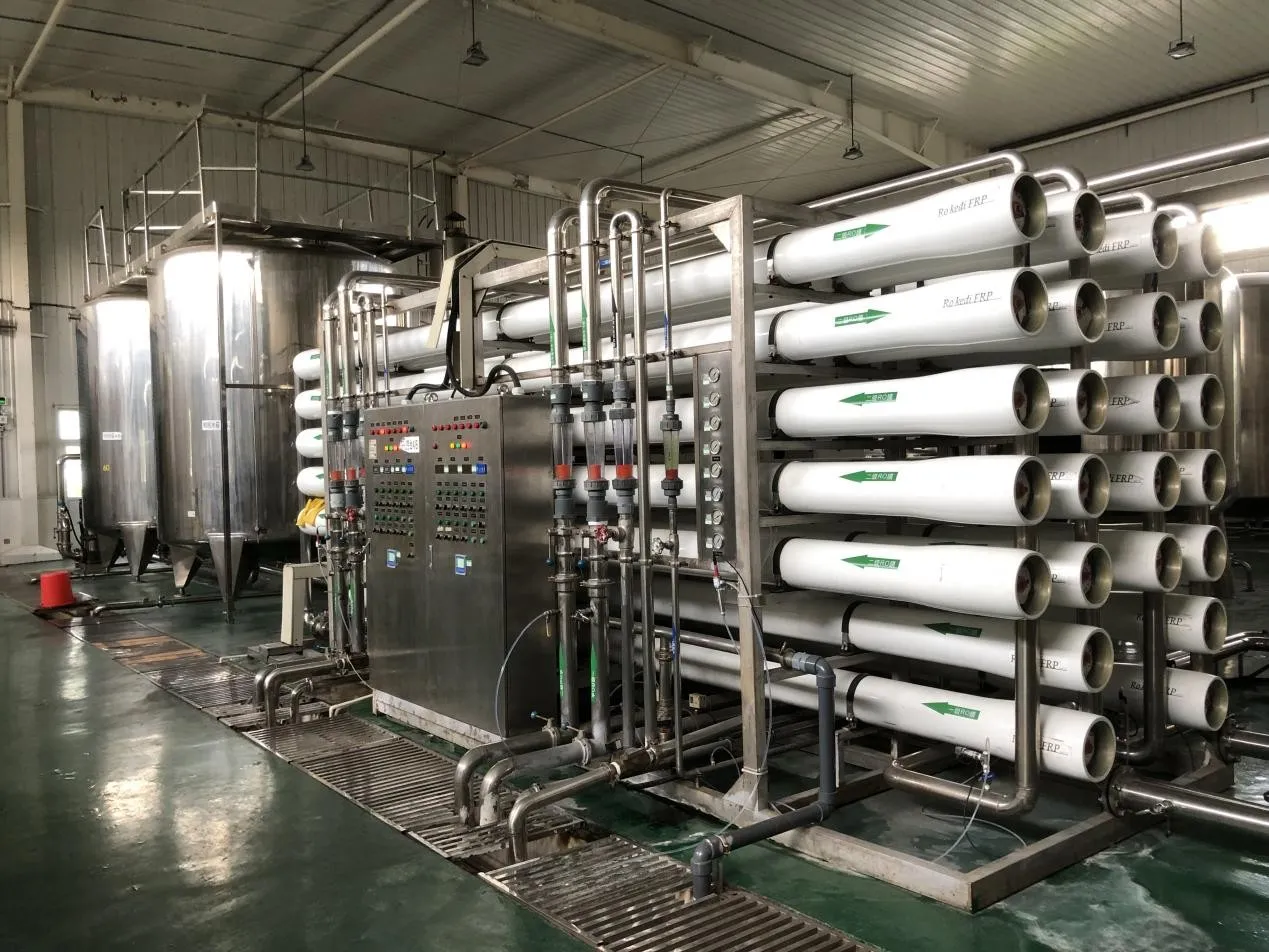
What Is RO System Recovery Rate?
Definition of Reverse Osmosis Recovery Rate
The RO system recovery rate refers to the percentage of feed water converted into purified product water after passing through the reverse osmosis membrane.
It is calculated using the following formula:
RO Recovery Rate (%) = Product Water Flow ÷ Feed Water Flow × 100%
For example:
If an RO system receives:
- Feed water flow: 10 m³/h
- Product water flow: 7 m³/h
The recovery rate is:
70%
This means:
- 70% becomes purified water
- 30% becomes concentrated wastewater (reject water)
Why Is RO Recovery Rate Important?
The recovery rate directly affects the performance and economics of an RO system.
1. Reduces Raw Water Consumption
A higher recovery rate means more product water can be produced from the same amount of feed water.
Example:
A system operating at:
- 50% recovery requires 20 m³/h feed water to produce 10 m³/h pure water
- 75% recovery requires approximately 13.3 m³/h feed water to produce 10 m³/h pure water
For areas with limited water resources, improving recovery rate can significantly reduce water waste.
2. Influences Operating Costs
Water treatment costs include:
- Raw water cost
- Electricity consumption
- Chemical consumption
- Wastewater treatment cost
- Maintenance expenses
A higher recovery rate can reduce:
- Raw water pumping costs
- Wastewater discharge volume
- Chemical treatment requirements
However, increasing recovery rate without proper design may also increase membrane fouling risks.
Therefore, the optimal recovery rate should balance:
- Water savings
- Energy consumption
- Membrane protection
Factors Affecting RO System Recovery Rate
The recovery rate of an industrial RO system depends on multiple factors.
1. Raw Water Quality
The quality of feed water is one of the most important factors affecting recovery rate.
Parameters include:
- Total dissolved solids (TDS)
- Conductivity
- Hardness
- Silica
- Iron
- Manganese
- Turbidity
- Organic contaminants
Water with high mineral content creates a higher risk of:
- Scaling
- Membrane fouling
- Reduced system performance
For example:
A seawater RO system usually operates at a lower recovery rate than a freshwater RO system because seawater contains much higher salt concentrations.
2. RO Membrane Type
Different RO membranes have different operating limitations.
Factors include:
- Salt rejection rate
- Operating pressure
- Flow characteristics
- Fouling resistance
Industrial RO membranes must be selected according to:
- Water source
- Required water quality
- Recovery target
- Operating conditions
3. Pretreatment System Design
A good pretreatment system is essential for achieving stable recovery rates.
Common RO pretreatment includes:
Multimedia Filter
Removes:
- Suspended solids
- Sand
- Turbidity
Activated Carbon Filter
Reduces:
- Chlorine
- Organic compounds
Water Softener
Controls:
- Calcium
- Magnesium hardness
Ultrafiltration System
Removes:
- Colloids
- Microorganisms
- Fine particles
Effective pretreatment reduces membrane fouling and allows the RO system to operate at a higher recovery rate.
4. Operating Pressure
The pressure applied by the high-pressure pump affects RO performance.
Higher pressure can:
- Increase water production
- Improve recovery rate
However, excessive pressure may cause:
- Higher energy consumption
- Faster membrane degradation
- Increased operating costs
The pressure should be optimized based on:
- Feed water salinity
- Temperature
- Membrane specifications
Typical RO System Recovery Rates
Different water sources require different recovery rates.
| Water Source | Typical Recovery Rate |
|---|---|
| Municipal water | 70%–85% |
| Fresh groundwater | 75%–90% |
| Brackish water | 60%–85% |
| Industrial wastewater reuse | 50%–85% |
| Seawater desalination | 35%–55% |
These values are general references. The actual recovery rate depends on:
- Water analysis
- Membrane configuration
- Pretreatment design
- Required water quality
How to Improve RO System Recovery Rate?
1. Optimize Pretreatment Performance
Poor pretreatment is one of the main reasons recovery rates cannot be increased.
Solutions:
- Improve filtration efficiency
- Control hardness
- Remove suspended solids
- Maintain proper chemical dosing
2. Use Proper Antiscalant Dosing
Antiscalant chemicals help prevent mineral deposits on RO membranes.
They reduce:
- Calcium carbonate scaling
- Sulfate scaling
- Silica scaling
Proper dosing allows the system to operate at higher recovery rates.
3. Regular RO Membrane Cleaning
Membrane fouling reduces:
- Water production
- Recovery efficiency
- System stability
Common cleaning methods include:
- Acid cleaning
- Alkaline cleaning
- Specialized chemical cleaning
Cleaning frequency depends on:
- Feed water quality
- Pressure changes
- Flow reduction
- Conductivity increase
4. Use Multiple RO Stages
For applications requiring higher recovery rates, engineers may design:
- Two-stage RO systems
- Double-pass RO systems
- Concentrate recycling systems
These configurations can improve water utilization while maintaining product water quality.
What Happens If RO Recovery Rate Is Too High?
Although a high recovery rate reduces water waste, excessive recovery can create problems.
1. Increased Scaling Risk
When more water is removed as product water, dissolved minerals become more concentrated in the reject stream.
This increases the risk of:
- Calcium scaling
- Silica deposits
- Membrane blockage
2. Reduced Membrane Lifespan
High concentration conditions may cause:
- Higher osmotic pressure
- Lower water flux
- Faster membrane fouling
This can increase replacement frequency.
3. Higher Maintenance Costs
An improperly optimized recovery rate may lead to:
- More frequent cleaning
- Increased downtime
- Higher chemical consumption
Therefore, the highest possible recovery rate is not always the best solution.
The goal is to achieve the optimal recovery rate according to project conditions.
RO Recovery Rate in Different Applications
Food and Beverage Industry
Food and beverage factories usually require stable water quality and high reliability.
RO systems are commonly used for:
- Process water
- Ingredient water
- Cleaning water
- Boiler feed
Recovery rate optimization helps reduce water consumption and production costs.
Mining Industry
Mining sites often operate in remote areas where water resources are limited.
RO recovery optimization helps:
- Reduce freshwater dependency
- Improve water reuse
- Support continuous production
Pharmaceutical Industry
Pharmaceutical facilities require highly controlled water quality.
RO systems are often combined with:
- EDI systems
- UV sterilization
- Ultrafiltration
Recovery rate must be balanced with strict quality requirements.
Seawater Desalination
Seawater RO systems have lower recovery rates due to high salinity.
Engineers must carefully balance:
- Energy consumption
- Membrane protection
- Freshwater production
How Zhongnuo Designs Efficient RO Systems
As a professional industrial water treatment equipment manufacturer, Zhongnuo Water Treatment provides customized RO solutions according to:
- Raw water analysis
- Required capacity
- Recovery requirements
- Final water application
- Local operating conditions
Our RO systems include:
- Industrial RO systems
- Brackish water desalination systems
- Seawater desalination systems
- Containerized RO systems
- RO + EDI ultrapure water systems
Each system is engineered to achieve reliable performance, stable water quality, and optimized operating costs.
Frequently Asked Questions (FAQ)
What is a good recovery rate for an RO system?
A typical industrial RO recovery rate ranges from 60% to 85%, depending on water quality and system design.
Does a higher RO recovery rate mean better performance?
Not always. A higher recovery rate reduces water waste but may increase scaling and membrane fouling risks.
How can I increase my RO system recovery rate?
Improving pretreatment, optimizing chemical dosing, maintaining membranes, and adjusting system design can help increase recovery.
What recovery rate can seawater RO systems achieve?
Most seawater RO systems operate around 35%–55% recovery due to high salt concentration.
Why does RO recovery rate decrease over time?
Recovery may decrease due to:
- Membrane fouling
- Scaling
- Incorrect operation
- Poor pretreatment performance
Conclusion
The RO system recovery rate is a key parameter that determines water treatment efficiency, operating cost, and system reliability.
A properly designed recovery rate helps industrial users:
- Save water resources
- Reduce operating expenses
- Protect RO membranes
- Improve overall system performance
However, maximizing recovery is not always the best strategy. The ideal recovery rate should be selected based on raw water characteristics, application requirements, and long-term operating conditions.
By combining proper pretreatment, membrane selection, and system optimization, companies can achieve reliable and efficient reverse osmosis water treatment performance.
Zhongnuo Water Treatment provides customized industrial RO systems designed for different industries and water sources. Contact us for professional RO system design and technical solutions.
Introduction
In an industrial reverse osmosis (RO) water treatment system, efficiency is not only determined by water quality and production capacity. Another important factor that directly affects system performance, operating costs, and water consumption is RO system recovery rate.
The recovery rate determines how much purified water can be produced from the total amount of feed water entering the RO system.
For factories, mining projects, seawater desalination plants, and industrial water treatment applications, understanding reverse osmosis recovery rate is essential for designing an efficient and economical water purification solution.
A properly optimized RO recovery rate can help companies:
- Reduce raw water consumption
- Lower wastewater discharge
- Improve operational efficiency
- Extend RO membrane lifespan
- Reduce overall water treatment costs
What Is RO System Recovery Rate?
Definition of Reverse Osmosis Recovery Rate
The RO system recovery rate refers to the percentage of feed water converted into purified product water after passing through the reverse osmosis membrane.
It is calculated using the following formula:
RO Recovery Rate (%) = Product Water Flow ÷ Feed Water Flow × 100%
For example:
If an RO system receives:
- Feed water flow: 10 m³/h
- Product water flow: 7 m³/h
The recovery rate is:
70%
This means:
- 70% becomes purified water
- 30% becomes concentrated wastewater (reject water)
Why Is RO Recovery Rate Important?
The recovery rate directly affects the performance and economics of an RO system.
1. Reduces Raw Water Consumption
A higher recovery rate means more product water can be produced from the same amount of feed water.
Example:
A system operating at:
- 50% recovery requires 20 m³/h feed water to produce 10 m³/h pure water
- 75% recovery requires approximately 13.3 m³/h feed water to produce 10 m³/h pure water
For areas with limited water resources, improving recovery rate can significantly reduce water waste.
2. Influences Operating Costs
Water treatment costs include:
- Raw water cost
- Electricity consumption
- Chemical consumption
- Wastewater treatment cost
- Maintenance expenses
A higher recovery rate can reduce:
- Raw water pumping costs
- Wastewater discharge volume
- Chemical treatment requirements
However, increasing recovery rate without proper design may also increase membrane fouling risks.
Therefore, the optimal recovery rate should balance:
- Water savings
- Energy consumption
- Membrane protection
Factors Affecting RO System Recovery Rate
The recovery rate of an industrial RO system depends on multiple factors.
1. Raw Water Quality
The quality of feed water is one of the most important factors affecting recovery rate.
Parameters include:
- Total dissolved solids (TDS)
- Conductivity
- Hardness
- Silica
- Iron
- Manganese
- Turbidity
- Organic contaminants
Water with high mineral content creates a higher risk of:
- Scaling
- Membrane fouling
- Reduced system performance
For example:
A seawater RO system usually operates at a lower recovery rate than a freshwater RO system because seawater contains much higher salt concentrations.
2. RO Membrane Type
Different RO membranes have different operating limitations.
Factors include:
- Salt rejection rate
- Operating pressure
- Flow characteristics
- Fouling resistance
Industrial RO membranes must be selected according to:
- Water source
- Required water quality
- Recovery target
- Operating conditions
3. Pretreatment System Design
A good pretreatment system is essential for achieving stable recovery rates.
Common RO pretreatment includes:
Multimedia Filter
Removes:
- Suspended solids
- Sand
- Turbidity
Activated Carbon Filter
Reduces:
- Chlorine
- Organic compounds
Water Softener
Controls:
- Calcium
- Magnesium hardness
Ultrafiltration System
Removes:
- Colloids
- Microorganisms
- Fine particles
Effective pretreatment reduces membrane fouling and allows the RO system to operate at a higher recovery rate.
4. Operating Pressure
The pressure applied by the high-pressure pump affects RO performance.
Higher pressure can:
- Increase water production
- Improve recovery rate
However, excessive pressure may cause:
- Higher energy consumption
- Faster membrane degradation
- Increased operating costs
The pressure should be optimized based on:
- Feed water salinity
- Temperature
- Membrane specifications
Typical RO System Recovery Rates
Different water sources require different recovery rates.
| Water Source | Typical Recovery Rate |
|---|---|
| Municipal water | 70%–85% |
| Fresh groundwater | 75%–90% |
| Brackish water | 60%–85% |
| Industrial wastewater reuse | 50%–85% |
| Seawater desalination | 35%–55% |
These values are general references. The actual recovery rate depends on:
- Water analysis
- Membrane configuration
- Pretreatment design
- Required water quality
How to Improve RO System Recovery Rate?
1. Optimize Pretreatment Performance
Poor pretreatment is one of the main reasons recovery rates cannot be increased.
Solutions:
- Improve filtration efficiency
- Control hardness
- Remove suspended solids
- Maintain proper chemical dosing
2. Use Proper Antiscalant Dosing
Antiscalant chemicals help prevent mineral deposits on RO membranes.
They reduce:
- Calcium carbonate scaling
- Sulfate scaling
- Silica scaling
Proper dosing allows the system to operate at higher recovery rates.
3. Regular RO Membrane Cleaning
Membrane fouling reduces:
- Water production
- Recovery efficiency
- System stability
Common cleaning methods include:
- Acid cleaning
- Alkaline cleaning
- Specialized chemical cleaning
Cleaning frequency depends on:
- Feed water quality
- Pressure changes
- Flow reduction
- Conductivity increase
4. Use Multiple RO Stages
For applications requiring higher recovery rates, engineers may design:
- Two-stage RO systems
- Double-pass RO systems
- Concentrate recycling systems
These configurations can improve water utilization while maintaining product water quality.
What Happens If RO Recovery Rate Is Too High?
Although a high recovery rate reduces water waste, excessive recovery can create problems.
1. Increased Scaling Risk
When more water is removed as product water, dissolved minerals become more concentrated in the reject stream.
This increases the risk of:
- Calcium scaling
- Silica deposits
- Membrane blockage
2. Reduced Membrane Lifespan
High concentration conditions may cause:
- Higher osmotic pressure
- Lower water flux
- Faster membrane fouling
This can increase replacement frequency.
3. Higher Maintenance Costs
An improperly optimized recovery rate may lead to:
- More frequent cleaning
- Increased downtime
- Higher chemical consumption
Therefore, the highest possible recovery rate is not always the best solution.
The goal is to achieve the optimal recovery rate according to project conditions.
RO Recovery Rate in Different Applications
Food and Beverage Industry
Food and beverage factories usually require stable water quality and high reliability.
RO systems are commonly used for:
- Process water
- Ingredient water
- Cleaning water
- Boiler feed
Recovery rate optimization helps reduce water consumption and production costs.
Mining Industry
Mining sites often operate in remote areas where water resources are limited.
RO recovery optimization helps:
- Reduce freshwater dependency
- Improve water reuse
- Support continuous production
Pharmaceutical Industry
Pharmaceutical facilities require highly controlled water quality.
RO systems are often combined with:
- EDI systems
- UV sterilization
- Ultrafiltration
Recovery rate must be balanced with strict quality requirements.
Seawater Desalination
Seawater RO systems have lower recovery rates due to high salinity.
Engineers must carefully balance:
- Energy consumption
- Membrane protection
- Freshwater production
How Zhongnuo Designs Efficient RO Systems
As a professional industrial water treatment equipment manufacturer, Zhongnuo Water Treatment provides customized RO solutions according to:
- Raw water analysis
- Required capacity
- Recovery requirements
- Final water application
- Local operating conditions
Our RO systems include:
- Industrial RO systems
- Brackish water desalination systems
- Seawater desalination systems
- Containerized RO systems
- RO + EDI ultrapure water systems
Each system is engineered to achieve reliable performance, stable water quality, and optimized operating costs.
Frequently Asked Questions (FAQ)
What is a good recovery rate for an RO system?
A typical industrial RO recovery rate ranges from 60% to 85%, depending on water quality and system design.
Does a higher RO recovery rate mean better performance?
Not always. A higher recovery rate reduces water waste but may increase scaling and membrane fouling risks.
How can I increase my RO system recovery rate?
Improving pretreatment, optimizing chemical dosing, maintaining membranes, and adjusting system design can help increase recovery.
What recovery rate can seawater RO systems achieve?
Most seawater RO systems operate around 35%–55% recovery due to high salt concentration.
Why does RO recovery rate decrease over time?
Recovery may decrease due to:
- Membrane fouling
- Scaling
- Incorrect operation
- Poor pretreatment performance
Conclusion
The RO system recovery rate is a key parameter that determines water treatment efficiency, operating cost, and system reliability.
A properly designed recovery rate helps industrial users:
- Save water resources
- Reduce operating expenses
- Protect RO membranes
- Improve overall system performance
However, maximizing recovery is not always the best strategy. The ideal recovery rate should be selected based on raw water characteristics, application requirements, and long-term operating conditions.
By combining proper pretreatment, membrane selection, and system optimization, companies can achieve reliable and efficient reverse osmosis water treatment performance.
Zhongnuo Water Treatment provides customized industrial RO systems designed for different industries and water sources. Contact us for professional RO system design and technical solutions.
Get a Quote for Free
Submit this form and our sales representative will contact you soon.


ONLINE MESSAGE
Copyright © 2026 Zhongnuo Water Treatment Co., Ltd.