

SEARCH WHAT YOU WANT
Smart Water Treatment Systems: Automation and Remote Monitoring Explained
Time:2026-07-29
Introduction
With increasing industrial water demand and growing challenges in water resource management, companies are seeking smarter and more efficient water treatment solutions.
Traditional water treatment systems usually depend on manual operation and regular onsite inspections. However, for large-scale industrial facilities and remote projects, manual management can lead to:
- Higher labor costs
- Delayed fault detection
- Increased maintenance expenses
- Unstable water quality
A Smart Water Treatment System combines advanced automation technology, sensors, digital control systems, and remote monitoring platforms to improve the reliability and efficiency of modern water purification processes.
Today, intelligent water treatment solutions are widely used in:
- Industrial RO water treatment systems
- Ultrafiltration systems
- EDI ultrapure water systems
- Seawater desalination plants
- Mining water treatment projects
- Containerized water treatment systems
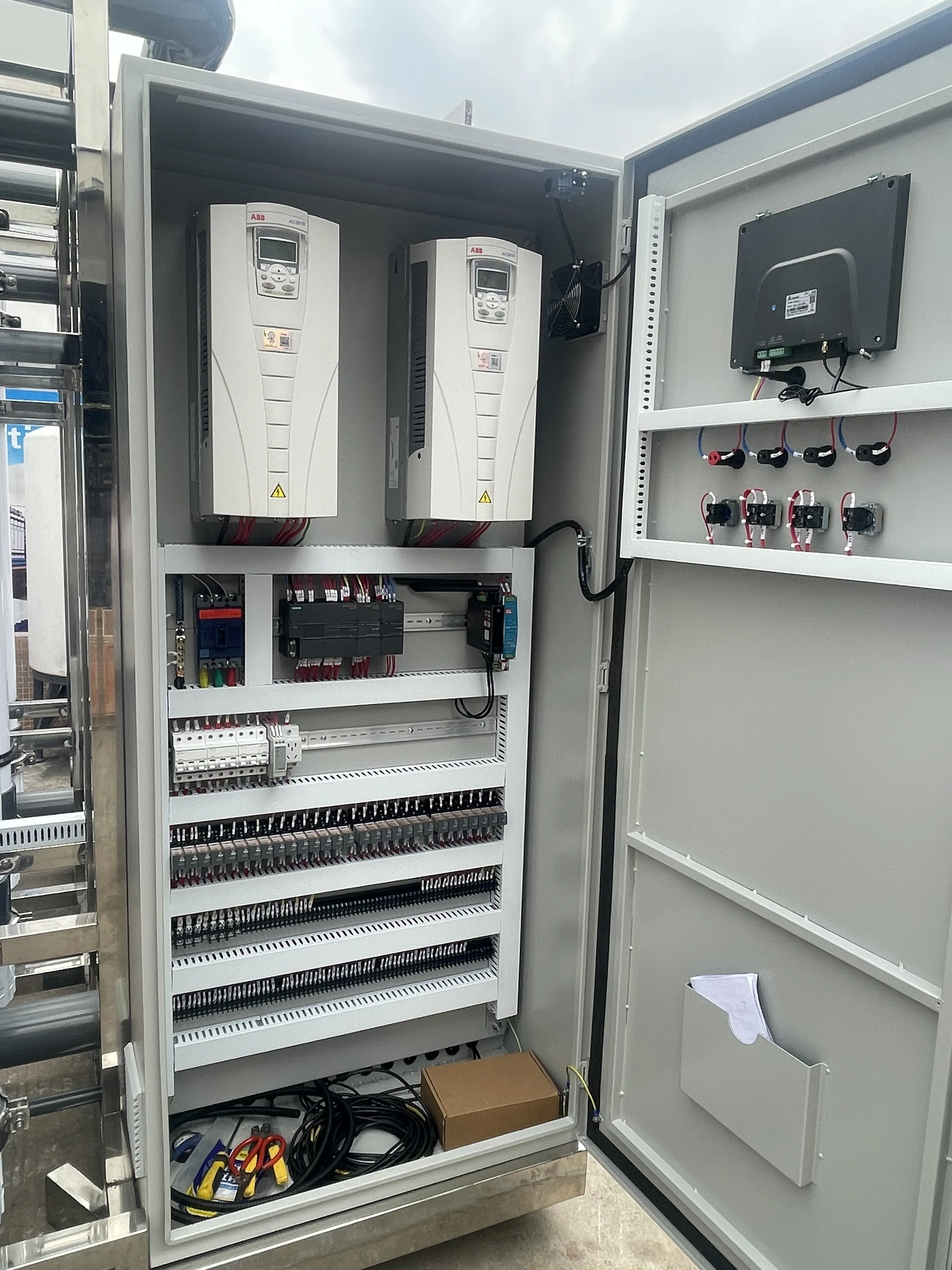
Table of Contents
- What Is a Smart Water Treatment System?
- Why Do Industries Need Smart Water Treatment Solutions?
- How Does Automation Work in Water Treatment Systems?
- What Is Remote Monitoring in Water Treatment?
- Key Components of Smart Water Treatment Systems
- Applications in Different Industries
- Benefits of Intelligent Water Treatment Systems
- Future Trends of Smart Water Treatment Technology
- Why Choose Zhongnuo Smart Water Treatment Solutions
- Frequently Asked Questions
What Is a Smart Water Treatment System?
A Smart Water Treatment System is an advanced water purification solution that integrates traditional treatment technologies with automation, digital monitoring, and intelligent control.
Unlike conventional water treatment equipment that requires frequent manual adjustment, smart systems can automatically:
✓ Monitor operating parameters
✓ Adjust equipment performance
✓ Detect abnormal conditions
✓ Generate alarm notifications
✓ Record operation data
✓ Optimize energy consumption
A complete smart water treatment system normally includes:
1. Water Treatment Equipment
The treatment process may include:
- Multimedia filters
- Activated carbon filters
- Cartridge filters
- Reverse osmosis membranes
- Ultrafiltration membranes
- EDI modules
- UV sterilization systems
2. Sensors and Monitoring Devices
Smart systems use different sensors to collect real-time information:
- Pressure sensors
- Flow meters
- Conductivity meters
- pH sensors
- Temperature sensors
- Water level sensors
3. Automated Control System
The PLC control system manages:
- Pump operation
- Valve switching
- Chemical dosing
- Automatic flushing
- Equipment protection
4. Remote Monitoring Platform
Operators can check system status through:
- Computer
- Tablet
- Mobile phone
- Cloud monitoring platform
Why Do Industries Need Smart Water Treatment Solutions?
1. Improve Water Treatment Reliability
Industrial production requires continuous and stable water supply.
Industries such as:
- Food and beverage manufacturing
- Pharmaceutical production
- Electronics manufacturing
- Semiconductor factories
- Chemical plants
- Mining operations
depend on reliable water treatment systems.
A sudden equipment failure may cause:
- Production shutdown
- Product quality issues
- Increased operating costs
Smart monitoring technology allows operators to identify problems before they become serious.
2. Reduce Management Difficulty in Remote Areas
Many industrial projects are located far away from cities, including:
- Mining sites
- Islands
- Desert factories
- Remote communities
- Offshore facilities
These locations often face:
- Limited technical staff
- Difficult maintenance conditions
- Slow troubleshooting response
A remote monitoring water treatment system allows engineers to:
- Check equipment status remotely
- Analyze operating data
- Receive alarm notifications
- Provide technical support online
This makes smart systems especially suitable for:
- Containerized RO systems
- Mining water treatment plants
- Seawater desalination projects
How Does Automation Work in Water Treatment Systems?
Automatic Equipment Control
Automation technology allows water treatment equipment to operate according to preset parameters.
For example, an automated RO system can control:
High Pressure Pump
Automatic functions:
- Start and stop
- Pressure protection
- Overload protection
RO Membrane System
Automatic functions:
- Automatic flushing
- Conductivity monitoring
- Production control
Chemical Dosing System
Automatic functions:
- Chemical dosage adjustment
- Low chemical alarm
Real-Time Water Quality Monitoring
Water quality monitoring is one of the most important functions of smart water treatment systems.
Conductivity Monitoring
Conductivity helps evaluate:
- Salt removal efficiency
- RO membrane performance
- Water quality stability
Pressure Monitoring
Pressure changes can indicate:
- Membrane fouling
- Filter blockage
- Pump problems
Flow Monitoring
Flow data helps evaluate:
- Equipment capacity
- System efficiency
- Production performance
pH Monitoring
pH monitoring helps maintain:
- Stable chemical conditions
- Proper treatment performance
What Is Remote Monitoring in Water Treatment?
A Remote Monitoring Water Treatment System uses digital communication technology to transmit equipment data to operators in real time.
Users can remotely monitor:
- Equipment running status
- Water quality parameters
- Alarm information
- Historical operating data
- Maintenance records
Benefits of Remote Monitoring Water Treatment Systems
1. Faster Problem Detection
Traditional systems may only detect problems during manual inspections.
Smart systems can immediately identify:
- Abnormal pressure
- Reduced water production
- High conductivity
- Equipment failure
This reduces unexpected downtime.
2. Reduce Maintenance Costs
Smart monitoring helps companies move from:
Reactive maintenance
to:
Preventive maintenance
By analyzing operation trends, engineers can predict:
- RO membrane cleaning time
- Filter replacement schedule
- Equipment maintenance requirements
3. Reduce Labor Requirements
Remote monitoring reduces the need for frequent onsite inspections.
This is especially valuable for:
- Remote factories
- Mining projects
- Offshore applications
Key Components of Smart Water Treatment Systems
PLC Control System
The PLC acts as the "brain" of the system.
Functions:
- Automatic operation control
- Safety protection
- Data collection
Human Machine Interface (HMI)
The HMI allows operators to:
- View system status
- Adjust parameters
- Check alarms
- Review operation records
Online Monitoring Sensors
Sensors continuously collect:
- Water quality data
- Pressure information
- Flow data
- Equipment conditions
Data Management Platform
The system stores operational data for:
- Performance analysis
- Energy optimization
- Maintenance planning
Smart Water Treatment Applications
Smart RO Water Treatment Systems
Industrial RO systems can use automation to monitor:
- Feed pressure
- Operating pressure
- Product water conductivity
- Recovery rate
Applications:
- Factory water purification
- Drinking water projects
- Mining water treatment
- Industrial production
Internal link suggestion:
Industrial Reverse Osmosis System
Smart Ultrafiltration Systems
Automation helps manage:
- Backwashing
- Membrane cleaning
- Pressure control
Advantages:
- Stable filtration performance
- Reduced membrane fouling
- Longer membrane lifespan
Smart EDI Ultrapure Water Systems
EDI systems require extremely stable operation.
Smart monitoring helps control:
- Resistivity
- Conductivity
- Flow rate
- Pressure
Applications:
- Semiconductor industry
- Electronics manufacturing
- Pharmaceutical production
Smart Containerized Water Treatment Systems
Containerized systems are often installed in remote areas.
Smart automation provides:
✓ Remote operation
✓ Lower labor requirements
✓ Faster troubleshooting
✓ Better system management
Applications:
- Mining sites
- Islands
- Emergency water supply
- Remote industrial projects
Smart Water Treatment System vs Traditional System
| Feature | Traditional System | Smart Water Treatment System |
| Operation | Manual | Automated |
| Monitoring | Periodic inspection | Real-time monitoring |
| Data recording | Manual | Digital |
| Maintenance | After failure | Predictive maintenance |
| Remote control | Limited | Available |
| Management efficiency | Lower | Higher |
Benefits of Intelligent Water Treatment Systems
Improve Energy Efficiency
Smart control can optimize:
- Pump operation
- Treatment cycles
- System performance
Reduce Chemical Consumption
Automatic dosing systems adjust chemical usage according to actual requirements.
Extend Equipment Lifespan
Early warning helps protect:
- RO membranes
- Pumps
- Valves
- Filtration equipment
Improve Production Stability
Stable water quality helps industries maintain consistent production.
Future Trends of Smart Water Treatment Technology
Artificial Intelligence (AI)
AI technology can analyze:
- Operating patterns
- Equipment conditions
- Maintenance requirements
Internet of Things (IoT)
IoT enables:
- Connected sensors
- Cloud monitoring
- Remote operation
Digital Water Management
Future water treatment systems will become:
- More automated
- More efficient
- More sustainable
Why Choose Zhongnuo Smart Water Treatment Solutions?
Zhongnuo Water Treatment specializes in manufacturing industrial water treatment equipment, including:
- Industrial RO systems
- UF systems
- EDI ultrapure water systems
- Seawater desalination systems
- Containerized water treatment systems
Our smart water treatment solutions can integrate:
✓ PLC automatic control
✓ Online monitoring instruments
✓ Remote operation support
✓ Customized system design
Solutions are customized according to:
- Raw water quality
- Production capacity
- Application requirements
- Installation environment
Frequently Asked Questions (FAQ)
What is a smart water treatment system?
A smart water treatment system combines purification technology with automation, sensors, and remote monitoring to improve system efficiency and reliability.
Can an industrial RO system be remotely monitored?
Yes. Industrial RO systems can integrate PLC control systems, sensors, and remote monitoring platforms.
Which industries need smart water treatment systems?
Smart water treatment solutions are widely used in:
- Manufacturing
- Food and beverage
- Pharmaceutical
- Electronics
- Mining
- Power generation
Are smart water treatment systems worth the investment?
Yes. Although the initial investment is higher, automation reduces labor costs, prevents failures, and improves long-term operating efficiency.
Conclusion
Smart water treatment systems represent the future direction of industrial water purification.
By combining automation technology, online monitoring, and remote management, companies can achieve:
✓ More stable water quality
✓ Lower operating costs
✓ Reduced maintenance requirements
✓ Improved equipment reliability
✓ Better management efficiency
For industrial projects requiring reliable and intelligent water solutions, smart water treatment technology provides a practical approach to achieving efficient and sustainable water management.
Zhongnuo Water Treatment provides customized intelligent water treatment solutions for global industrial applications.
Introduction
With increasing industrial water demand and growing challenges in water resource management, companies are seeking smarter and more efficient water treatment solutions.
Traditional water treatment systems usually depend on manual operation and regular onsite inspections. However, for large-scale industrial facilities and remote projects, manual management can lead to:
- Higher labor costs
- Delayed fault detection
- Increased maintenance expenses
- Unstable water quality
A Smart Water Treatment System combines advanced automation technology, sensors, digital control systems, and remote monitoring platforms to improve the reliability and efficiency of modern water purification processes.
Today, intelligent water treatment solutions are widely used in:
- Industrial RO water treatment systems
- Ultrafiltration systems
- EDI ultrapure water systems
- Seawater desalination plants
- Mining water treatment projects
- Containerized water treatment systems
Table of Contents
- What Is a Smart Water Treatment System?
- Why Do Industries Need Smart Water Treatment Solutions?
- How Does Automation Work in Water Treatment Systems?
- What Is Remote Monitoring in Water Treatment?
- Key Components of Smart Water Treatment Systems
- Applications in Different Industries
- Benefits of Intelligent Water Treatment Systems
- Future Trends of Smart Water Treatment Technology
- Why Choose Zhongnuo Smart Water Treatment Solutions
- Frequently Asked Questions
What Is a Smart Water Treatment System?
A Smart Water Treatment System is an advanced water purification solution that integrates traditional treatment technologies with automation, digital monitoring, and intelligent control.
Unlike conventional water treatment equipment that requires frequent manual adjustment, smart systems can automatically:
✓ Monitor operating parameters
✓ Adjust equipment performance
✓ Detect abnormal conditions
✓ Generate alarm notifications
✓ Record operation data
✓ Optimize energy consumption
A complete smart water treatment system normally includes:
1. Water Treatment Equipment
The treatment process may include:
- Multimedia filters
- Activated carbon filters
- Cartridge filters
- Reverse osmosis membranes
- Ultrafiltration membranes
- EDI modules
- UV sterilization systems
2. Sensors and Monitoring Devices
Smart systems use different sensors to collect real-time information:
- Pressure sensors
- Flow meters
- Conductivity meters
- pH sensors
- Temperature sensors
- Water level sensors
3. Automated Control System
The PLC control system manages:
- Pump operation
- Valve switching
- Chemical dosing
- Automatic flushing
- Equipment protection
4. Remote Monitoring Platform
Operators can check system status through:
- Computer
- Tablet
- Mobile phone
- Cloud monitoring platform
Why Do Industries Need Smart Water Treatment Solutions?
1. Improve Water Treatment Reliability
Industrial production requires continuous and stable water supply.
Industries such as:
- Food and beverage manufacturing
- Pharmaceutical production
- Electronics manufacturing
- Semiconductor factories
- Chemical plants
- Mining operations
depend on reliable water treatment systems.
A sudden equipment failure may cause:
- Production shutdown
- Product quality issues
- Increased operating costs
Smart monitoring technology allows operators to identify problems before they become serious.
2. Reduce Management Difficulty in Remote Areas
Many industrial projects are located far away from cities, including:
- Mining sites
- Islands
- Desert factories
- Remote communities
- Offshore facilities
These locations often face:
- Limited technical staff
- Difficult maintenance conditions
- Slow troubleshooting response
A remote monitoring water treatment system allows engineers to:
- Check equipment status remotely
- Analyze operating data
- Receive alarm notifications
- Provide technical support online
This makes smart systems especially suitable for:
- Containerized RO systems
- Mining water treatment plants
- Seawater desalination projects
How Does Automation Work in Water Treatment Systems?
Automatic Equipment Control
Automation technology allows water treatment equipment to operate according to preset parameters.
For example, an automated RO system can control:
High Pressure Pump
Automatic functions:
- Start and stop
- Pressure protection
- Overload protection
RO Membrane System
Automatic functions:
- Automatic flushing
- Conductivity monitoring
- Production control
Chemical Dosing System
Automatic functions:
- Chemical dosage adjustment
- Low chemical alarm
Real-Time Water Quality Monitoring
Water quality monitoring is one of the most important functions of smart water treatment systems.
Conductivity Monitoring
Conductivity helps evaluate:
- Salt removal efficiency
- RO membrane performance
- Water quality stability
Pressure Monitoring
Pressure changes can indicate:
- Membrane fouling
- Filter blockage
- Pump problems
Flow Monitoring
Flow data helps evaluate:
- Equipment capacity
- System efficiency
- Production performance
pH Monitoring
pH monitoring helps maintain:
- Stable chemical conditions
- Proper treatment performance
What Is Remote Monitoring in Water Treatment?
A Remote Monitoring Water Treatment System uses digital communication technology to transmit equipment data to operators in real time.
Users can remotely monitor:
- Equipment running status
- Water quality parameters
- Alarm information
- Historical operating data
- Maintenance records
Benefits of Remote Monitoring Water Treatment Systems
1. Faster Problem Detection
Traditional systems may only detect problems during manual inspections.
Smart systems can immediately identify:
- Abnormal pressure
- Reduced water production
- High conductivity
- Equipment failure
This reduces unexpected downtime.
2. Reduce Maintenance Costs
Smart monitoring helps companies move from:
Reactive maintenance
to:
Preventive maintenance
By analyzing operation trends, engineers can predict:
- RO membrane cleaning time
- Filter replacement schedule
- Equipment maintenance requirements
3. Reduce Labor Requirements
Remote monitoring reduces the need for frequent onsite inspections.
This is especially valuable for:
- Remote factories
- Mining projects
- Offshore applications
Key Components of Smart Water Treatment Systems
PLC Control System
The PLC acts as the "brain" of the system.
Functions:
- Automatic operation control
- Safety protection
- Data collection
Human Machine Interface (HMI)
The HMI allows operators to:
- View system status
- Adjust parameters
- Check alarms
- Review operation records
Online Monitoring Sensors
Sensors continuously collect:
- Water quality data
- Pressure information
- Flow data
- Equipment conditions
Data Management Platform
The system stores operational data for:
- Performance analysis
- Energy optimization
- Maintenance planning
Smart Water Treatment Applications
Smart RO Water Treatment Systems
Industrial RO systems can use automation to monitor:
- Feed pressure
- Operating pressure
- Product water conductivity
- Recovery rate
Applications:
- Factory water purification
- Drinking water projects
- Mining water treatment
- Industrial production
Internal link suggestion:
Industrial Reverse Osmosis System
Smart Ultrafiltration Systems
Automation helps manage:
- Backwashing
- Membrane cleaning
- Pressure control
Advantages:
- Stable filtration performance
- Reduced membrane fouling
- Longer membrane lifespan
Smart EDI Ultrapure Water Systems
EDI systems require extremely stable operation.
Smart monitoring helps control:
- Resistivity
- Conductivity
- Flow rate
- Pressure
Applications:
- Semiconductor industry
- Electronics manufacturing
- Pharmaceutical production
Smart Containerized Water Treatment Systems
Containerized systems are often installed in remote areas.
Smart automation provides:
✓ Remote operation
✓ Lower labor requirements
✓ Faster troubleshooting
✓ Better system management
Applications:
- Mining sites
- Islands
- Emergency water supply
- Remote industrial projects
Smart Water Treatment System vs Traditional System
| Feature | Traditional System | Smart Water Treatment System |
| Operation | Manual | Automated |
| Monitoring | Periodic inspection | Real-time monitoring |
| Data recording | Manual | Digital |
| Maintenance | After failure | Predictive maintenance |
| Remote control | Limited | Available |
| Management efficiency | Lower | Higher |
Benefits of Intelligent Water Treatment Systems
Improve Energy Efficiency
Smart control can optimize:
- Pump operation
- Treatment cycles
- System performance
Reduce Chemical Consumption
Automatic dosing systems adjust chemical usage according to actual requirements.
Extend Equipment Lifespan
Early warning helps protect:
- RO membranes
- Pumps
- Valves
- Filtration equipment
Improve Production Stability
Stable water quality helps industries maintain consistent production.
Future Trends of Smart Water Treatment Technology
Artificial Intelligence (AI)
AI technology can analyze:
- Operating patterns
- Equipment conditions
- Maintenance requirements
Internet of Things (IoT)
IoT enables:
- Connected sensors
- Cloud monitoring
- Remote operation
Digital Water Management
Future water treatment systems will become:
- More automated
- More efficient
- More sustainable
Why Choose Zhongnuo Smart Water Treatment Solutions?
Zhongnuo Water Treatment specializes in manufacturing industrial water treatment equipment, including:
- Industrial RO systems
- UF systems
- EDI ultrapure water systems
- Seawater desalination systems
- Containerized water treatment systems
Our smart water treatment solutions can integrate:
✓ PLC automatic control
✓ Online monitoring instruments
✓ Remote operation support
✓ Customized system design
Solutions are customized according to:
- Raw water quality
- Production capacity
- Application requirements
- Installation environment
Frequently Asked Questions (FAQ)
What is a smart water treatment system?
A smart water treatment system combines purification technology with automation, sensors, and remote monitoring to improve system efficiency and reliability.
Can an industrial RO system be remotely monitored?
Yes. Industrial RO systems can integrate PLC control systems, sensors, and remote monitoring platforms.
Which industries need smart water treatment systems?
Smart water treatment solutions are widely used in:
- Manufacturing
- Food and beverage
- Pharmaceutical
- Electronics
- Mining
- Power generation
Are smart water treatment systems worth the investment?
Yes. Although the initial investment is higher, automation reduces labor costs, prevents failures, and improves long-term operating efficiency.
Conclusion
Smart water treatment systems represent the future direction of industrial water purification.
By combining automation technology, online monitoring, and remote management, companies can achieve:
✓ More stable water quality
✓ Lower operating costs
✓ Reduced maintenance requirements
✓ Improved equipment reliability
✓ Better management efficiency
For industrial projects requiring reliable and intelligent water solutions, smart water treatment technology provides a practical approach to achieving efficient and sustainable water management.
Zhongnuo Water Treatment provides customized intelligent water treatment solutions for global industrial applications.
Get a Quote for Free
Submit this form and our sales representative will contact you soon.


ONLINE MESSAGE
Copyright © 2026 Zhongnuo Water Treatment Co., Ltd.