

SEARCH WHAT YOU WANT
What Is an Industrial Reverse Osmosis Water Treatment System and Why Do Factories Need It?
Time:2025-09-24
A practical guide for manufacturers choosing stable water purification equipment
Factories that depend on stable process water often face the same challenge: raw water quality is not always consistent, but production standards are. In industries such as electronics, food and beverage, pharmaceuticals, chemicals, and precision manufacturing, untreated water can lead to scaling, unstable product quality, higher maintenance costs, and unnecessary downtime. That is why many manufacturers invest in an industrial reverse osmosis water treatment system as a core part of their water management strategy.
A well-designed industrial RO system helps remove dissolved salts, suspended solids, organic contaminants, and other impurities that can interfere with production. It also creates a more reliable water source for cleaning, rinsing, boiler feed, ingredient water, and downstream ultrapure water processes.
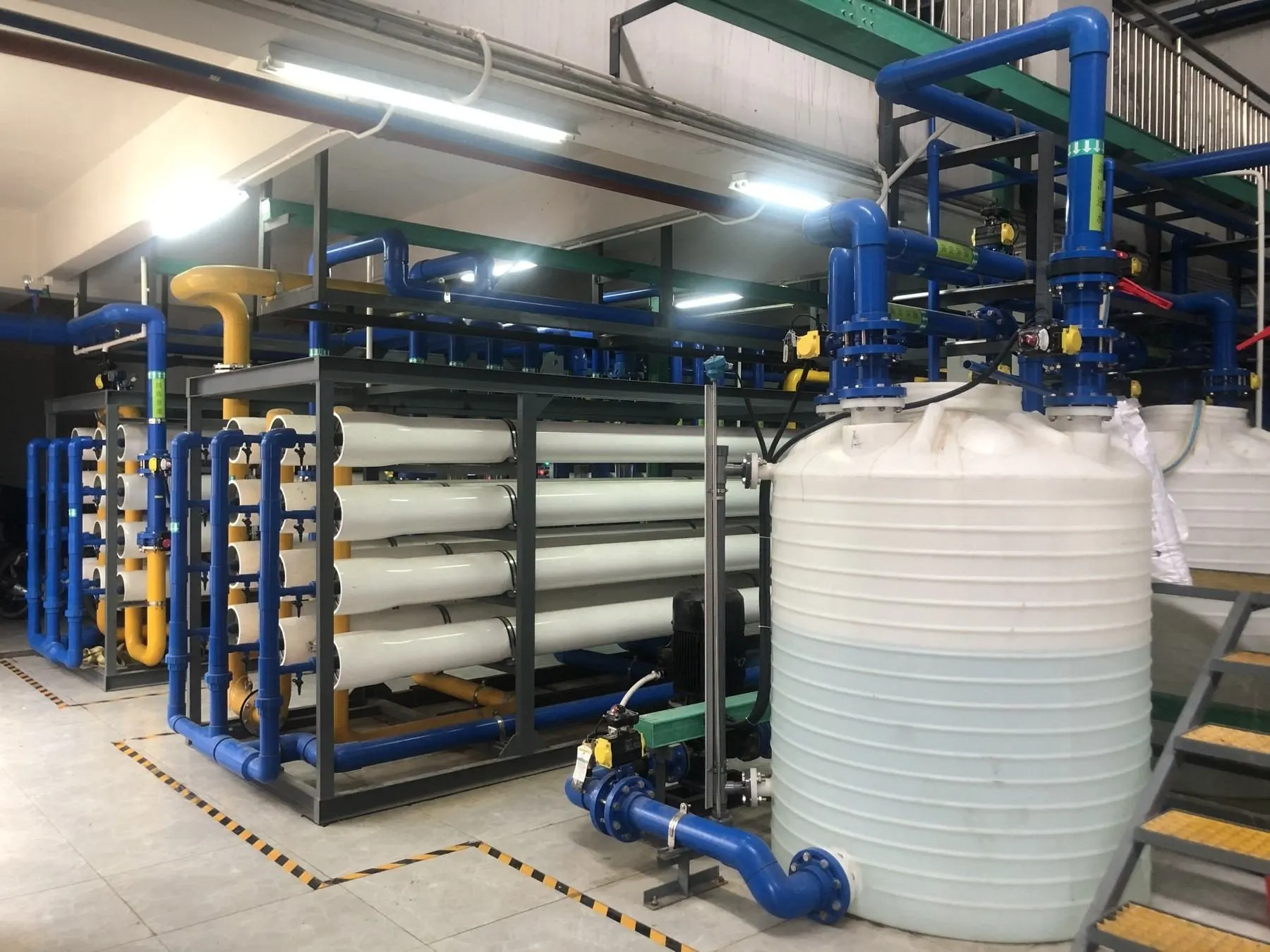 Industrial reverse osmosis water treatment system from Zhongnuo Water Treatment equipment library.
What Is an Industrial Reverse Osmosis Water Treatment System?
An industrial reverse osmosis water treatment system is a purification solution that uses membrane separation technology to remove dissolved salts, bacteria, heavy metals, and fine contaminants from raw water. By applying pressure, the system pushes water through reverse osmosis membranes while rejecting most unwanted substances. The result is cleaner and more stable water for industrial use.
Compared with simple filtration equipment, reverse osmosis offers much deeper purification. For factories that need lower conductivity, reduced scaling risk, and more predictable water quality, an industrial water purification system based on RO technology is often the most practical long-term choice.
How an Industrial RO System Works
A complete reverse osmosis water treatment system for factories is not just a membrane rack. It usually includes multiple stages that work together to protect the membranes and improve final water quality.
· Feed water source or raw water tank to stabilize incoming water supply
· Pretreatment equipment such as quartz sand filters, activated carbon filters, and water softeners
· Precision cartridge filtration to reduce fine particles
· High-pressure pump to provide membrane operating pressure
· RO membrane unit to separate purified water from rejected contaminants
· Automatic control system for monitoring, flushing, alarms, and operating protection
· Post-treatment or storage section depending on the final water application
This multi-stage design is especially important for industrial users because membrane performance depends heavily on good pretreatment. When the front-end process is properly matched to the raw water conditions, the RO unit can operate more efficiently and with lower maintenance risk.
Why Factories Use Reverse Osmosis Water Treatment
Different factories use reverse osmosis for different reasons, but the most common goal is the same: better control over water quality. In many plants, raw water contains dissolved salts, hardness, chlorine, organics, or seasonal fluctuations that make untreated water unsuitable for direct production use.
· Electronics factories use RO water to improve cleaning and rinsing consistency.
· Food and beverage plants use purified water to protect taste, quality, and process hygiene.
· Pharmaceutical manufacturers need stable water quality for sensitive production environments.
· Boiler systems use RO-treated water to reduce scaling and improve operating efficiency.
· Chemical factories use RO systems to support process water preparation and equipment protection.
Because of this broad applicability, an industrial reverse osmosis water treatment system has become one of the most common solutions for modern factory water treatment.
Main Benefits of an Industrial Water Purification System
When properly configured, an industrial water purification system built around reverse osmosis can bring both technical and financial value to a factory.
· More stable water quality for production and utility use
· Reduced risk of scaling and fouling in downstream equipment
· Lower maintenance frequency and better equipment protection
· Improved consistency for water-sensitive manufacturing processes
· Automatic operation with PLC control and easier plant management
· Flexible integration with ultrafiltration, EDI, softening, and water reuse systems
How to Choose the Right Reverse Osmosis Water Treatment System for Factories
Choosing the right reverse osmosis water treatment system for factories starts with understanding the real project conditions. Capacity alone is never enough. A supplier should also evaluate raw water quality, final water requirements, installation environment, and operating expectations.
· Raw water source: municipal water, groundwater, river water, brackish water, or reclaimed water
· Water quality report: TDS, hardness, turbidity, iron, manganese, chlorine, and other relevant parameters
· Required output: hourly or daily production capacity
· Final application: cleaning, ingredient water, boiler feed, rinse water, or ultrapure water pretreatment
· Material preference: carbon steel, SUS304, or SUS316 depending on the site and budget
· Automation level: manual control or PLC automatic operation
A customized industrial RO system is usually more reliable than a generic one because the configuration can be adjusted to match the actual water conditions and the customer's process target.
What Zhongnuo Water Treatment Can Provide
Zhongnuo Water Treatment designs and manufactures industrial reverse osmosis water treatment systems for a wide range of industries. Based on the customer's water source, capacity requirement, and target water quality, the system can be configured with the right pretreatment process, membrane arrangement, control mode, and material option.
· Customized industrial RO system design
· Integrated pretreatment and membrane configuration
· PLC control with user-friendly operation
· Support for containerized or skid-mounted solutions
· Technical guidance for installation and commissioning
Conclusion
An industrial reverse osmosis water treatment system is more than a piece of equipment. It is a practical investment in production stability, equipment protection, and long-term water quality control. For factories that rely on consistent water conditions, reverse osmosis remains one of the most effective technologies available.
If you are planning a new water project, the best starting point is a raw water analysis and a clear description of how the treated water will be used. With those details in place, it becomes much easier to design a system that delivers the right performance for your factory.
Contact Suggestion
If you need help selecting an industrial reverse osmosis water treatment system, prepare your raw water source, water quality report, required capacity, and target use. These details allow engineers to recommend a practical and cost-effective solution more quickly.
A practical guide for manufacturers choosing stable water purification equipment
Factories that depend on stable process water often face the same challenge: raw water quality is not always consistent, but production standards are. In industries such as electronics, food and beverage, pharmaceuticals, chemicals, and precision manufacturing, untreated water can lead to scaling, unstable product quality, higher maintenance costs, and unnecessary downtime. That is why many manufacturers invest in an industrial reverse osmosis water treatment system as a core part of their water management strategy.
A well-designed industrial RO system helps remove dissolved salts, suspended solids, organic contaminants, and other impurities that can interfere with production. It also creates a more reliable water source for cleaning, rinsing, boiler feed, ingredient water, and downstream ultrapure water processes.
Industrial reverse osmosis water treatment system from Zhongnuo Water Treatment equipment library.
What Is an Industrial Reverse Osmosis Water Treatment System?
An industrial reverse osmosis water treatment system is a purification solution that uses membrane separation technology to remove dissolved salts, bacteria, heavy metals, and fine contaminants from raw water. By applying pressure, the system pushes water through reverse osmosis membranes while rejecting most unwanted substances. The result is cleaner and more stable water for industrial use.
Compared with simple filtration equipment, reverse osmosis offers much deeper purification. For factories that need lower conductivity, reduced scaling risk, and more predictable water quality, an industrial water purification system based on RO technology is often the most practical long-term choice.
How an Industrial RO System Works
A complete reverse osmosis water treatment system for factories is not just a membrane rack. It usually includes multiple stages that work together to protect the membranes and improve final water quality.
· Feed water source or raw water tank to stabilize incoming water supply
· Pretreatment equipment such as quartz sand filters, activated carbon filters, and water softeners
· Precision cartridge filtration to reduce fine particles
· High-pressure pump to provide membrane operating pressure
· RO membrane unit to separate purified water from rejected contaminants
· Automatic control system for monitoring, flushing, alarms, and operating protection
· Post-treatment or storage section depending on the final water application
This multi-stage design is especially important for industrial users because membrane performance depends heavily on good pretreatment. When the front-end process is properly matched to the raw water conditions, the RO unit can operate more efficiently and with lower maintenance risk.
Why Factories Use Reverse Osmosis Water Treatment
Different factories use reverse osmosis for different reasons, but the most common goal is the same: better control over water quality. In many plants, raw water contains dissolved salts, hardness, chlorine, organics, or seasonal fluctuations that make untreated water unsuitable for direct production use.
· Electronics factories use RO water to improve cleaning and rinsing consistency.
· Food and beverage plants use purified water to protect taste, quality, and process hygiene.
· Pharmaceutical manufacturers need stable water quality for sensitive production environments.
· Boiler systems use RO-treated water to reduce scaling and improve operating efficiency.
· Chemical factories use RO systems to support process water preparation and equipment protection.
Because of this broad applicability, an industrial reverse osmosis water treatment system has become one of the most common solutions for modern factory water treatment.
Main Benefits of an Industrial Water Purification System
When properly configured, an industrial water purification system built around reverse osmosis can bring both technical and financial value to a factory.
· More stable water quality for production and utility use
· Reduced risk of scaling and fouling in downstream equipment
· Lower maintenance frequency and better equipment protection
· Improved consistency for water-sensitive manufacturing processes
· Automatic operation with PLC control and easier plant management
· Flexible integration with ultrafiltration, EDI, softening, and water reuse systems
How to Choose the Right Reverse Osmosis Water Treatment System for Factories
Choosing the right reverse osmosis water treatment system for factories starts with understanding the real project conditions. Capacity alone is never enough. A supplier should also evaluate raw water quality, final water requirements, installation environment, and operating expectations.
· Raw water source: municipal water, groundwater, river water, brackish water, or reclaimed water
· Water quality report: TDS, hardness, turbidity, iron, manganese, chlorine, and other relevant parameters
· Required output: hourly or daily production capacity
· Final application: cleaning, ingredient water, boiler feed, rinse water, or ultrapure water pretreatment
· Material preference: carbon steel, SUS304, or SUS316 depending on the site and budget
· Automation level: manual control or PLC automatic operation
A customized industrial RO system is usually more reliable than a generic one because the configuration can be adjusted to match the actual water conditions and the customer's process target.
What Zhongnuo Water Treatment Can Provide
Zhongnuo Water Treatment designs and manufactures industrial reverse osmosis water treatment systems for a wide range of industries. Based on the customer's water source, capacity requirement, and target water quality, the system can be configured with the right pretreatment process, membrane arrangement, control mode, and material option.
· Customized industrial RO system design
· Integrated pretreatment and membrane configuration
· PLC control with user-friendly operation
· Support for containerized or skid-mounted solutions
· Technical guidance for installation and commissioning
Conclusion
An industrial reverse osmosis water treatment system is more than a piece of equipment. It is a practical investment in production stability, equipment protection, and long-term water quality control. For factories that rely on consistent water conditions, reverse osmosis remains one of the most effective technologies available.
If you are planning a new water project, the best starting point is a raw water analysis and a clear description of how the treated water will be used. With those details in place, it becomes much easier to design a system that delivers the right performance for your factory.
Contact Suggestion
If you need help selecting an industrial reverse osmosis water treatment system, prepare your raw water source, water quality report, required capacity, and target use. These details allow engineers to recommend a practical and cost-effective solution more quickly.
Get a Quote for Free
Submit this form and our sales representative will contact you soon.


ONLINE MESSAGE
Copyright © 2026 Zhongnuo Water Treatment Co., Ltd.