

SEARCH WHAT YOU WANT
How to Choose the Right Reverse Osmosis System for Food and Beverage Plants
Time:2025-08-13
A practical guide for stable process water, ingredient water, and hygienic production needs
Choosing the right reverse osmosis system for food and beverage plants is not only about producing clean water. It is also about protecting flavor consistency, improving production stability, meeting hygiene standards, and reducing long-term maintenance risks. In many factories, water is directly involved in ingredient preparation, equipment cleaning, bottle rinsing, steam generation, and cooling support. Because of that, water quality has a direct effect on both product quality and daily operation.
A well-designed food and beverage water treatment system helps manufacturers remove dissolved salts, chlorine, hardness, suspended solids, and unwanted taste or odor issues. When the reverse osmosis process is properly matched to the raw water source, the plant can operate with more stable water quality and better production confidence.
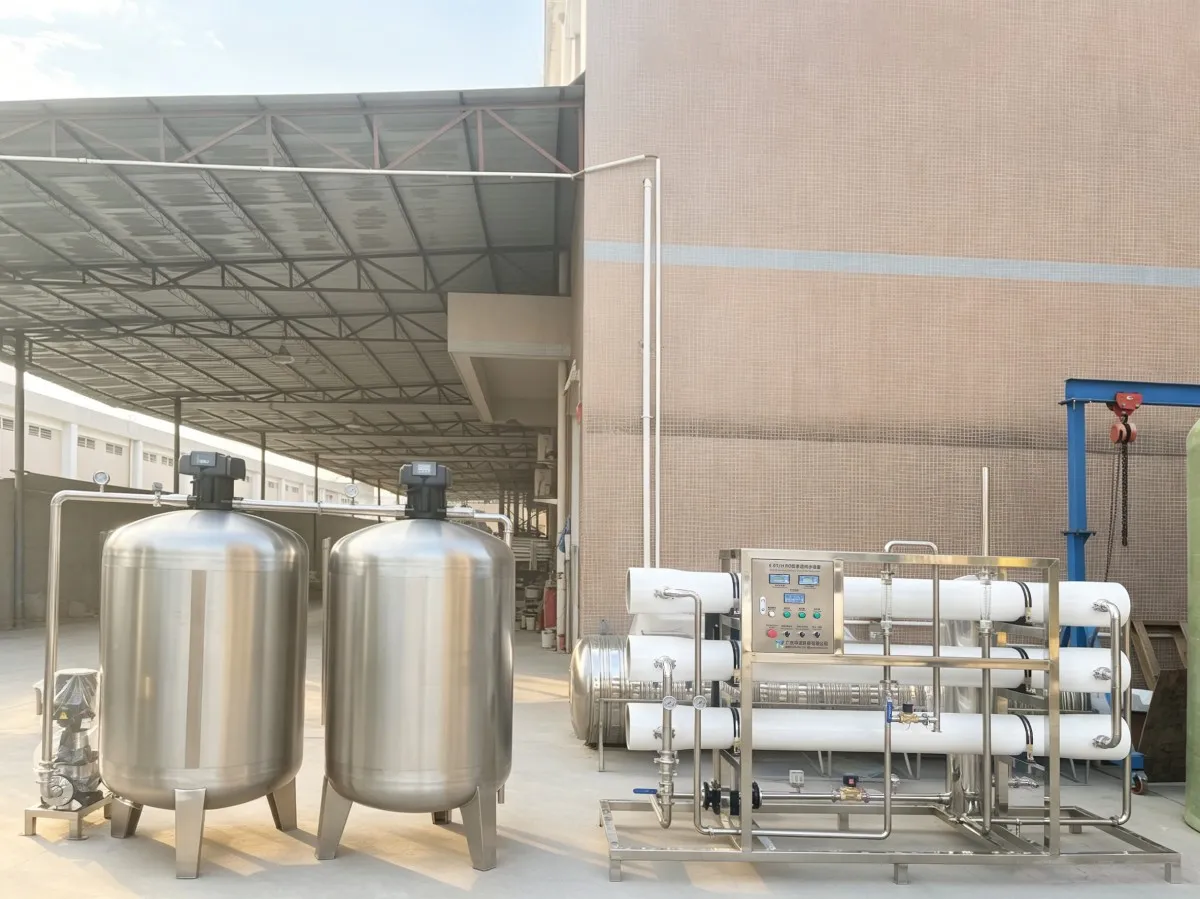 Reverse osmosis system for food and beverage plants from Zhongnuo Water Treatment local equipment library.
Why Water Quality Matters in Food and Beverage Production
In food and beverage plants, water is often part of the final product or part of a production process that directly affects quality. If raw water contains too much hardness, dissolved salts, chlorine, bacteria, or unstable conductivity, it can influence taste, process hygiene, equipment life, and cleaning performance.
· Drinking water and bottled water production need stable taste and clarity.
· Juice, dairy, and beverage mixing lines depend on consistent water quality for flavor control.
· CIP cleaning and rinsing processes benefit from lower scaling and fewer water-related residues.
· Steam boilers and heating systems need treated water to reduce fouling and maintenance problems.
What a Reverse Osmosis System Does for Food and Beverage Plants
A reverse osmosis system for food and beverage plants uses pressure and membrane separation to remove a large percentage of dissolved salts, organics, and other fine impurities from raw water. This makes it one of the most effective options for factories that need reliable purified water for production support.
In most projects, the RO unit is combined with pretreatment equipment such as quartz sand filters, activated carbon filters, water softeners, dosing systems, and precision cartridge filters. Together, these stages help create a stable and hygienic water treatment process suitable for industrial food and beverage use.
Key Factors to Consider Before Choosing a System
Not every food and beverage factory needs the same configuration. The right system depends on the real water conditions and the final application. Before selecting a supplier or requesting a quotation, it is important to prepare the right technical information.
· Raw water source: municipal water, groundwater, surface water, or treated recycled water
· Water quality report: TDS, hardness, turbidity, chlorine, iron, manganese, and microbiological concerns
· Required capacity: hourly or daily water demand
· Final use: ingredient water, process water, rinsing water, boiler feed, or cleaning support
· Material requirements: SUS304 or SUS316 depending on hygiene and corrosion considerations
· Control preference: manual operation or PLC automatic control
How to Match Capacity to Production Demand
One of the most common mistakes in food and beverage projects is choosing a reverse osmosis system based only on a rough capacity number. In reality, the design should reflect peak demand, shift schedule, storage tank volume, and future production expansion.
For example, a plant that runs multiple filling lines, CIP cycles, and rinsing steps at the same time may need more capacity than a factory with the same daily output but different production timing. A good supplier will look at the full water consumption pattern before recommending the final system size.
Why Pretreatment Is So Important
Even the best RO membranes cannot perform well without proper pretreatment. In food and beverage plants, pretreatment helps reduce suspended solids, chlorine, hardness, and organic fouling risks before water enters the membrane section.
· Quartz sand filtration helps reduce turbidity and visible particles.
· Activated carbon helps remove chlorine, odor, and organic matter.
· Water softening helps reduce hardness and scaling risk.
· Precision cartridge filtration protects the high-pressure pump and membrane housings.
This is why a complete food and beverage water treatment system should be evaluated as an integrated process rather than as a single RO machine.
Questions to Ask Your RO System Supplier
A professional supplier should be able to explain not only the membrane model and pump size, but also the full system logic behind the design. Asking the right questions helps buyers avoid under-designed or mismatched solutions.
· How is the system configured according to my raw water report?
· What pretreatment steps are included and why?
· What recovery rate and product water quality can I expect?
· Is the system easy to clean, maintain, and monitor?
· Can the system support future capacity expansion?
· What after-sales service and installation guidance are available?
How Zhongnuo Water Treatment Supports Food and Beverage Projects
Zhongnuo Water Treatment provides customized reverse osmosis systems for food and beverage plants based on raw water quality, required output, and final water use. Depending on the project, the system can be configured with pretreatment, stainless steel pipelines, PLC automatic control, storage tanks, and optional post-treatment sections.
· Customized design based on actual factory water demand
· Integrated pretreatment and membrane process design
· Stable operation and easy daily management
· Flexible capacity range for different production scales
· Support for installation guidance and technical follow-up
Conclusion
The right reverse osmosis system for food and beverage plants should deliver more than clean water. It should also support product consistency, reduce operational risk, and match the real needs of the production line. By starting with a water quality report and a clear description of your final application, it becomes much easier to choose a system that is practical, stable, and cost-effective.
If your plant is planning a new water treatment project, collecting the raw water data, target capacity, and water use details is the best first step toward a reliable solution.
A practical guide for stable process water, ingredient water, and hygienic production needs
Choosing the right reverse osmosis system for food and beverage plants is not only about producing clean water. It is also about protecting flavor consistency, improving production stability, meeting hygiene standards, and reducing long-term maintenance risks. In many factories, water is directly involved in ingredient preparation, equipment cleaning, bottle rinsing, steam generation, and cooling support. Because of that, water quality has a direct effect on both product quality and daily operation.
A well-designed food and beverage water treatment system helps manufacturers remove dissolved salts, chlorine, hardness, suspended solids, and unwanted taste or odor issues. When the reverse osmosis process is properly matched to the raw water source, the plant can operate with more stable water quality and better production confidence.
Reverse osmosis system for food and beverage plants from Zhongnuo Water Treatment local equipment library.
Why Water Quality Matters in Food and Beverage Production
In food and beverage plants, water is often part of the final product or part of a production process that directly affects quality. If raw water contains too much hardness, dissolved salts, chlorine, bacteria, or unstable conductivity, it can influence taste, process hygiene, equipment life, and cleaning performance.
· Drinking water and bottled water production need stable taste and clarity.
· Juice, dairy, and beverage mixing lines depend on consistent water quality for flavor control.
· CIP cleaning and rinsing processes benefit from lower scaling and fewer water-related residues.
· Steam boilers and heating systems need treated water to reduce fouling and maintenance problems.
What a Reverse Osmosis System Does for Food and Beverage Plants
A reverse osmosis system for food and beverage plants uses pressure and membrane separation to remove a large percentage of dissolved salts, organics, and other fine impurities from raw water. This makes it one of the most effective options for factories that need reliable purified water for production support.
In most projects, the RO unit is combined with pretreatment equipment such as quartz sand filters, activated carbon filters, water softeners, dosing systems, and precision cartridge filters. Together, these stages help create a stable and hygienic water treatment process suitable for industrial food and beverage use.
Key Factors to Consider Before Choosing a System
Not every food and beverage factory needs the same configuration. The right system depends on the real water conditions and the final application. Before selecting a supplier or requesting a quotation, it is important to prepare the right technical information.
· Raw water source: municipal water, groundwater, surface water, or treated recycled water
· Water quality report: TDS, hardness, turbidity, chlorine, iron, manganese, and microbiological concerns
· Required capacity: hourly or daily water demand
· Final use: ingredient water, process water, rinsing water, boiler feed, or cleaning support
· Material requirements: SUS304 or SUS316 depending on hygiene and corrosion considerations
· Control preference: manual operation or PLC automatic control
How to Match Capacity to Production Demand
One of the most common mistakes in food and beverage projects is choosing a reverse osmosis system based only on a rough capacity number. In reality, the design should reflect peak demand, shift schedule, storage tank volume, and future production expansion.
For example, a plant that runs multiple filling lines, CIP cycles, and rinsing steps at the same time may need more capacity than a factory with the same daily output but different production timing. A good supplier will look at the full water consumption pattern before recommending the final system size.
Why Pretreatment Is So Important
Even the best RO membranes cannot perform well without proper pretreatment. In food and beverage plants, pretreatment helps reduce suspended solids, chlorine, hardness, and organic fouling risks before water enters the membrane section.
· Quartz sand filtration helps reduce turbidity and visible particles.
· Activated carbon helps remove chlorine, odor, and organic matter.
· Water softening helps reduce hardness and scaling risk.
· Precision cartridge filtration protects the high-pressure pump and membrane housings.
This is why a complete food and beverage water treatment system should be evaluated as an integrated process rather than as a single RO machine.
Questions to Ask Your RO System Supplier
A professional supplier should be able to explain not only the membrane model and pump size, but also the full system logic behind the design. Asking the right questions helps buyers avoid under-designed or mismatched solutions.
· How is the system configured according to my raw water report?
· What pretreatment steps are included and why?
· What recovery rate and product water quality can I expect?
· Is the system easy to clean, maintain, and monitor?
· Can the system support future capacity expansion?
· What after-sales service and installation guidance are available?
How Zhongnuo Water Treatment Supports Food and Beverage Projects
Zhongnuo Water Treatment provides customized reverse osmosis systems for food and beverage plants based on raw water quality, required output, and final water use. Depending on the project, the system can be configured with pretreatment, stainless steel pipelines, PLC automatic control, storage tanks, and optional post-treatment sections.
· Customized design based on actual factory water demand
· Integrated pretreatment and membrane process design
· Stable operation and easy daily management
· Flexible capacity range for different production scales
· Support for installation guidance and technical follow-up
Conclusion
The right reverse osmosis system for food and beverage plants should deliver more than clean water. It should also support product consistency, reduce operational risk, and match the real needs of the production line. By starting with a water quality report and a clear description of your final application, it becomes much easier to choose a system that is practical, stable, and cost-effective.
If your plant is planning a new water treatment project, collecting the raw water data, target capacity, and water use details is the best first step toward a reliable solution.
Get a Quote for Free
Submit this form and our sales representative will contact you soon.


ONLINE MESSAGE
Copyright © 2026 Zhongnuo Water Treatment Co., Ltd.