

SEARCH WHAT YOU WANT
How PLC Automatic Control Improves Industrial Water Treatment System Reliability
Time:2024-06-25
Why automatic control helps water treatment systems run more steadily, safely, and efficiently
In industrial water treatment, water quality is important, but stable operation is just as critical. Even a well-designed reverse osmosis or ultrapure water system can face trouble if daily running depends too heavily on manual intervention. That is why PLC automatic control has become a key part of modern water treatment equipment.
A properly configured PLC control system helps operators monitor performance, automate sequences, reduce operating error, and improve the overall reliability of the water treatment line. For factories that value consistent production, automation often brings very practical benefits.
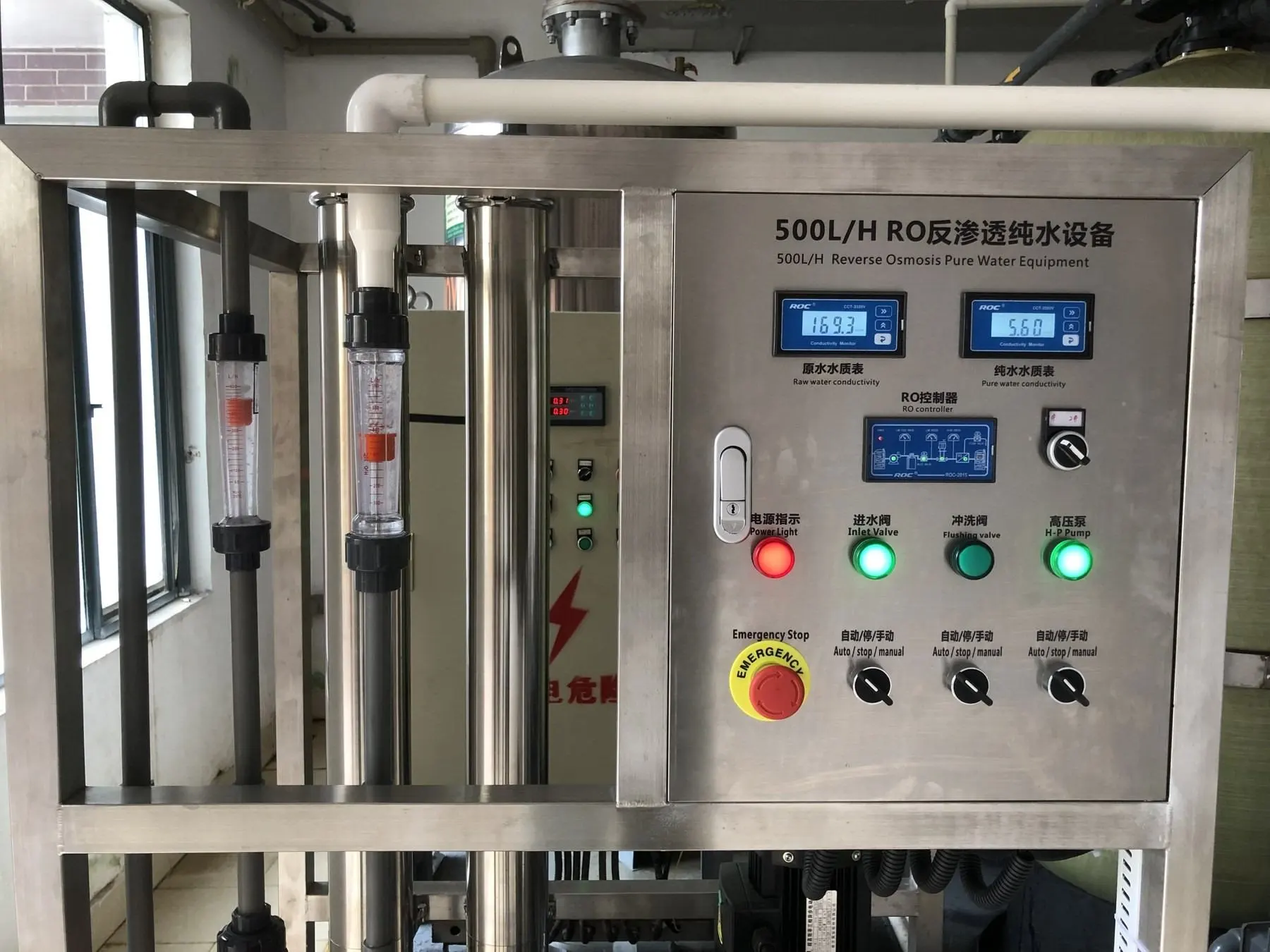
Industrial water treatment system from Zhongnuo Water Treatment local equipment library.
What Is PLC Automatic Control in Water Treatment?
PLC stands for programmable logic controller. In water treatment equipment, it is used to manage operating sequences, monitor system status, control pumps and valves, and respond to process conditions according to pre-set logic.
Instead of relying on repeated manual switching and observation, the PLC system can help the equipment run in a more consistent and organized way.
Why Manual Operation Alone Can Create Risk
Manual operation may be workable in very simple systems, but as industrial water treatment lines become larger or more integrated, the chance of human error also increases. Missed steps, delayed response, or inconsistent settings can affect both water quality and equipment safety.
· Inconsistent start and stop procedures
· Delayed reaction to abnormal pressure or level conditions
· Higher risk of operator oversight
· Difficulty recording stable operating data
· More dependence on individual operator experience
How PLC Control Improves Reliability
Automatic control improves reliability by making the system behave in a repeatable and monitored way. The PLC helps make sure the equipment follows the intended process logic every time it runs.
· Automates system start-up and shutdown sequences
· Monitors pressure, flow, tank level, and conductivity signals
· Protects key components with alarm and interlock functions
· Reduces unnecessary manual mistakes
· Helps keep operation more stable from shift to shift
Common PLC Functions in Industrial Water Treatment
The exact control scope depends on the project, but many industrial water treatment systems use PLC automation for both daily operation and protective logic.
· Pump start and stop control
· Automatic valve switching
· Tank level protection
· High and low pressure alarms
· Conductivity or water quality monitoring
· System fault display and operating status indication
Where PLC Automatic Control Is Especially Valuable
PLC automation is especially useful in projects with longer running hours, multiple treatment stages, or higher water quality requirements.
· Reverse osmosis water treatment systems
· Ultrapure water and EDI systems
· Integrated UF plus RO process lines
· Desalination and water reuse projects
· Factories requiring stable multi-shift production
Benefits Beyond Basic Automation
For many factories, PLC control is not only about convenience. It can also improve long-term system management and operational confidence.
· More stable daily operation
· Clearer alarm and fault response
· Less dependence on constant manual watching
· Better protection for pumps, membranes, and tanks
· Easier operation for trained plant staff
What Buyers Should Consider When Choosing PLC Control
Not every project needs the same level of automation. The right PLC design should match the complexity of the system and the operator's actual needs.
· Required control points and monitoring signals
· Whether touch screen HMI is needed
· Alarm and protection expectations
· Future expansion or remote monitoring plans
· Operator skill level and site management style
· Integration needs with existing plant systems
How Zhongnuo Water Treatment Supports Automated Systems
Zhongnuo Water Treatment provides PLC automatic control options for reverse osmosis, ultrapure water, desalination, and integrated industrial water treatment systems. Control logic can be configured according to project process needs, protection points, and practical on-site operation requirements.
· PLC-based control design matched to process flow
· Alarm and interlock logic for safer operation
· Touch screen and operation-friendly interfaces when required
· Integration with different industrial water treatment configurations
· Technical support from system design through commissioning
Conclusion
PLC automatic control improves industrial water treatment system reliability by reducing manual error, protecting equipment, and making operation more stable and repeatable. For modern factories, automation is often a practical part of dependable water treatment, not just an added feature.
If your project needs steady operation across shifts or includes multiple treatment stages, it is worth reviewing the automation level together with the process design. That will help you choose a system that is easier to manage and more reliable over the long term.
Why automatic control helps water treatment systems run more steadily, safely, and efficiently
In industrial water treatment, water quality is important, but stable operation is just as critical. Even a well-designed reverse osmosis or ultrapure water system can face trouble if daily running depends too heavily on manual intervention. That is why PLC automatic control has become a key part of modern water treatment equipment.
A properly configured PLC control system helps operators monitor performance, automate sequences, reduce operating error, and improve the overall reliability of the water treatment line. For factories that value consistent production, automation often brings very practical benefits.
Industrial water treatment system from Zhongnuo Water Treatment local equipment library.
What Is PLC Automatic Control in Water Treatment?
PLC stands for programmable logic controller. In water treatment equipment, it is used to manage operating sequences, monitor system status, control pumps and valves, and respond to process conditions according to pre-set logic.
Instead of relying on repeated manual switching and observation, the PLC system can help the equipment run in a more consistent and organized way.
Why Manual Operation Alone Can Create Risk
Manual operation may be workable in very simple systems, but as industrial water treatment lines become larger or more integrated, the chance of human error also increases. Missed steps, delayed response, or inconsistent settings can affect both water quality and equipment safety.
· Inconsistent start and stop procedures
· Delayed reaction to abnormal pressure or level conditions
· Higher risk of operator oversight
· Difficulty recording stable operating data
· More dependence on individual operator experience
How PLC Control Improves Reliability
Automatic control improves reliability by making the system behave in a repeatable and monitored way. The PLC helps make sure the equipment follows the intended process logic every time it runs.
· Automates system start-up and shutdown sequences
· Monitors pressure, flow, tank level, and conductivity signals
· Protects key components with alarm and interlock functions
· Reduces unnecessary manual mistakes
· Helps keep operation more stable from shift to shift
Common PLC Functions in Industrial Water Treatment
The exact control scope depends on the project, but many industrial water treatment systems use PLC automation for both daily operation and protective logic.
· Pump start and stop control
· Automatic valve switching
· Tank level protection
· High and low pressure alarms
· Conductivity or water quality monitoring
· System fault display and operating status indication
Where PLC Automatic Control Is Especially Valuable
PLC automation is especially useful in projects with longer running hours, multiple treatment stages, or higher water quality requirements.
· Reverse osmosis water treatment systems
· Ultrapure water and EDI systems
· Integrated UF plus RO process lines
· Desalination and water reuse projects
· Factories requiring stable multi-shift production
Benefits Beyond Basic Automation
For many factories, PLC control is not only about convenience. It can also improve long-term system management and operational confidence.
· More stable daily operation
· Clearer alarm and fault response
· Less dependence on constant manual watching
· Better protection for pumps, membranes, and tanks
· Easier operation for trained plant staff
What Buyers Should Consider When Choosing PLC Control
Not every project needs the same level of automation. The right PLC design should match the complexity of the system and the operator's actual needs.
· Required control points and monitoring signals
· Whether touch screen HMI is needed
· Alarm and protection expectations
· Future expansion or remote monitoring plans
· Operator skill level and site management style
· Integration needs with existing plant systems
How Zhongnuo Water Treatment Supports Automated Systems
Zhongnuo Water Treatment provides PLC automatic control options for reverse osmosis, ultrapure water, desalination, and integrated industrial water treatment systems. Control logic can be configured according to project process needs, protection points, and practical on-site operation requirements.
· PLC-based control design matched to process flow
· Alarm and interlock logic for safer operation
· Touch screen and operation-friendly interfaces when required
· Integration with different industrial water treatment configurations
· Technical support from system design through commissioning
Conclusion
PLC automatic control improves industrial water treatment system reliability by reducing manual error, protecting equipment, and making operation more stable and repeatable. For modern factories, automation is often a practical part of dependable water treatment, not just an added feature.
If your project needs steady operation across shifts or includes multiple treatment stages, it is worth reviewing the automation level together with the process design. That will help you choose a system that is easier to manage and more reliable over the long term.
Get a Quote for Free
Submit this form and our sales representative will contact you soon.


ONLINE MESSAGE
Copyright © 2026 Zhongnuo Water Treatment Co., Ltd.