

SEARCH WHAT YOU WANT
What Is an EDI Ultrapure Water System and Where Is It Used?
Time:2025-06-06
A practical guide to high-purity water production for industrial and laboratory applications
Many industries need water that is much cleaner than normal purified water. In electronics, pharmaceuticals, laboratories, biotechnology, and precision manufacturing, even a small amount of dissolved ions can affect product quality, process reliability, or equipment performance. That is why an EDI ultrapure water system is widely used when stable high-purity water is required.
Compared with standard reverse osmosis alone, an EDI ultrapure water system provides deeper polishing and more stable output conductivity. It is especially suitable for users who want continuous ultrapure water production without frequent acid and alkali regeneration.
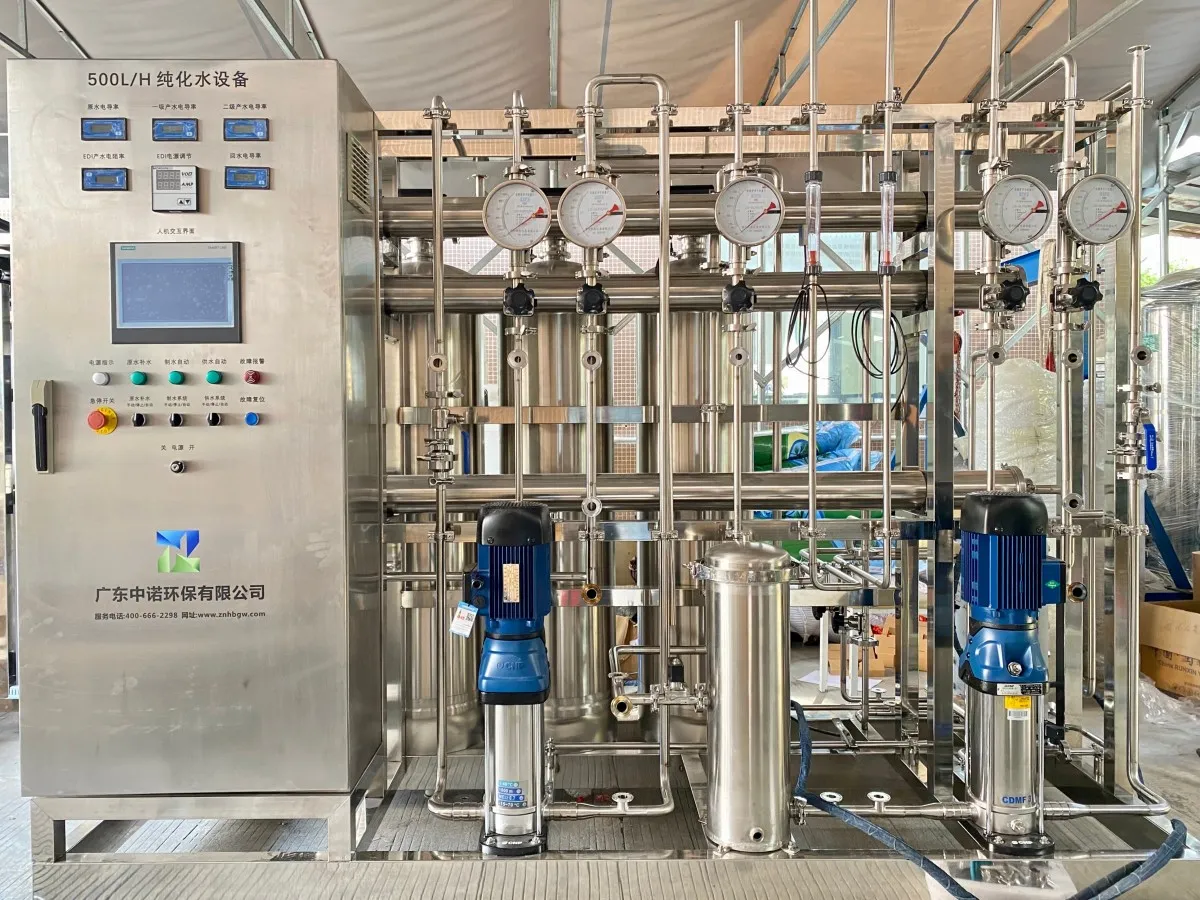 EDI ultrapure water system from Zhongnuo Water Treatment local equipment library.
What Is an EDI Ultrapure Water System?
An EDI ultrapure water system is a high-purity water treatment solution that usually combines reverse osmosis with electrodeionization technology. The RO stage removes most dissolved salts, particles, and organics, while the EDI stage continuously removes the remaining ions to produce higher-purity water.
Because the system operates continuously, it does not require the same type of chemical regeneration used by traditional mixed-bed ion exchange units. This makes it a practical choice for facilities that need stable ultrapure water with lower operating intervention.
How an EDI Ultrapure Water System Works
A complete EDI ultrapure water system is usually built in multiple treatment stages so that each section supports the next one and improves final water quality.
· Pretreatment removes suspended solids, chlorine, and hardness that could affect downstream components.
· Reverse osmosis removes most dissolved salts and reduces conductivity significantly.
· Intermediate storage or polishing sections may stabilize the process before final treatment.
· EDI modules use ion exchange resin, membranes, and electric current to continuously remove remaining ions.
· Optional post-treatment can include UV sterilization, fine filtration, or terminal polishing depending on the application.
This combination is one of the main reasons why an EDI water treatment system is often selected for industries that require consistent water purity over long operating periods.
Main Advantages of an EDI Water Treatment System
An EDI water treatment system offers several benefits compared with lower-grade purified water systems or conventional ion exchange polishing.
· Continuous ultrapure water production
· Stable water quality with very low conductivity
· Reduced need for acid and alkali regeneration
· Lower chemical handling requirements
· More automated operation with easier process control
· Suitable integration with RO ultrapure water system designs
Where Is an EDI Ultrapure Water System Used?
An EDI ultrapure water system is used in industries where water purity directly affects product quality, cleaning standards, or process safety.
· Electronics and semiconductor manufacturing
· Pharmaceutical production and biotechnology facilities
· Hospital laboratories and research institutes
· Power plants requiring high-quality boiler make-up water
· Cosmetics and fine chemical processing
· Precision rinsing and component cleaning applications
In these industries, a standard industrial water purification system may not be enough. When lower conductivity and higher consistency are required, EDI becomes an important part of the overall ultrapure water process.
What Should You Check Before Choosing an EDI System?
Before selecting a system, it is important to define both the raw water conditions and the final water target. The right configuration depends on more than capacity alone.
· Raw water source and full water analysis report
· Required output capacity per hour or per day
· Target conductivity or resistivity level
· Industry application and critical process use
· Voltage, installation site, and automation expectations
· Material and piping preferences such as SUS304 or SUS316
RO Ultrapure Water System vs EDI Ultrapure Water System
A basic RO ultrapure water system can already produce high-quality purified water, but some industries need even lower ion content. That is where EDI brings extra value. RO handles the major desalination work, while EDI provides continuous final polishing for higher-purity output.
For users who need stable 24-hour ultrapure water and want to reduce chemical regeneration steps, an EDI ultrapure water system is often the more advanced and practical option.
How Zhongnuo Water Treatment Supports Ultrapure Water Projects
Zhongnuo Water Treatment provides customized ultrapure water solutions based on raw water quality, industry application, output capacity, and final purity targets. Depending on the project, the system can include pretreatment, RO, EDI, UV, storage tanks, and terminal polishing units.
· Customized RO plus EDI ultrapure water system design
· Stable control logic and user-friendly PLC operation
· Practical skid-mounted layout for installation convenience
· Support for electronics, laboratory, pharmaceutical, and industrial projects
· Technical guidance from design through commissioning
Conclusion
An EDI ultrapure water system is one of the most effective options for industries that need stable high-purity water on a continuous basis. By combining reverse osmosis with electrodeionization, the system can deliver lower conductivity, reduced chemical handling, and more reliable long-term operation.
If your application requires water quality beyond standard RO treatment, the best starting point is a raw water report and a clear final water target. With those details, it becomes much easier to determine whether an EDI water treatment system is the right solution for your project.
A practical guide to high-purity water production for industrial and laboratory applications
Many industries need water that is much cleaner than normal purified water. In electronics, pharmaceuticals, laboratories, biotechnology, and precision manufacturing, even a small amount of dissolved ions can affect product quality, process reliability, or equipment performance. That is why an EDI ultrapure water system is widely used when stable high-purity water is required.
Compared with standard reverse osmosis alone, an EDI ultrapure water system provides deeper polishing and more stable output conductivity. It is especially suitable for users who want continuous ultrapure water production without frequent acid and alkali regeneration.
EDI ultrapure water system from Zhongnuo Water Treatment local equipment library.
What Is an EDI Ultrapure Water System?
An EDI ultrapure water system is a high-purity water treatment solution that usually combines reverse osmosis with electrodeionization technology. The RO stage removes most dissolved salts, particles, and organics, while the EDI stage continuously removes the remaining ions to produce higher-purity water.
Because the system operates continuously, it does not require the same type of chemical regeneration used by traditional mixed-bed ion exchange units. This makes it a practical choice for facilities that need stable ultrapure water with lower operating intervention.
How an EDI Ultrapure Water System Works
A complete EDI ultrapure water system is usually built in multiple treatment stages so that each section supports the next one and improves final water quality.
· Pretreatment removes suspended solids, chlorine, and hardness that could affect downstream components.
· Reverse osmosis removes most dissolved salts and reduces conductivity significantly.
· Intermediate storage or polishing sections may stabilize the process before final treatment.
· EDI modules use ion exchange resin, membranes, and electric current to continuously remove remaining ions.
· Optional post-treatment can include UV sterilization, fine filtration, or terminal polishing depending on the application.
This combination is one of the main reasons why an EDI water treatment system is often selected for industries that require consistent water purity over long operating periods.
Main Advantages of an EDI Water Treatment System
An EDI water treatment system offers several benefits compared with lower-grade purified water systems or conventional ion exchange polishing.
· Continuous ultrapure water production
· Stable water quality with very low conductivity
· Reduced need for acid and alkali regeneration
· Lower chemical handling requirements
· More automated operation with easier process control
· Suitable integration with RO ultrapure water system designs
Where Is an EDI Ultrapure Water System Used?
An EDI ultrapure water system is used in industries where water purity directly affects product quality, cleaning standards, or process safety.
· Electronics and semiconductor manufacturing
· Pharmaceutical production and biotechnology facilities
· Hospital laboratories and research institutes
· Power plants requiring high-quality boiler make-up water
· Cosmetics and fine chemical processing
· Precision rinsing and component cleaning applications
In these industries, a standard industrial water purification system may not be enough. When lower conductivity and higher consistency are required, EDI becomes an important part of the overall ultrapure water process.
What Should You Check Before Choosing an EDI System?
Before selecting a system, it is important to define both the raw water conditions and the final water target. The right configuration depends on more than capacity alone.
· Raw water source and full water analysis report
· Required output capacity per hour or per day
· Target conductivity or resistivity level
· Industry application and critical process use
· Voltage, installation site, and automation expectations
· Material and piping preferences such as SUS304 or SUS316
RO Ultrapure Water System vs EDI Ultrapure Water System
A basic RO ultrapure water system can already produce high-quality purified water, but some industries need even lower ion content. That is where EDI brings extra value. RO handles the major desalination work, while EDI provides continuous final polishing for higher-purity output.
For users who need stable 24-hour ultrapure water and want to reduce chemical regeneration steps, an EDI ultrapure water system is often the more advanced and practical option.
How Zhongnuo Water Treatment Supports Ultrapure Water Projects
Zhongnuo Water Treatment provides customized ultrapure water solutions based on raw water quality, industry application, output capacity, and final purity targets. Depending on the project, the system can include pretreatment, RO, EDI, UV, storage tanks, and terminal polishing units.
· Customized RO plus EDI ultrapure water system design
· Stable control logic and user-friendly PLC operation
· Practical skid-mounted layout for installation convenience
· Support for electronics, laboratory, pharmaceutical, and industrial projects
· Technical guidance from design through commissioning
Conclusion
An EDI ultrapure water system is one of the most effective options for industries that need stable high-purity water on a continuous basis. By combining reverse osmosis with electrodeionization, the system can deliver lower conductivity, reduced chemical handling, and more reliable long-term operation.
If your application requires water quality beyond standard RO treatment, the best starting point is a raw water report and a clear final water target. With those details, it becomes much easier to determine whether an EDI water treatment system is the right solution for your project.
Get a Quote for Free
Submit this form and our sales representative will contact you soon.


ONLINE MESSAGE
Copyright © 2026 Zhongnuo Water Treatment Co., Ltd.