

SEARCH WHAT YOU WANT
Nitrate Removal from Well Water: Is RO Effective?
Time:2026-08-28
Nitrate pollution is one of the most common groundwater issues in rural and agricultural areas. It mainly comes from farm fertilizers, livestock waste, septic systems and sewage infiltration. Since nitrate is fully dissolved in water, conventional filtration equipment cannot remove nitrate effectively.
Many well water users ask: Is reverse osmosis effective for nitrate removal? The clear answer is yes. A properly designed and maintained RO system can reliably reduce nitrate in well water for drinking and industrial use.
Why Nitrate in Well Water Is Dangerous
Nitrate is colorless, odorless and tasteless. Polluted well water looks completely clean, which brings hidden health risks, especially for infants and pregnant women.
Boiling water cannot remove nitrate. Instead, water evaporation will concentrate nitrate and make water quality worse. Any well water used for drinking must be tested and meet local drinking water standards.
Can Reverse Osmosis Remove Well Water Nitrate?
RO is highly effective for nitrate removal. Under operating pressure, RO membranes intercept dissolved nitrate ions and separate them from purified water.
The actual nitrate removal rate depends on these key factors:
-
Raw water nitrate concentration
-
Water temperature and system working pressure
-
RO membrane type and service condition
-
System water recovery rate
-
Overall water quality composition and daily maintenance
Final water quality must be verified by laboratory testing, not only by nominal membrane rejection data. View our custom industrial reverse osmosis systems for well water treatment.
Is Pretreatment Necessary for Nitrate Removal RO?
Yes. Standard pretreatment cannot directly remove dissolved nitrate, but it protects RO membranes from fouling, scaling, blockage and oxidation, ensuring stable long-term nitrate removal performance.
Well water usually contains multiple impurities that harm RO membranes:
-
Sediment, turbidity and suspended solids
-
Water hardness (calcium & magnesium)
-
Iron, manganese and hydrogen sulfide
-
Organic matter and microorganisms
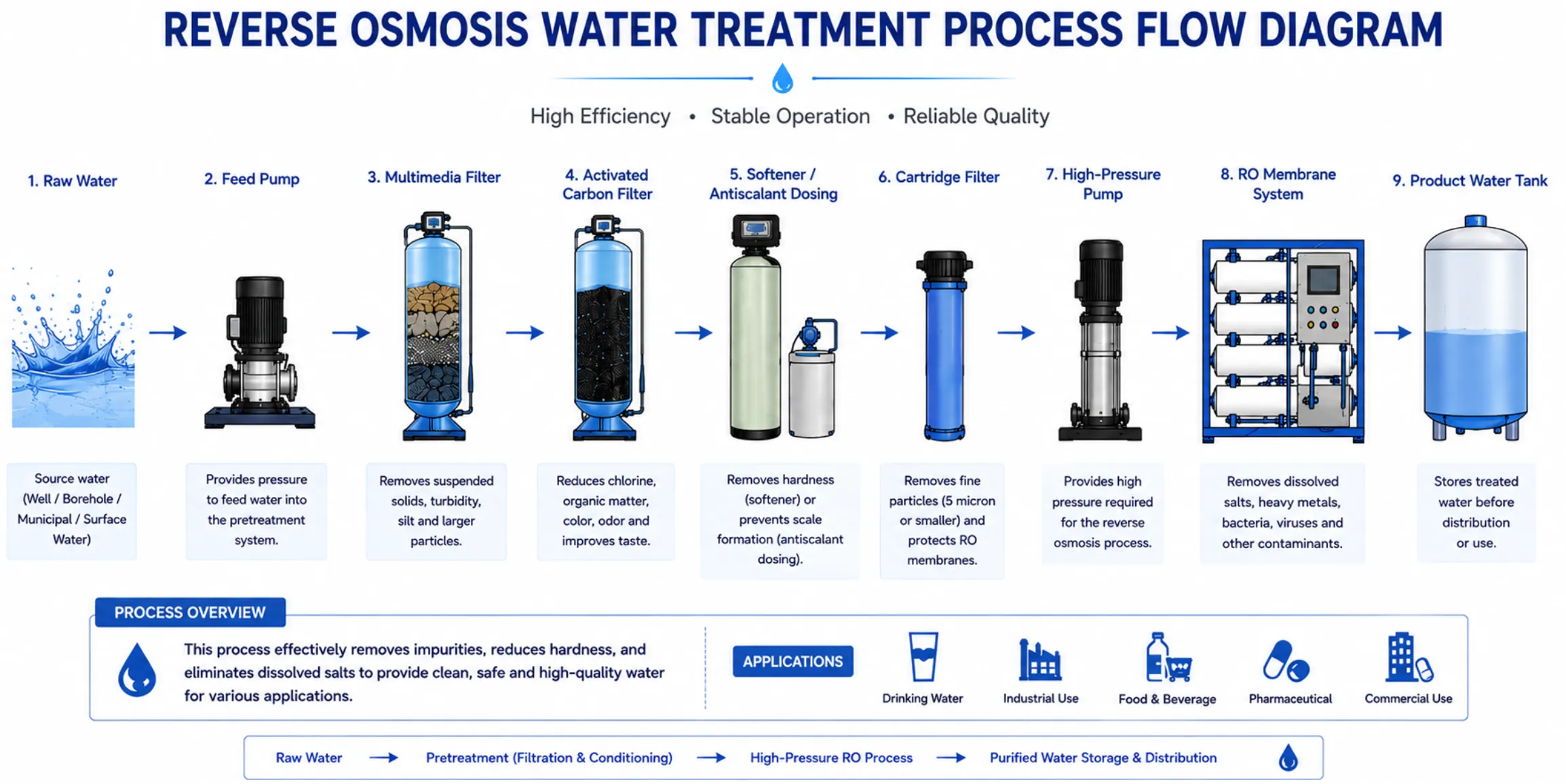
Typical Well Water Nitrate Removal Process:
Well Water → Multimedia Filter → Iron & Manganese Removal / Water Softener → Security Cartridge Filter → RO System → Disinfection → Pure Water Tank
Complete water pretreatment systems stabilize water flow, maintain consistent salt rejection and extend membrane service life. If your well water contains red or black sediment, learn more about iron and manganese removal from borehole water.
When Is RO the Best Choice for Nitrate Treatment?
Reverse osmosis is the most cost-effective solution in the following scenarios:
-
Well water nitrate exceeds drinking or industrial water standards
-
Raw water contains high TDS, hardness and various dissolved salts
-
Treated water is used for drinking, food production or process water
-
Stable, long-term water purification performance is required
For pure drinking water projects, post-treatment such as UV disinfection, pH adjustment and remineralization can be added to improve water safety and taste.
Water Quality Testing Items Before RO Design
Testing only nitrate is insufficient. Full water analysis ensures accurate system design and stable treatment effect:
-
Nitrate and nitrite content
-
TDS, conductivity, hardness and alkalinity
-
Iron, manganese, sulfate, chloride and silica
-
Turbidity, pH value and microbial indicators
RO vs Alternative Nitrate Removal Methods
Common nitrate treatment technologies include RO, ion exchange and biological denitrification.
-
Reverse Osmosis: Best for water with nitrate + high TDS, hardness and multiple impurities, realizing full water quality purification.
-
Ion Exchange: Suitable for water where nitrate is the only main pollutant, no need for desalination.
The final solution is determined by water quality report, water demand and water usage.
How to Maintain Stable Nitrate Removal Performance
Reasonable maintenance avoids nitrate treatment failure and unstable water quality:
-
Regularly test feed water and RO product water
-
Replace filter cartridges on schedule
-
Monitor system pressure, flow rate and conductivity
-
Maintain standard water recovery rate
-
Clean or replace aging RO membranes timely
Note: Conductivity data cannot fully confirm nitrate safety. Periodic laboratory testing is necessary.
Conclusion
Reverse osmosis is the most reliable and practical solution for nitrate removal from well water, especially for raw water with multiple contaminants such as high salinity and hardness.
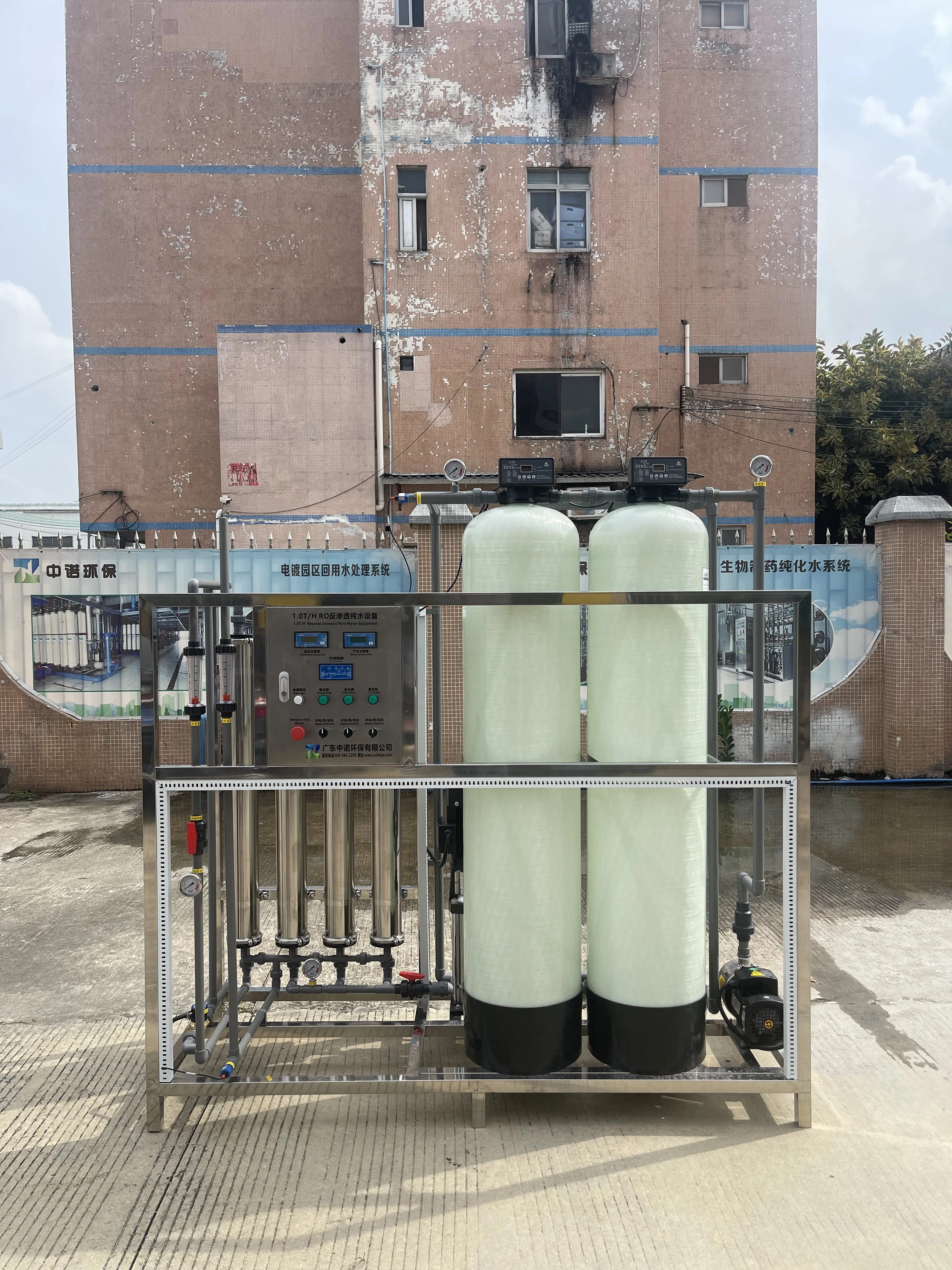
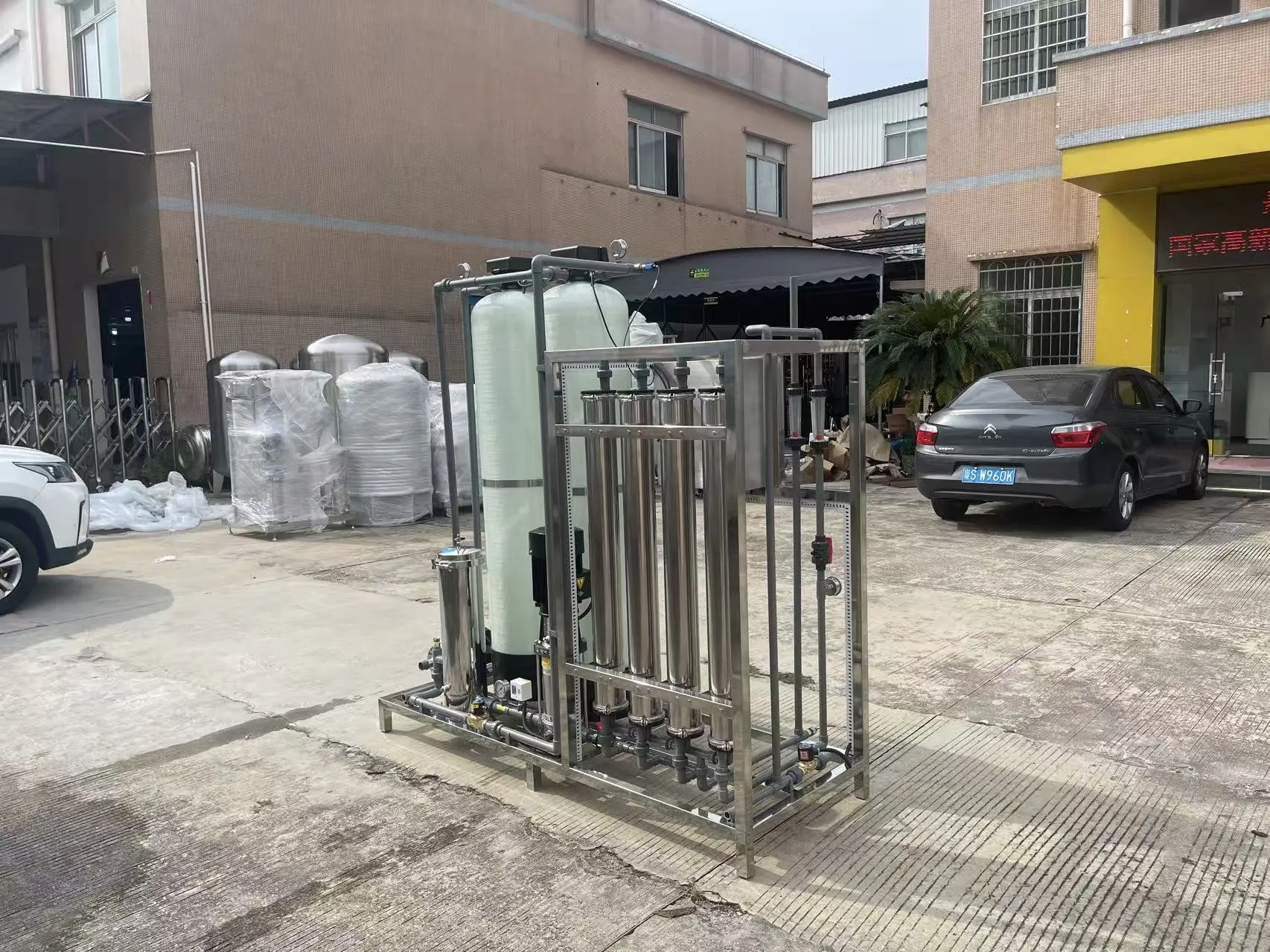
Stable nitrate removal depends on professional water analysis, matched pretreatment, correct membrane configuration and daily maintenance. Zhongnuo Water Treatment provides custom well water RO systems for agricultural, residential, commercial and industrial projects.
Send us your water quality report, required water capacity and usage standards to get a tailored nitrate removal solution and quotation.
FAQ
Q: Does boiling well water remove nitrate?
A: No. Boiling cannot eliminate nitrate but will concentrate it and worsen water quality.
Q: Can activated carbon filters remove nitrate?
A: Standard activated carbon only removes odor, residual chlorine and organics, with no effect on dissolved nitrate.
Q: Can water softeners remove nitrate?
A: Ordinary softeners cannot remove nitrate. Only special nitrate-selective ion exchange resin works.
Q: How to verify RO nitrate removal effect?
A: Professional laboratory testing of both raw water and purified water is the only accurate verification method.
Nitrate pollution is one of the most common groundwater issues in rural and agricultural areas. It mainly comes from farm fertilizers, livestock waste, septic systems and sewage infiltration. Since nitrate is fully dissolved in water, conventional filtration equipment cannot remove nitrate effectively.
Many well water users ask: Is reverse osmosis effective for nitrate removal? The clear answer is yes. A properly designed and maintained RO system can reliably reduce nitrate in well water for drinking and industrial use.
Why Nitrate in Well Water Is Dangerous
Nitrate is colorless, odorless and tasteless. Polluted well water looks completely clean, which brings hidden health risks, especially for infants and pregnant women.
Boiling water cannot remove nitrate. Instead, water evaporation will concentrate nitrate and make water quality worse. Any well water used for drinking must be tested and meet local drinking water standards.
Can Reverse Osmosis Remove Well Water Nitrate?
RO is highly effective for nitrate removal. Under operating pressure, RO membranes intercept dissolved nitrate ions and separate them from purified water.
The actual nitrate removal rate depends on these key factors:
-
Raw water nitrate concentration
-
Water temperature and system working pressure
-
RO membrane type and service condition
-
System water recovery rate
-
Overall water quality composition and daily maintenance
Final water quality must be verified by laboratory testing, not only by nominal membrane rejection data. View our custom industrial reverse osmosis systems for well water treatment.
Is Pretreatment Necessary for Nitrate Removal RO?
Yes. Standard pretreatment cannot directly remove dissolved nitrate, but it protects RO membranes from fouling, scaling, blockage and oxidation, ensuring stable long-term nitrate removal performance.
Well water usually contains multiple impurities that harm RO membranes:
-
Sediment, turbidity and suspended solids
-
Water hardness (calcium & magnesium)
-
Iron, manganese and hydrogen sulfide
-
Organic matter and microorganisms
Typical Well Water Nitrate Removal Process:
Well Water → Multimedia Filter → Iron & Manganese Removal / Water Softener → Security Cartridge Filter → RO System → Disinfection → Pure Water Tank
Complete water pretreatment systems stabilize water flow, maintain consistent salt rejection and extend membrane service life. If your well water contains red or black sediment, learn more about iron and manganese removal from borehole water.
When Is RO the Best Choice for Nitrate Treatment?
Reverse osmosis is the most cost-effective solution in the following scenarios:
-
Well water nitrate exceeds drinking or industrial water standards
-
Raw water contains high TDS, hardness and various dissolved salts
-
Treated water is used for drinking, food production or process water
-
Stable, long-term water purification performance is required
For pure drinking water projects, post-treatment such as UV disinfection, pH adjustment and remineralization can be added to improve water safety and taste.
Water Quality Testing Items Before RO Design
Testing only nitrate is insufficient. Full water analysis ensures accurate system design and stable treatment effect:
-
Nitrate and nitrite content
-
TDS, conductivity, hardness and alkalinity
-
Iron, manganese, sulfate, chloride and silica
-
Turbidity, pH value and microbial indicators
RO vs Alternative Nitrate Removal Methods
Common nitrate treatment technologies include RO, ion exchange and biological denitrification.
-
Reverse Osmosis: Best for water with nitrate + high TDS, hardness and multiple impurities, realizing full water quality purification.
-
Ion Exchange: Suitable for water where nitrate is the only main pollutant, no need for desalination.
The final solution is determined by water quality report, water demand and water usage.
How to Maintain Stable Nitrate Removal Performance
Reasonable maintenance avoids nitrate treatment failure and unstable water quality:
-
Regularly test feed water and RO product water
-
Replace filter cartridges on schedule
-
Monitor system pressure, flow rate and conductivity
-
Maintain standard water recovery rate
-
Clean or replace aging RO membranes timely
Note: Conductivity data cannot fully confirm nitrate safety. Periodic laboratory testing is necessary.
Conclusion
Reverse osmosis is the most reliable and practical solution for nitrate removal from well water, especially for raw water with multiple contaminants such as high salinity and hardness.
Stable nitrate removal depends on professional water analysis, matched pretreatment, correct membrane configuration and daily maintenance. Zhongnuo Water Treatment provides custom well water RO systems for agricultural, residential, commercial and industrial projects.
Send us your water quality report, required water capacity and usage standards to get a tailored nitrate removal solution and quotation.
FAQ
Q: Does boiling well water remove nitrate?
A: No. Boiling cannot eliminate nitrate but will concentrate it and worsen water quality.
Q: Can activated carbon filters remove nitrate?
A: Standard activated carbon only removes odor, residual chlorine and organics, with no effect on dissolved nitrate.
Q: Can water softeners remove nitrate?
A: Ordinary softeners cannot remove nitrate. Only special nitrate-selective ion exchange resin works.
Q: How to verify RO nitrate removal effect?
A: Professional laboratory testing of both raw water and purified water is the only accurate verification method.
Get a Quote for Free
Submit this form and our sales representative will contact you soon.


ONLINE MESSAGE
Copyright © 2026 Zhongnuo Water Treatment Co., Ltd.