

SEARCH WHAT YOU WANT
Ultrafiltration System vs Reverse Osmosis: What Is the Difference?
Time:2025-04-10
A practical comparison of UF and RO for industrial water treatment projects
Many buyers ask the same question at the beginning of a water treatment project: should they choose an ultrafiltration system or a reverse osmosis system? The answer depends on the raw water condition, the target water quality, and the actual industrial application. Although both technologies are membrane-based, they are designed for different levels of purification and different project goals.
Understanding the difference between UF and RO is important because the right selection affects system cost, operating efficiency, maintenance strategy, and final water quality. In some projects, one technology is enough. In others, the best solution is to combine both.
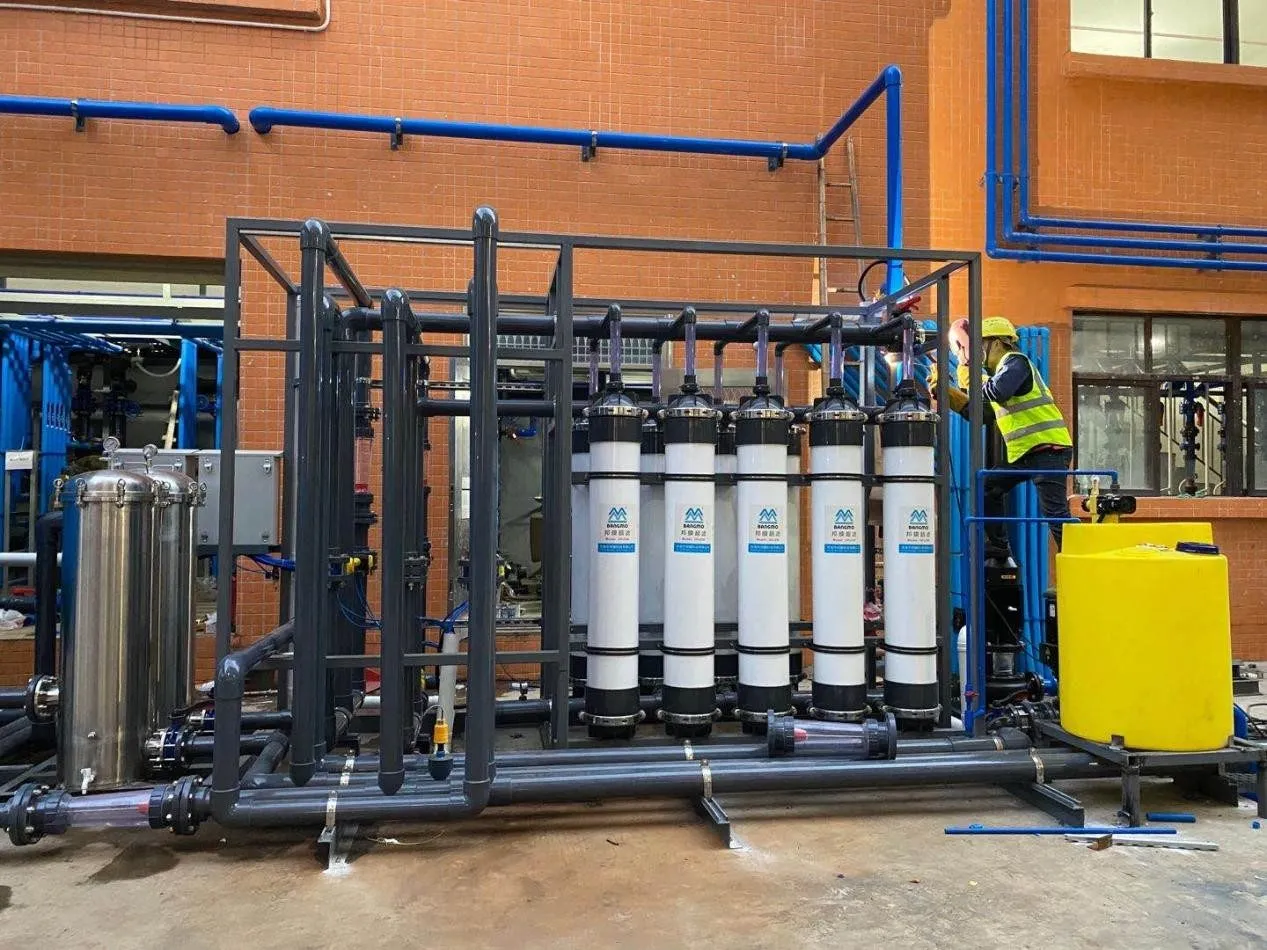 Ultrafiltration system equipment from Zhongnuo Water Treatment local equipment library.
What Is an Ultrafiltration System?
An ultrafiltration system uses hollow-fiber or similar membrane technology to remove suspended solids, bacteria, viruses, colloids, and larger organic molecules from water. UF membranes usually have filtration precision around 0.01 micron, which makes them effective for clarifying water and reducing biological contamination.
Ultrafiltration is commonly used for surface water treatment, municipal water polishing, wastewater reuse pretreatment, and as pretreatment before reverse osmosis.
What Is a Reverse Osmosis System?
A reverse osmosis system uses pressure and semi-permeable membranes to remove dissolved salts, heavy metals, bacteria, and many other dissolved impurities. Compared with UF, reverse osmosis provides much deeper desalination and lower conductivity water.
This is why a reverse osmosis water treatment system is widely used for drinking water projects, food and beverage production, pharmaceutical processes, electronics manufacturing, boiler feed water, and other applications that need lower TDS and more stable purified water.
Main Difference Between UF and RO
The biggest difference between an ultrafiltration system and reverse osmosis is the type of contaminants they remove.
· Ultrafiltration removes suspended solids, bacteria, viruses, and colloids.
· Reverse osmosis removes dissolved salts, ions, heavy metals, and many finer impurities.
· UF is usually used for clarification and pretreatment.
· RO is used when lower conductivity or desalination is required.
In simple terms, UF improves water cleanliness, while RO improves both cleanliness and dissolved impurity control.
When Should You Choose an Ultrafiltration System?
An ultrafiltration system is a good choice when the project mainly needs to remove turbidity, bacteria, colloids, and visible suspended matter, but does not require major salt removal.
· Surface water treatment
· Pretreatment before reverse osmosis
· Municipal water improvement
· Wastewater reuse polishing before deeper treatment
· Industrial process water where lower TDS is not the main requirement
When Should You Choose a Reverse Osmosis System?
A reverse osmosis system should be selected when the project requires desalination, lower conductivity, or a much higher level of purification. If dissolved salts, hardness, or ionic contamination are major concerns, RO is usually the more suitable option.
· Drinking water and bottled water production
· Food and beverage ingredient water
· Pharmaceutical purified water
· Electronics and ultrapure water pretreatment
· Brackish water desalination and industrial water purification
Why UF and RO Are Often Used Together
In many industrial projects, UF and RO are not alternatives but partners. A UF system can be installed before an RO unit to reduce suspended solids, bacteria, and colloids, which helps protect the RO membranes and improves long-term system stability.
This combined design is especially useful in projects with challenging raw water or where longer membrane life and better pretreatment performance are important.
How to Choose the Right Option for Your Project
The right decision depends on several practical questions. Buyers should avoid choosing only by price or by capacity alone.
· What is the raw water source and water quality report?
· Do you need to remove dissolved salts or mainly suspended impurities?
· What final water quality target do you need?
· Is the system for drinking water, industrial process water, reuse water, or pretreatment?
· Will the site benefit from a combined UF plus RO configuration?
How Zhongnuo Water Treatment Supports UF and RO Projects
Zhongnuo Water Treatment provides customized ultrafiltration systems, reverse osmosis systems, and integrated UF plus RO solutions based on raw water conditions and final application needs. Depending on the project, the treatment process can be adjusted to improve water quality, reduce operating risk, and match the customer's long-term production goals.
· Customized UF and RO system design
· Integrated pretreatment and polishing process options
· Stable skid-mounted configuration with PLC automation
· Support for industrial, commercial, and reuse projects
· Technical guidance from design through commissioning
Conclusion
The difference between an ultrafiltration system and reverse osmosis comes down to purification depth and application goal. UF is ideal for removing suspended matter and biological contamination, while RO is needed when dissolved salts and lower conductivity must be controlled.
If you are planning a new water treatment project, the best approach is to start with your raw water report and final water target. With those two points clearly defined, it becomes much easier to decide whether UF, RO, or a combined UF plus RO system is the right solution.
A practical comparison of UF and RO for industrial water treatment projects
Many buyers ask the same question at the beginning of a water treatment project: should they choose an ultrafiltration system or a reverse osmosis system? The answer depends on the raw water condition, the target water quality, and the actual industrial application. Although both technologies are membrane-based, they are designed for different levels of purification and different project goals.
Understanding the difference between UF and RO is important because the right selection affects system cost, operating efficiency, maintenance strategy, and final water quality. In some projects, one technology is enough. In others, the best solution is to combine both.
Ultrafiltration system equipment from Zhongnuo Water Treatment local equipment library.
What Is an Ultrafiltration System?
An ultrafiltration system uses hollow-fiber or similar membrane technology to remove suspended solids, bacteria, viruses, colloids, and larger organic molecules from water. UF membranes usually have filtration precision around 0.01 micron, which makes them effective for clarifying water and reducing biological contamination.
Ultrafiltration is commonly used for surface water treatment, municipal water polishing, wastewater reuse pretreatment, and as pretreatment before reverse osmosis.
What Is a Reverse Osmosis System?
A reverse osmosis system uses pressure and semi-permeable membranes to remove dissolved salts, heavy metals, bacteria, and many other dissolved impurities. Compared with UF, reverse osmosis provides much deeper desalination and lower conductivity water.
This is why a reverse osmosis water treatment system is widely used for drinking water projects, food and beverage production, pharmaceutical processes, electronics manufacturing, boiler feed water, and other applications that need lower TDS and more stable purified water.
Main Difference Between UF and RO
The biggest difference between an ultrafiltration system and reverse osmosis is the type of contaminants they remove.
· Ultrafiltration removes suspended solids, bacteria, viruses, and colloids.
· Reverse osmosis removes dissolved salts, ions, heavy metals, and many finer impurities.
· UF is usually used for clarification and pretreatment.
· RO is used when lower conductivity or desalination is required.
In simple terms, UF improves water cleanliness, while RO improves both cleanliness and dissolved impurity control.
When Should You Choose an Ultrafiltration System?
An ultrafiltration system is a good choice when the project mainly needs to remove turbidity, bacteria, colloids, and visible suspended matter, but does not require major salt removal.
· Surface water treatment
· Pretreatment before reverse osmosis
· Municipal water improvement
· Wastewater reuse polishing before deeper treatment
· Industrial process water where lower TDS is not the main requirement
When Should You Choose a Reverse Osmosis System?
A reverse osmosis system should be selected when the project requires desalination, lower conductivity, or a much higher level of purification. If dissolved salts, hardness, or ionic contamination are major concerns, RO is usually the more suitable option.
· Drinking water and bottled water production
· Food and beverage ingredient water
· Pharmaceutical purified water
· Electronics and ultrapure water pretreatment
· Brackish water desalination and industrial water purification
Why UF and RO Are Often Used Together
In many industrial projects, UF and RO are not alternatives but partners. A UF system can be installed before an RO unit to reduce suspended solids, bacteria, and colloids, which helps protect the RO membranes and improves long-term system stability.
This combined design is especially useful in projects with challenging raw water or where longer membrane life and better pretreatment performance are important.
How to Choose the Right Option for Your Project
The right decision depends on several practical questions. Buyers should avoid choosing only by price or by capacity alone.
· What is the raw water source and water quality report?
· Do you need to remove dissolved salts or mainly suspended impurities?
· What final water quality target do you need?
· Is the system for drinking water, industrial process water, reuse water, or pretreatment?
· Will the site benefit from a combined UF plus RO configuration?
How Zhongnuo Water Treatment Supports UF and RO Projects
Zhongnuo Water Treatment provides customized ultrafiltration systems, reverse osmosis systems, and integrated UF plus RO solutions based on raw water conditions and final application needs. Depending on the project, the treatment process can be adjusted to improve water quality, reduce operating risk, and match the customer's long-term production goals.
· Customized UF and RO system design
· Integrated pretreatment and polishing process options
· Stable skid-mounted configuration with PLC automation
· Support for industrial, commercial, and reuse projects
· Technical guidance from design through commissioning
Conclusion
The difference between an ultrafiltration system and reverse osmosis comes down to purification depth and application goal. UF is ideal for removing suspended matter and biological contamination, while RO is needed when dissolved salts and lower conductivity must be controlled.
If you are planning a new water treatment project, the best approach is to start with your raw water report and final water target. With those two points clearly defined, it becomes much easier to decide whether UF, RO, or a combined UF plus RO system is the right solution.
Get a Quote for Free
Submit this form and our sales representative will contact you soon.


ONLINE MESSAGE
Copyright © 2026 Zhongnuo Water Treatment Co., Ltd.