

SEARCH WHAT YOU WANT
Why Electronics Factories Need Ultrapure Water Treatment Equipment
Time:2025-05-30
A practical look at water quality requirements for precision manufacturing and electronic component production
Electronics manufacturing depends on process control at every stage, and water quality is part of that control. In PCB production, semiconductor processing, component cleaning, precision rinsing, coating preparation, and cleanroom support, even very small amounts of dissolved ions or particles can create quality risks. That is why many manufacturers invest in ultrapure water treatment equipment instead of relying on standard purified water alone.
A well-designed ultrapure water treatment system helps electronics factories improve cleaning consistency, reduce contamination risk, protect sensitive equipment, and maintain more stable production conditions. For many plants, it is not just a utility upgrade. It is part of overall product quality assurance.
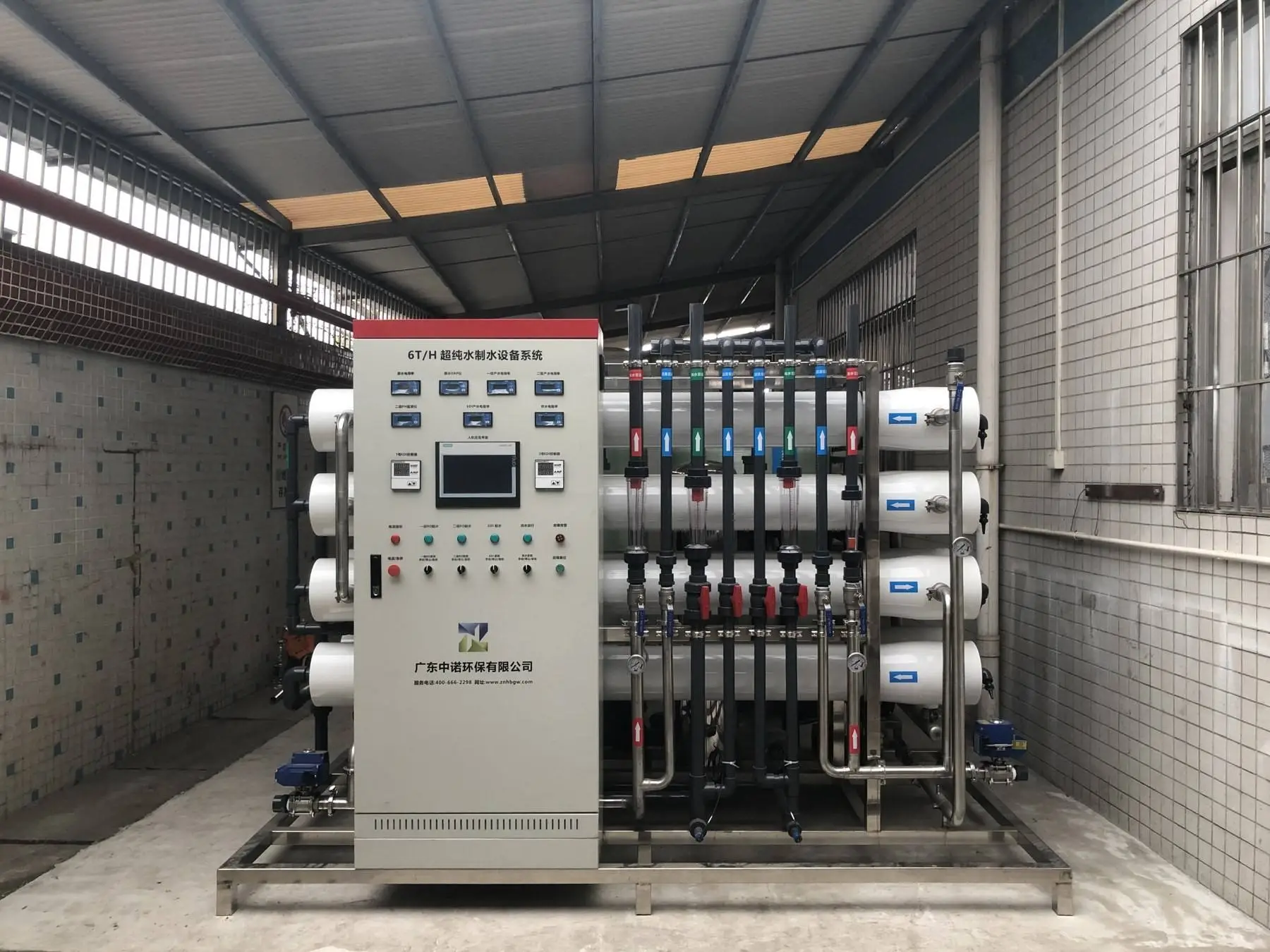 Ultrapure water treatment equipment for electronics factories from Zhongnuo Water Treatment local equipment library.
Why Electronics Production Requires Higher Water Purity
In electronics factories, ordinary industrial water may still contain ions, silica, organics, bacteria, or fine particles that are too small to notice in normal use but large enough to affect precision processes. During washing, etching, rinsing, and surface treatment, these impurities can remain on components or interfere with process results.
· PCB and component cleaning require low-conductivity water to reduce contamination residue.
· Semiconductor and precision electronics processes need stable water quality for repeated consistency.
· Fine production lines benefit from reduced scaling and cleaner equipment surfaces.
· Ultrapure water helps reduce the risk of quality defects caused by dissolved ions or microparticles.
What Is Ultrapure Water Treatment Equipment?
Ultrapure water treatment equipment is designed to produce water with very low conductivity and very low ionic contamination. In most industrial projects, this is achieved through a combination of pretreatment, reverse osmosis, polishing, and often EDI or mixed-bed finishing depending on the final purity target.
Compared with a standard industrial water purification system, ultrapure water treatment equipment is configured for deeper purification and tighter process stability. The final design depends on the raw water quality and the actual purity level required by the electronics application.
Typical Process of an Ultrapure Water Treatment System
A complete ultrapure water treatment system for electronics factories usually includes several treatment stages. Each stage supports the next one and helps protect the final polishing section.
· Pretreatment such as quartz sand filtration, activated carbon filtration, and softening
· Reverse osmosis to remove the majority of dissolved salts and impurities
· Intermediate storage or transfer sections for process stability
· EDI or other polishing technology to reduce remaining ionic content
· Optional UV sterilization and final filtration depending on the process requirement
This is why many factories choose an RO plus EDI ultrapure water system when they need continuous and stable high-purity water for production.
Main Benefits for Electronics Factories
The value of ultrapure water treatment equipment is not limited to water quality alone. It also improves consistency, equipment protection, and long-term operating reliability.
· Better rinsing and cleaning performance for sensitive components
· Lower contamination risk during precision production processes
· Reduced mineral residue and scaling in downstream equipment
· More stable conductivity and water quality for repeatable manufacturing
· Improved compatibility with automated and high-spec production lines
How to Choose the Right Ultrapure Water Treatment System
Electronics factories should not choose a system only by capacity. The right ultrapure water treatment system depends on both the incoming water condition and the exact production target.
· Raw water source and complete water quality report
· Required hourly or daily output capacity
· Target conductivity or resistivity level
· Application type such as PCB cleaning, electronics rinsing, or laboratory support
· Automation requirements and control preferences
· Material configuration such as SUS304 or SUS316
A customized design is often the most effective approach because different electronics processes do not always require the same purity level or the same polishing configuration.
Why RO Plus EDI Is Common in Electronics Projects
In many electronics projects, reverse osmosis handles the main desalination task while EDI provides continuous final ion removal. This combination gives the factory a more reliable high-purity water source and reduces the need for frequent chemical regeneration compared with older polishing methods.
For factories that run continuous or high-standard lines, an EDI ultrapure water system is often more practical because it supports stable operation with better long-term process control.
How Zhongnuo Water Treatment Supports Electronics Industry Projects
Zhongnuo Water Treatment provides customized ultrapure water treatment equipment for electronics factories according to raw water conditions, target water quality, production demand, and site layout. The solution can include pretreatment, RO, EDI, storage tanks, UV units, and terminal polishing depending on the final application.
· Customized design for electronics manufacturing requirements
· Stable skid-mounted ultrapure water treatment system configuration
· PLC automatic control and user-friendly operation
· Flexible capacity range for different plant sizes
· Technical support from design to commissioning
Conclusion
Electronics factories need ultrapure water treatment equipment because water quality directly affects production cleanliness, component quality, and process stability. When precision manufacturing depends on low-conductivity and low-contamination water, a standard purified water system is often not enough.
If your plant is evaluating a new project, the best first step is to define the raw water condition, required capacity, and final conductivity target. With those details, it becomes much easier to choose the right ultrapure water treatment system for your electronics production line.
A practical look at water quality requirements for precision manufacturing and electronic component production
Electronics manufacturing depends on process control at every stage, and water quality is part of that control. In PCB production, semiconductor processing, component cleaning, precision rinsing, coating preparation, and cleanroom support, even very small amounts of dissolved ions or particles can create quality risks. That is why many manufacturers invest in ultrapure water treatment equipment instead of relying on standard purified water alone.
A well-designed ultrapure water treatment system helps electronics factories improve cleaning consistency, reduce contamination risk, protect sensitive equipment, and maintain more stable production conditions. For many plants, it is not just a utility upgrade. It is part of overall product quality assurance.
Ultrapure water treatment equipment for electronics factories from Zhongnuo Water Treatment local equipment library.
Why Electronics Production Requires Higher Water Purity
In electronics factories, ordinary industrial water may still contain ions, silica, organics, bacteria, or fine particles that are too small to notice in normal use but large enough to affect precision processes. During washing, etching, rinsing, and surface treatment, these impurities can remain on components or interfere with process results.
· PCB and component cleaning require low-conductivity water to reduce contamination residue.
· Semiconductor and precision electronics processes need stable water quality for repeated consistency.
· Fine production lines benefit from reduced scaling and cleaner equipment surfaces.
· Ultrapure water helps reduce the risk of quality defects caused by dissolved ions or microparticles.
What Is Ultrapure Water Treatment Equipment?
Ultrapure water treatment equipment is designed to produce water with very low conductivity and very low ionic contamination. In most industrial projects, this is achieved through a combination of pretreatment, reverse osmosis, polishing, and often EDI or mixed-bed finishing depending on the final purity target.
Compared with a standard industrial water purification system, ultrapure water treatment equipment is configured for deeper purification and tighter process stability. The final design depends on the raw water quality and the actual purity level required by the electronics application.
Typical Process of an Ultrapure Water Treatment System
A complete ultrapure water treatment system for electronics factories usually includes several treatment stages. Each stage supports the next one and helps protect the final polishing section.
· Pretreatment such as quartz sand filtration, activated carbon filtration, and softening
· Reverse osmosis to remove the majority of dissolved salts and impurities
· Intermediate storage or transfer sections for process stability
· EDI or other polishing technology to reduce remaining ionic content
· Optional UV sterilization and final filtration depending on the process requirement
This is why many factories choose an RO plus EDI ultrapure water system when they need continuous and stable high-purity water for production.
Main Benefits for Electronics Factories
The value of ultrapure water treatment equipment is not limited to water quality alone. It also improves consistency, equipment protection, and long-term operating reliability.
· Better rinsing and cleaning performance for sensitive components
· Lower contamination risk during precision production processes
· Reduced mineral residue and scaling in downstream equipment
· More stable conductivity and water quality for repeatable manufacturing
· Improved compatibility with automated and high-spec production lines
How to Choose the Right Ultrapure Water Treatment System
Electronics factories should not choose a system only by capacity. The right ultrapure water treatment system depends on both the incoming water condition and the exact production target.
· Raw water source and complete water quality report
· Required hourly or daily output capacity
· Target conductivity or resistivity level
· Application type such as PCB cleaning, electronics rinsing, or laboratory support
· Automation requirements and control preferences
· Material configuration such as SUS304 or SUS316
A customized design is often the most effective approach because different electronics processes do not always require the same purity level or the same polishing configuration.
Why RO Plus EDI Is Common in Electronics Projects
In many electronics projects, reverse osmosis handles the main desalination task while EDI provides continuous final ion removal. This combination gives the factory a more reliable high-purity water source and reduces the need for frequent chemical regeneration compared with older polishing methods.
For factories that run continuous or high-standard lines, an EDI ultrapure water system is often more practical because it supports stable operation with better long-term process control.
How Zhongnuo Water Treatment Supports Electronics Industry Projects
Zhongnuo Water Treatment provides customized ultrapure water treatment equipment for electronics factories according to raw water conditions, target water quality, production demand, and site layout. The solution can include pretreatment, RO, EDI, storage tanks, UV units, and terminal polishing depending on the final application.
· Customized design for electronics manufacturing requirements
· Stable skid-mounted ultrapure water treatment system configuration
· PLC automatic control and user-friendly operation
· Flexible capacity range for different plant sizes
· Technical support from design to commissioning
Conclusion
Electronics factories need ultrapure water treatment equipment because water quality directly affects production cleanliness, component quality, and process stability. When precision manufacturing depends on low-conductivity and low-contamination water, a standard purified water system is often not enough.
If your plant is evaluating a new project, the best first step is to define the raw water condition, required capacity, and final conductivity target. With those details, it becomes much easier to choose the right ultrapure water treatment system for your electronics production line.
Get a Quote for Free
Submit this form and our sales representative will contact you soon.


ONLINE MESSAGE
Copyright © 2026 Zhongnuo Water Treatment Co., Ltd.